

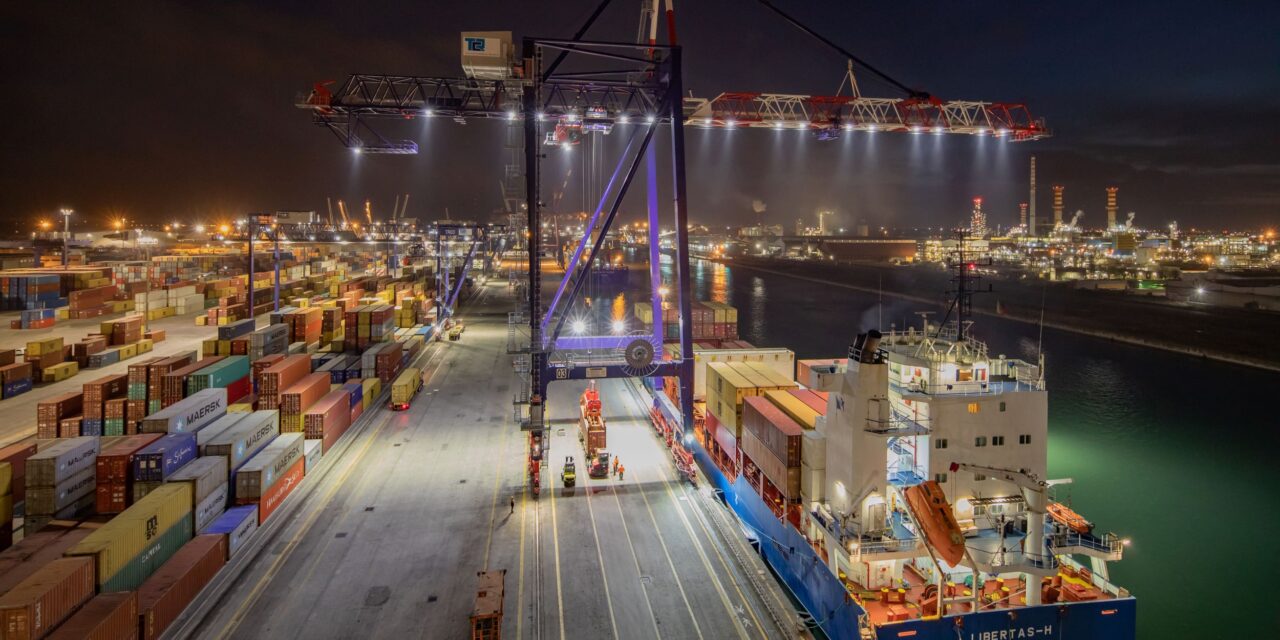
TRIESTE – The Port of Ravenna closed 2025 with a record result: 28,096,272 tonnes handled, 706,386 tonnes more than the previous best year (2022) and up 10% compared to 2024.
Growth was recorded in liquid agri-food cargoes (+18.8%) and solid agri-food cargoes (+12.2%), solid chemical products (+49.1%), construction materials (+4.4%), fertilisers (+4.1%), metallurgical products (+4.4%), petroleum products (+48.1%) and other cargoes (+60.1%).
Liquid chemicals fell (-23.9%).
Container volumes also increased in 2025 to over 212,000 TEU, up 5.1% compared to 2024, with containerised cargo up 5.2%.
The number of trailers is estimated at almost 70,000 units (-1.1%), while related Ro-Ro cargo is expected to total 1.7 million tonnes, down 4.5% compared to 2024.
Cruise passengers totalled 248,015, including 205,201 in home port and 42,683 in transit, down 8.9% versus 2024. In this case, the decline was due to the construction works for the new passenger terminal, which created structural limits on ship berthing.
«An extraordinary result,» said Francesco Benevolo, chairman of the Ravenna Port Authority, «thanks to the commitment shown over these months and years by the entire port community, local institutions, the people working at the Port Authority and the presidents who came before me. The figures confirm Ravenna as a true multipurpose port hub able to handle all cargo types, and above all they consolidate our role as a national leading port in dry bulk and general cargo. In addition, this year we are benefiting from the new liquefied gas traffic, which generates significant economic and employment spillovers in the port and may point to a future national role for Ravenna also in liquid bulk. Ravenna therefore confirms itself as a strategic logistics node for the country’s productive system and, thanks to strong cohesion with the community and local institutions, as well as further public and private investments that we hope will soon be activated in the area, it will be able to face with efficiency and competitiveness the desirable targets expected for 2026».
As for the last two months, traffic strengthened significantly between November and December. In November, 2.55 million tonnes were handled, up 17.1% year on year, while in December traffic is estimated at 2.63 million tonnes, up 22.1% compared to the same month of 2024.
In detail for December, growth affected almost all categories: solid and liquid agri-food cargoes, metallurgical products, petroleum products and fertilisers, with particularly strong increases in the latter segments. Liquid chemicals and construction materials moved against the trend. Trailer traffic was also positive, both in terms of cargo and units, while the container segment fell, with a reduction in volumes and TEU handled.