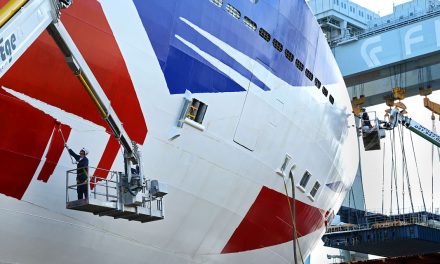


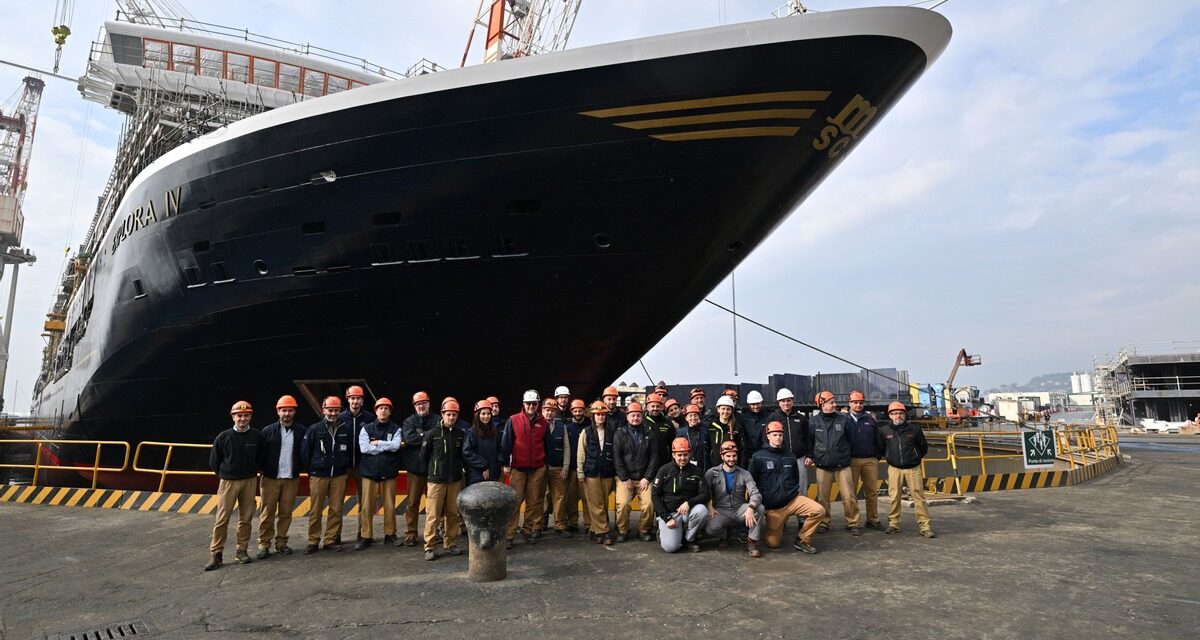
TRIESTE – Explora Journeys’ luxury fleet programme is entering its निर्णsicive phase. At Fincantieri’s Sestri Ponente shipyard, a triple ceremony was held today, Monday 9 March, marking a key milestone in the development of the MSC Group brand: the float-out of Explora IV, the coin ceremony for Explora V and the steel-cutting for Explora VI.
The event confirms the simultaneous progress of four ships in the new fleet: Explora III, currently undergoing sea trials and due for delivery in July, Explora IV and Explora V, both scheduled for 2027, and Explora VI, which will enter service in 2028, completing the six-ship programme entrusted entirely to Fincantieri. The first two vessels, Explora I and Explora II, are already in operation and are seeing growing demand on international markets in the luxury cruise segment.
The progress of the programme confirms the strategic weight of shipbuilding within the national economic system and the so-called blue economy. The overall six-ship Explora Journeys project is worth around €3.5 billion in investment by the MSC Group. Including four vessels previously ordered from Fincantieri – MSC Seaside, MSC Seaview, MSC Seashore and MSC Seascape – the shipowner’s total commitment rises to around €7 billion.
Beyond its industrial scale, the programme is also generating a significant impact across the supply chain: Fincantieri works with around 6,500 suppliers in Italy, most of them small and medium-sized enterprises, while in Liguria about 800 companies operate within the supply chain. The group employs more than 3,600 people locally and helps support a total of more than 70,000 jobs across the national supply chain.
On the technological side, the new vessels will be fuelled by liquefied natural gas (LNG), significantly reducing emissions compared with traditional fuels. Explora VI will also introduce an innovative fuel-cell system, capable of converting LNG into hydrogen to generate energy even more efficiently. All the ships will also be equipped with cold ironing systems, allowing them to draw electricity from shore while in port, eliminating emissions during berthing.