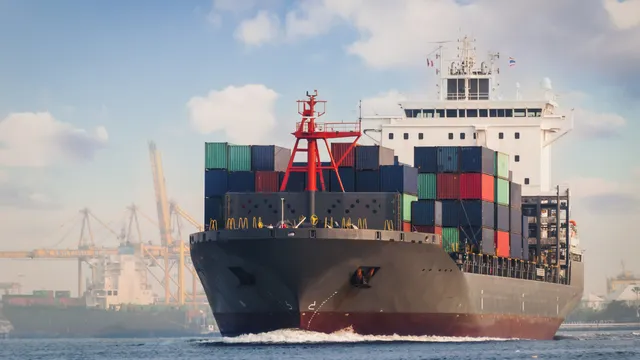


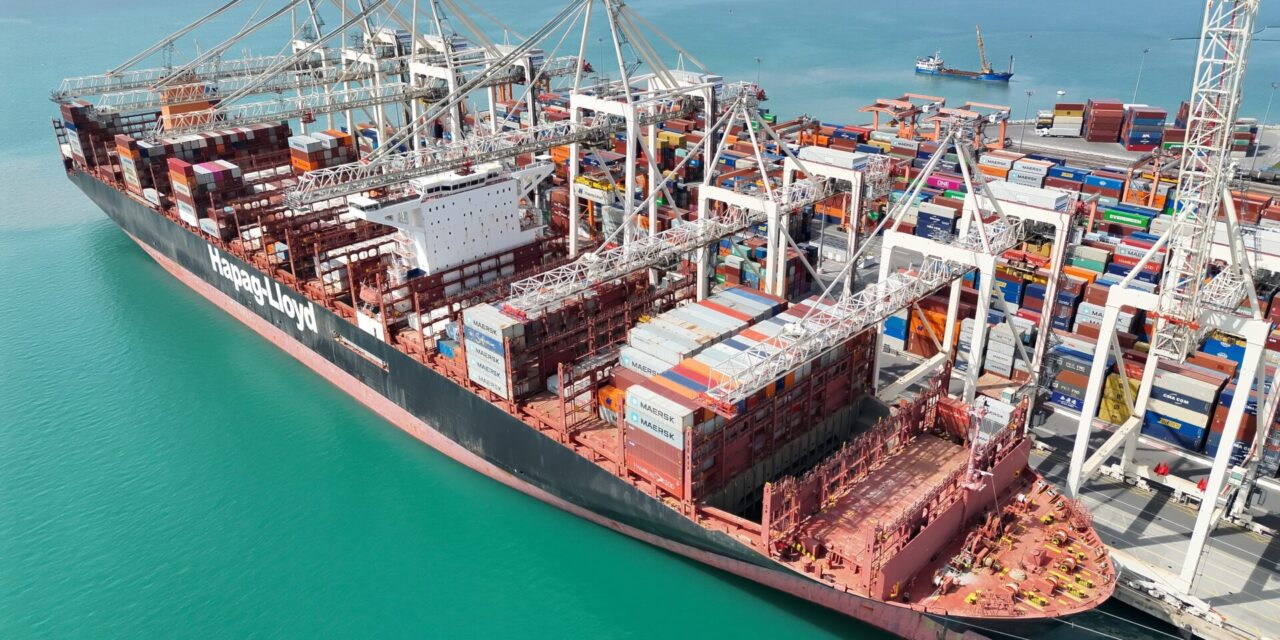
TRIESTE – Hapag-Lloyd signed three letters of intent in recent days with the Indian government to expand maritime cooperation and support the country’s logistics development.
The agreement was signed in Mumbai by chief executive Rolf Habben Jansen and India’s ports minister Sarbananda Sonowal. It covers three areas: a possible flag change for some vessels, the development of a sustainable ship recycling system and cooperation on the new port of Vadhavan.
On the first point, the German carrier is considering reflagging up to four vessels under the Indian flag.
More developed is the section on ships’ end-of-life management. The aim is to help create in India a ship recycling chain compliant with European standards, in particular the EU Ship Recycling Regulation. The system could eventually handle up to 100 vessels, with high requirements in terms of safety and environmental impact. The third strand concerns the port of Vadhavan, one of India’s main infrastructure projects currently under development. Hapag-Lloyd intends to provide operational and terminal management expertise, working with the Jawaharlal Nehru Port Authority to strengthen the country’s logistics capacity.
India is already a key market for the group, which has more than 2,800 employees in the country, 17 offices and six dedicated shipping services. Hapag-Lloyd is also active in terminal management and inland services, with around 3.2 million TEUs handled each year. The stated objective is to reach 3 million TEUs managed in the region by 2030.
For the Northern Adriatic, the agreement fits into a broader context. Hapag-Lloyd calls regularly at the ports of Koper, Rijeka and Venice (in alliance with Maersk), which represent important gateways to Central and Eastern Europe.
Against this backdrop, the agreement with India can also be read in a forward-looking perspective. If the IMEC project were to materialise, stronger ties between a major global carrier and the Indian port system could have direct repercussions on the routes linking India to the Mediterranean and therefore also to the ports of the Northern Adriatic.