

TRIESTE – China is working on an idea that brings together two technological frontiers: nuclear marine propulsion and the use of thorium as fuel.
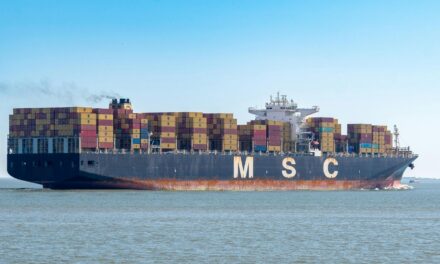
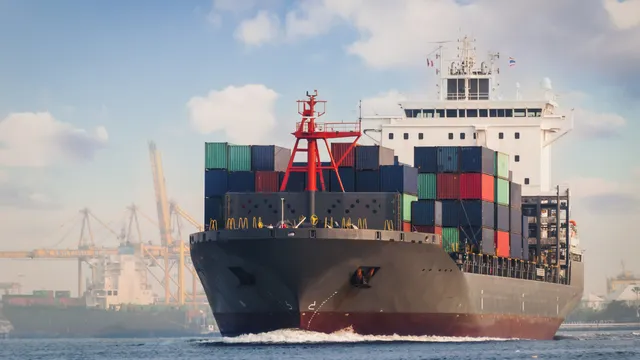
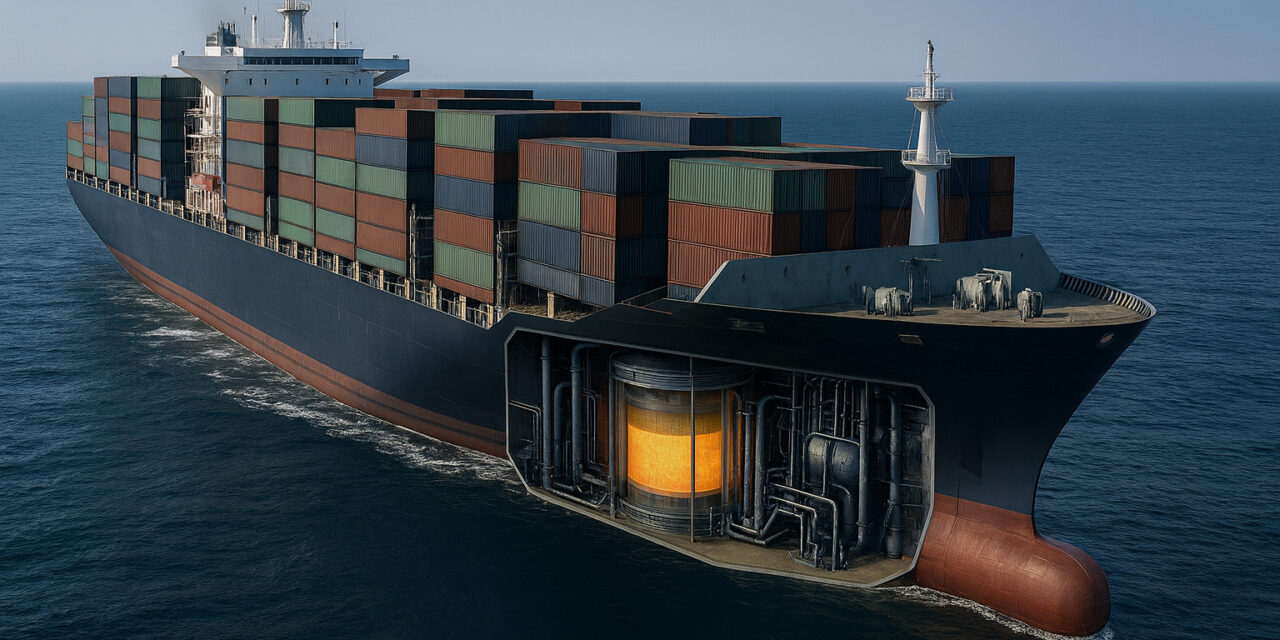
According to Chinese sources cited by the South China Morning Post and industry media, the China State Shipbuilding Corporation (CSSC) and the China National Nuclear Corporation (CNNC) have unveiled a concept for a 14,000-teu container ship powered by a thorium molten-salt reactor (TMSR) of around 200 thermal megawatts.
The project is being developed by the Jiangnan Shipyard in Shanghai, which has reportedly shared the first technical details of the system. The reactor, based on a liquid mixture of fluorides and thorium, promises higher efficiency and lower risks than traditional uranium-fuelled reactors.
A reactor of this kind would eliminate the use of bunker fuel and drastically reduce emissions. For a sector like maritime transport — responsible today for about 3% of global CO₂ — the impact would be enormous.
China already has experience in the field: in Wuwei, Gansu Province, a small experimental TMSR-LF1 reactor is in operation and has reportedly achieved thorium-to-uranium conversion, according to World Nuclear News. That project serves as a testbed for future applications, potentially including maritime propulsion systems.
So far, however, there are no official statements from the Chinese government or the companies involved. Sources describe a concept or study-phase project, not a vessel under construction. Many technical and regulatory questions remain open: safety, waste management, insurance and ship-classification requirements.
As several industry outlets point out, a thorium reactor on a commercial vessel is still an engineering and regulatory challenge, not an imminent development.
Interest in thorium has risen again in recent years: it is more abundant than uranium, generates less waste and can be used in reactors that are inherently safer. However, molten-salt technology remains experimental, and no country has yet deployed it on a large scale.
If China manages to bring forward even a single prototype, it would be a significant signal — not only for next-generation nuclear technologies but also for the decarbonisation of maritime transport, one of the most complex challenges of the global energy transition.