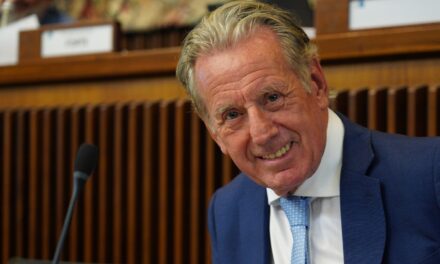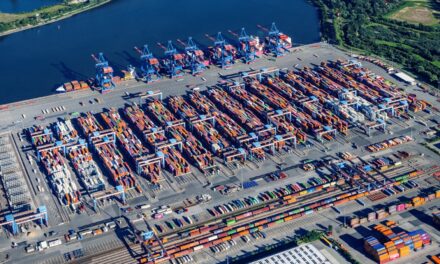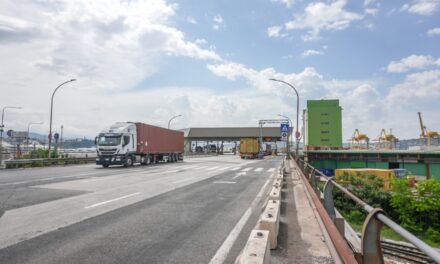


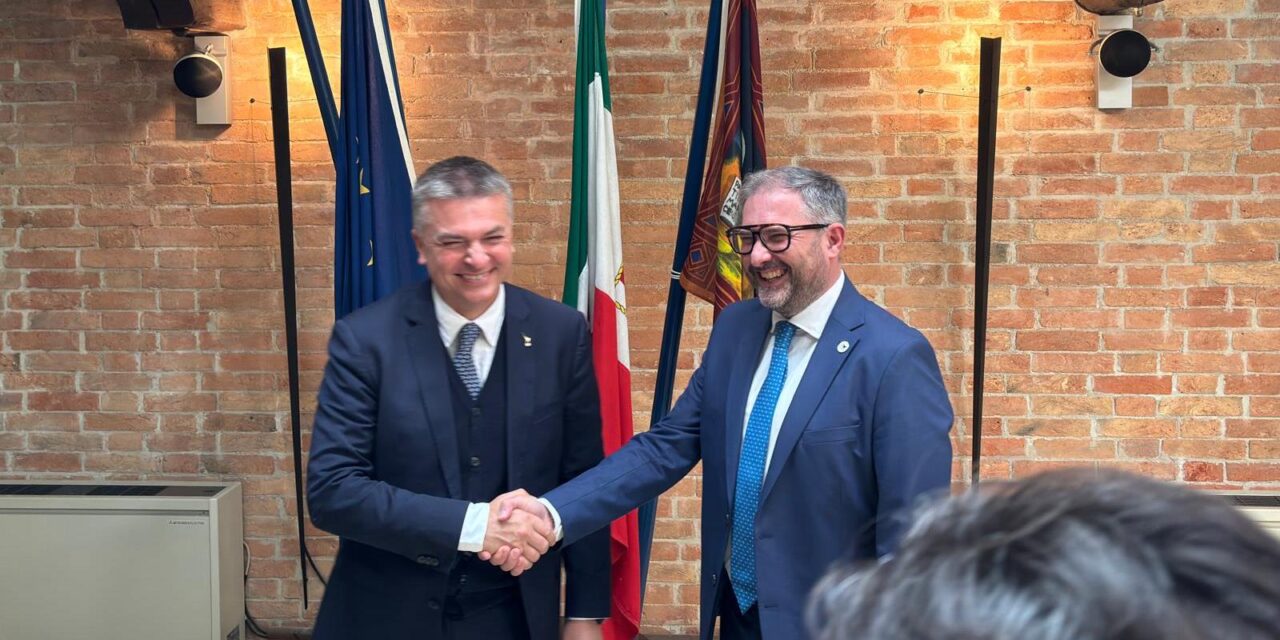
VENICE – «The Port of Venice is not central in national planning, but it is central at the global level. Venice is one of the world’s most sought-after destinations». The words of Deputy Minister for Infrastructure and Transport Edoardo Rixi offer reassurance to the Venetian port community, which can now count — at least verbally — on the Ministry’s support for new investments.
Isola delle “Trezze” and maintenance dredging were the main issues Rixi focused on today during a meeting at the headquarters of the North Adriatic Sea Port Authority (AdSP MAS). The Deputy Minister met port stakeholders including the newly appointed president of the Authority, Matteo Gasparato, Venice Maritime Director Admiral Filippo Marini, the president of the Venice Lagoon Authority, Roberto Rossetto, the president of the Venice Port Community (VPC), Davide Calderan, and the president of Venezia Terminal Passeggeri (VTP), Fabrizio Spagna.
The goal of the meeting was to outline the relaunch and development of the Veneto port system.
«We discussed cruises, lagoon dredging and the reform, reassuring the port community that we will involve them when the reform moves forward and the parliamentary debate opens», Rixi said.
REGULATED PORT
The Deputy Minister also addressed the Mose: «It is a unique port in our country, so much so that I would like to define it (from a regulatory standpoint) as a regulated port, because it has characteristics that no other Italian port has, yet it must contribute to developing a dynamic region like Veneto».
Rixi stressed the centrality of port development: «My concern is that with the European market not growing for years, and with cyclical problems in Germany and France, we will always need maritime development to reach extra-European markets and allow our companies to grow».
Looking to the future — offshore included — Rixi added: «Because companies must not be allowed to shut down», insisting on the need for «national coordination on interventions», which he called «essential to be able to act promptly when tragic situations occur», the rationale driving the reform «in precisely that direction».
DREDGING
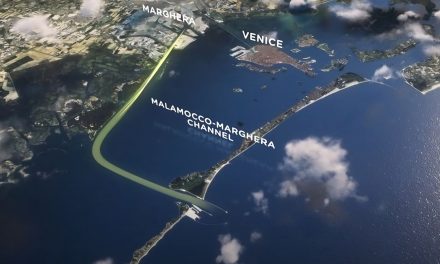
On dredging permits, Rixi clarified that they are not issued by his Ministry: «I would have issued them three years ago, but they are granted by another ministry (Environment) and by other authorities», stressing the need to cut through the «layers of bureaucracy».
He also criticised ideological positions: «Not maintaining dredging, continuing to believe that doing nothing is better. And unfortunately some people in Venice think this way, and it does not help the lagoon».
Looking ahead, Rixi said everyone must understand «that port infrastructure development is necessary not for today, but for future generations, to guarantee them environmental and service quality».
«I would dredge the Vittorio Emanuele canal tomorrow morning», he added, «but I need the authorisations, and I need the work to be done properly, with sediment characterisation completed in record time. No one forbids working on Saturdays and Sundays. I do it — others can do it too».
OFFSHORE
Regarding the long-term idea of an offshore port, Rixi called it a complex option: «Whether the solution will be offshore or something else, we will see». His approach is step-by-step: «Today we struggle to dredge channels that forty years ago were dredged without any issue. I believe we must first simplify things and understand that if this country stops thinking about the future, it risks losing its past as well».
CRUISE SECTOR
On cruises and passenger traffic, Rixi was direct: «Cruise operations in the Upper Adriatic do not exist without Venice. That is the real risk». He also warned: «Even the logistics chains of Veneto’s companies would be placed under severe threat without the port».
For this reason, «we must find solutions that are not driven by ideology. Today we must face the world. I do not agree with those who say we should do nothing — because doing nothing means we are finished».
More broadly, there is a need to «overcome a situation that has become sclerotic and risks preventing the development of an area that, for our country, has been one of the few that became globally central».
Veneto, Rixi said, is «one of the most dynamic regions in Italy». «We cannot fail to let this ecosystem grow — otherwise the national rebound will be devastating. And since the continent is not growing and there are unmanageable issues in Europe, today every good entering or leaving continental Europe travels by sea».