

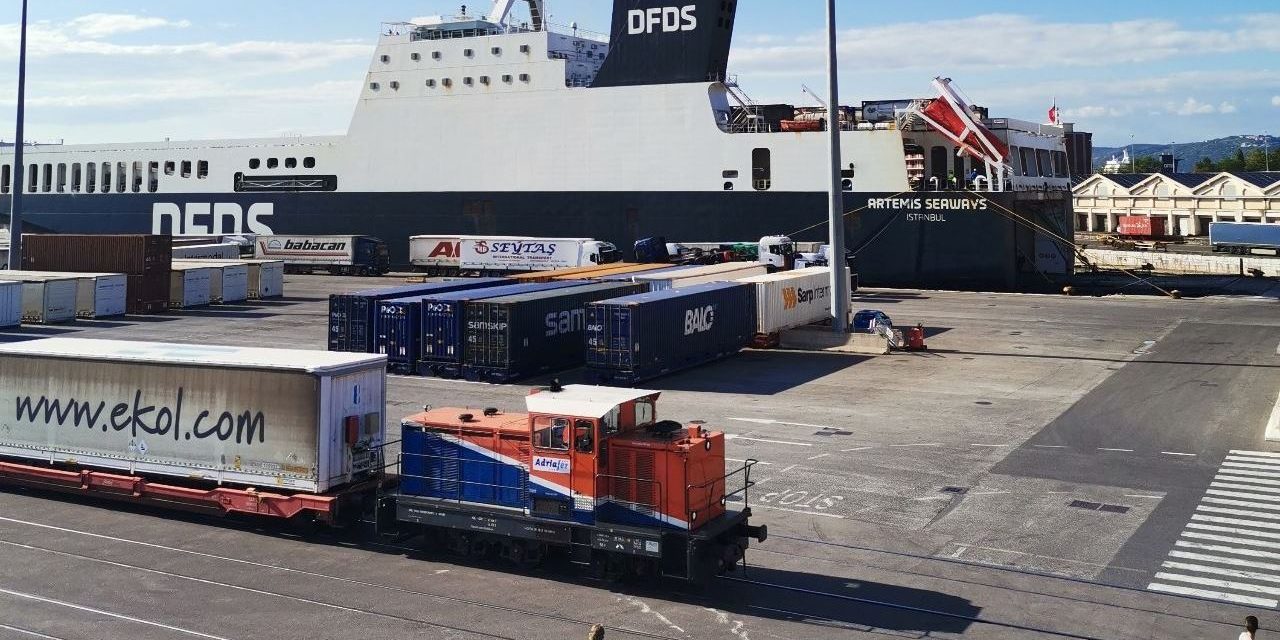
TRIESTE – A transition year for DFDS, which is reorganising its freight and logistics activities and announcing a cost-reduction programme of around 40 million euro with effects expected in 2026.
The plan, released together with the revision of economic forecasts, will also entail around 400 redundancies, mostly among administrative staff, and an extraordinary charge estimated at 13 million euro in the fourth quarter of 2025.
At the same time, the DFDS Board of Directors has initiated the succession process for CEO Torben Carlsen, who will remain in office until the appointment of the new chief executive. At the helm of the group since 2019, Carlsen has overseen key operations such as the acquisition of UN RoRo and the expansion in the Mediterranean, strengthening the European network of intermodal sea and land connections.
The Danish group, which in Trieste plays a leading role in Ro-Ro services along the Motorway of the Sea with Turkey, is also paying the price for the recent competition battle with Grimaldi Group along the same routes.
DFDS’s goal is now to «accelerate the transition towards greater efficiency and competitiveness in an evolving market», said Torben Carlsen, the group’s CEO. EBIT 2025 has been revised downwards to between 80 and 100 million euro, compared with the previous estimates, while adjusted free cash flow is expected at around 120 million euro. The decline reflects in particular the uncertainty regarding the fourth-quarter performance of freight ferry and logistics services in the Mediterranean, including the Trieste–Mersin route.
The group’s chairman, Claus V. Hemmingsen, stressed that the succession is intended «to guide DFDS into the next phase of the 2030 strategy, centred on long-term value creation and the green transition». With annual revenues of around 4 billion euro and more than 16,000 employees, DFDS is one of Europe’s leading logistics and Ro-Ro operators.
The company confirmed that the reorganisation will not affect the operability of strategic freight services, but aims to lay the foundation for a structural improvement in medium-term profitability.