

TRIESTE – The first year of implementation of the FS Group’s 2025–2029 Strategic Plan closes with figures that weigh most heavily on infrastructure and freight: €18 billion invested in 2025 alone, €18 billion of PNRR funds already committed overall, 241 new units delivered, and an industrial programme aimed at supporting more than €177 billion in additional investment by 2034.
On the operational side, more than 35,000 trains were brought back on schedule, with improved punctuality and a strengthening of network capacity focused first and foremost on freight corridors and the main territorial axes.
The industrial plan and financial targets
The update of the Strategic Plan presented in Rome by CEO Stefano Antonio Donnarumma and chairman Tommaso Tanzilli confirms the 2029 financial trajectory: €20 billion in revenues, €3.5 billion EBITDA and an estimated net profit of €500 million. The strategy aims to generate stable long-term value by strengthening the Group’s financial solidity and its ability to sustain an unprecedented volume of investments in scale and impact on national mobility, with direct spillovers on the competitiveness of Italy’s logistics system.
Record investment and progress on worksites
The intensity of investment in 2025—€18 billion—has fuelled progress on projects considered key to freight flows: upgrades on European corridors, new High Speed/High Capacity lines, resilience works and modernisation of the regional network. More rigorous worksite planning is also producing effects on service reliability, reducing bottlenecks and operational interference. Within this framework, the PNRR plays a decisive role: around €7 billion was invested over the past 12 months, bringing the overall share used to €18 billion out of the €25 billion allocated to the FS Group.
The RAB model to support the freight network
To sustain this level of infrastructure spending over time, the Group is pushing for the possible introduction of a regulatory model based on the RAB (Regulated Asset Base), considered essential to provide long-term stability for investments. Before the PNRR, annual spending on the network averaged around €4 billion; the Plan has already raised it to about €10 billion. Post-PNRR, the goal is to consolidate an investment capacity of €12 billion per year, seen as necessary to complete major routes (Palermo–Messina–Catania, Salerno–Reggio Calabria, Naples–Bari) and strengthen the regional network. According to internal estimates, a similar investment intensity could generate a GDP impact of around €18 billion and activate direct and indirect employment for 120,000 people, with clear benefits also for the logistics chain.
Rail network, logistics nodes and corridors
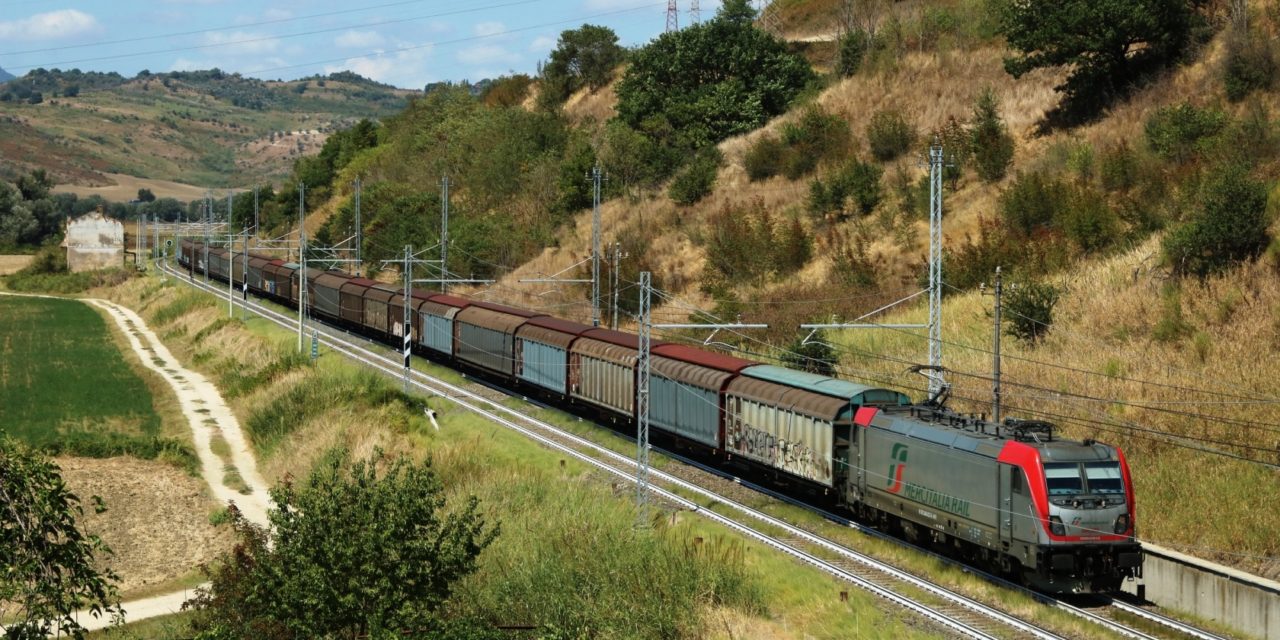
The Rail Infrastructure Business Unit (RFI and Italferr) is at the centre of this transformation. Network modernisation targets greater reliability, safety and capacity: system digitalisation, wider ERTMS rollout, the transformation of stations into intermodal hubs, and accessibility upgrades. For freight, strengthening connections along TEN-T corridors and to ports is a key element: more capacity and greater regularity mean longer, standardised trains that are more competitive than road haulage. In parallel, on the road side, Anas is working on revising industrial processes and digitising worksites—an element that ties into land logistics and connections with terminals and interporti.
FS Logistix and vertical integration in freight
The Logistics Business Unit, led by FS Logistix, continues its transition towards a European freight forwarder model, based on modal integration and direct control of strategic nodes. Among the most significant moves is expansion into logistics terminals, such as the one in Antwerp (Belgium), supporting international flows. Vertical integration along the chain—transport, terminals, forwarding services—is indicated as a lever to make the Group more resilient and competitive in cargo. Work is also ongoing on strategic segments such as construction, rail technology and rolling stock manufacturing, with the aim of better controlling critical factors for the development of the freight offering.
Technology, digitalisation and network capacity
The Technology Plan worth over €20 billion to 2034 is another pillar with a direct impact on freight. Broad network digitalisation, faster ERTMS deployment, predictive maintenance and a national rail connectivity infrastructure are the main axes. On the Turin–Milan high-speed line, between Turin and Greggio, a pilot project has already been completed with 60 kilometres equipped and 41 active sites. A more ‘connected’ and monitored network makes it possible to increase capacity, reduce recovery times in the event of faults and optimise freight train scheduling, currently hampered by congestion and limited operational margins.
Energy, FS Energy and decarbonisation of flows
On the energy front, 2025 marks the creation of FS Energy, the Group’s new company dedicated to procurement and energy efficiency. Contracts have already been signed for 275 GWh per year of green energy, a first step towards the goal of covering 19% of consumption with renewables by 2029 and 40% by 2034. For freight, this means being able to offer rail services with an increasingly lower carbon footprint, in line with the demands of major shippers and European emissions-reduction targets. More centralised energy management also reduces cost volatility, with potentially positive effects on cargo margins.
Operational performance and punctuality
Operational improvements in 2025 confirm the impact of the new industrial organisation. High Speed gains around three percentage points in punctuality, Regional improves by one point and Intercity by three points, with over 35,000 trains brought back on time during the year. A 35% reduction in serious injuries indicates, on the safety side, stronger procedures and prevention technologies. A more stable and safer network is also an essential prerequisite for developing regular and reliable freight traffic, especially along the most congested corridors.
Governance and human capital
The reorganisation launched in 2024 made five Business Units operational, with clearer responsibilities, greater integration between network and operations, and stronger central coordination. On the people side, 2025 saw the launch of Scuola FS, the corporate academy that will activate 10 faculties to develop technical and managerial skills, and the renewal of the national labour contract with an enhanced welfare system. A new leadership model based on integrity, courage and accountability was also adopted, with the stated aim of supporting industrial transformation also from a cultural standpoint.
International growth and European corridors
The Group’s international presence has been consolidated with the full operation of FS International, tasked with coordinating foreign shareholdings in passenger transport. Beyond markets already covered, new projects are being developed on German high-speed rail and on the Paris–Brussels corridor, while the US rail market is being explored. The long-term strategy is to contribute to building a sort of ‘European metro’ integrated and interoperable, with indirect effects also on freight thanks to more connected networks and harmonised technical standards.
Passengers: a growing backdrop
2025 closes with 577 million passengers carried in Italy and 253 million abroad, up 15% on 2024. Trenitalia and Busitalia are working on punctuality, fleet renewal and digital services, with particular attention to the role of regional services in everyday mobility. Passenger growth is the backdrop to the Group’s transformation, but the centre of gravity of the Strategic Plan—by investment volumes and impact on the productive system—remains network modernisation, the development of rail logistics and the strengthening of national and European freight corridors.