

TRIESTE – Despite the high uncertainty of the international context, thanks to shipbuilding Friuli Venezia Giulia is posting double-digit export growth.
In the first nine months of 2025, the value of overseas sales by companies in Friuli Venezia Giulia reached almost €16 billion, compared with €13 billion in the same period last year. The increase—nearly €3 billion (+22.5% in relative terms)—was the highest among all Italian regions. Nationwide, the change stood at +3.6%, while in the North-East growth was +1.9%, reflecting opposing dynamics: Trentino-Alto Adige -1.5%, Veneto -0.6%, Emilia-Romagna +0.5%.
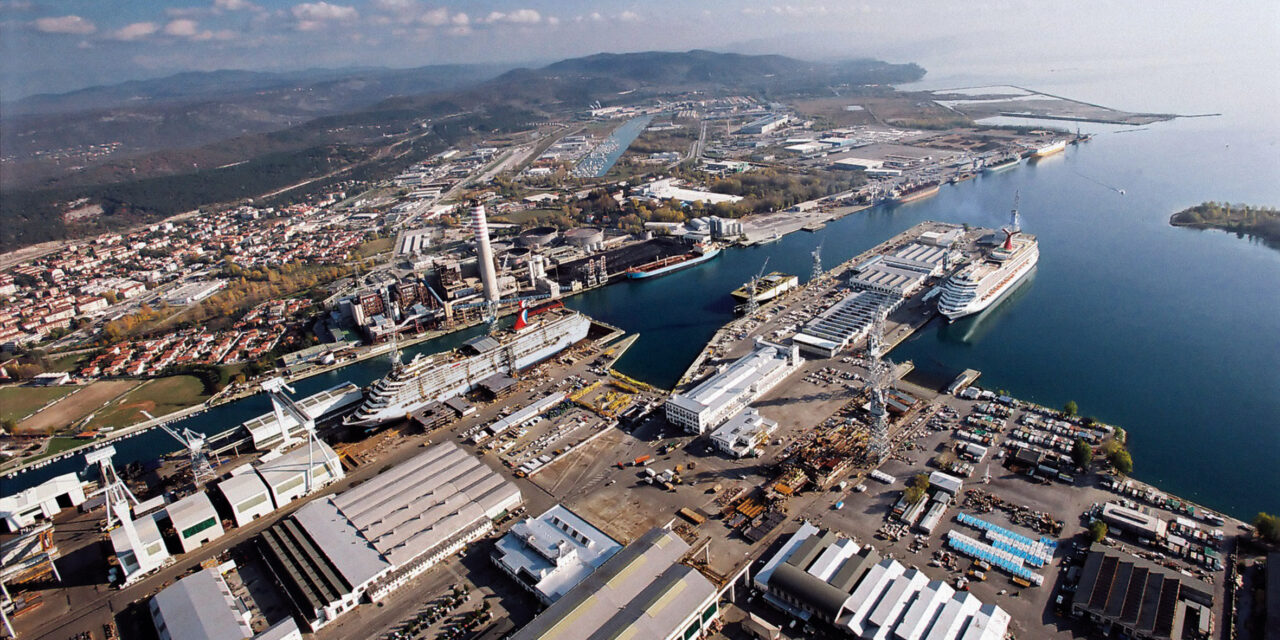
The positive result was driven by shipbuilding, which, as is well known, is characterised by high variability in exports over time. In the first nine months of last year, sales of ships and boats totalled just over €1 billion, while in the same period of 2025 they came close to €3.7 billion (an increase of 245.6%). Even excluding this segment, regional exports would still remain slightly positive (+2.6%).
At territorial level, the increase recorded in shipbuilding is entirely attributable to the province of Trieste (+118.7%); for this reason, the Isontino area shows a slight decline (-1.3%). The province of Udine records an increase of +2.3%, while Pordenone posts a more positive result (+6.4%).
As for the geographical destinations of exports by regional companies, there is also strong growth in flows to Germany (+55.3%) and the United States (+67.5%), precisely thanks to shipbuilding (the attribution depends on the company’s reference country). Among the main partner countries, a noteworthy decline is reported only for Poland (-6.8%).
The other main specialised sectors of Friuli Venezia Giulia’s economy generally show positive results in terms of overseas sales: this is the case for machinery and equipment (+7.6%), furniture (+6.9%), food and beverages (+8.6%) and electrical equipment (+12.6%). Metallurgy is more stable (-1.8%), while the sector including computers, electronic and optical products shows a sharp contraction (-46.5%, linked to the Giulian area).
The research was provided by Ires Fvg (Alessandro Russo), processing ISTAT data.