

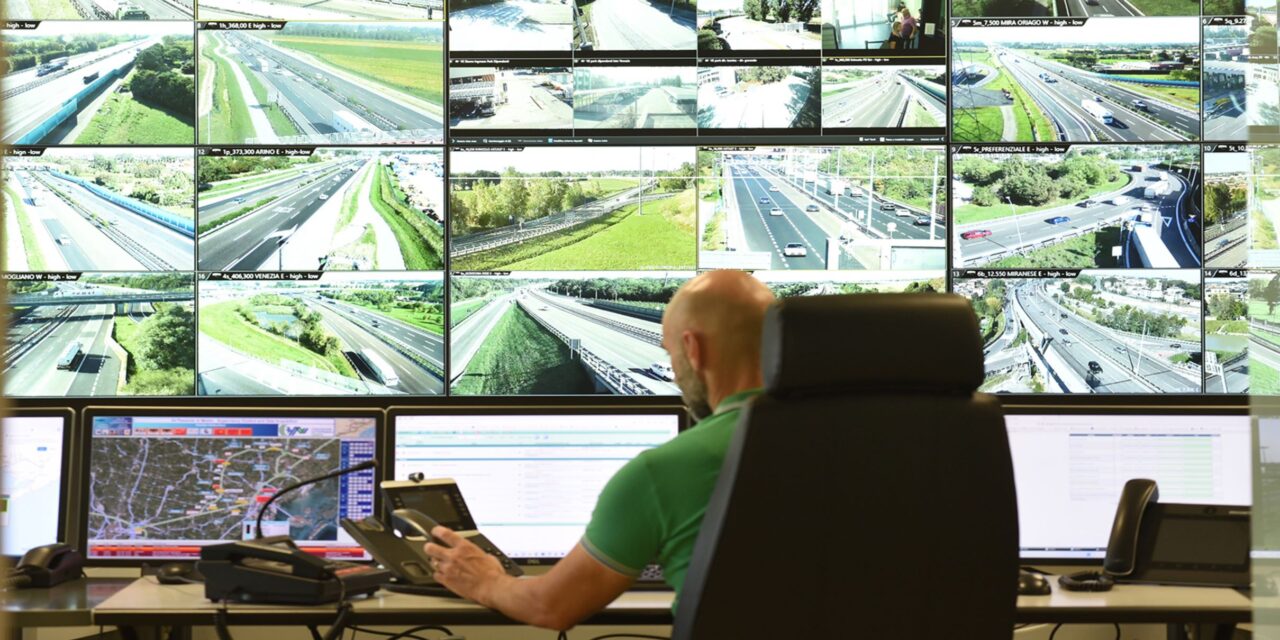
TRIESTE – The new year opens with a motorway toll increase that directly affects the North-East, one of the country’s busiest and most strategic areas.
According to the schedule released by the Ministry of Infrastructure and Transport, as of 1 January an average 1.5% tariff adjustment takes effect for concessionaires engaged in updating their Economic and Financial Plans. A “standard” band affecting several key routes for the flow of people and goods across Veneto, Friuli Venezia Giulia and Emilia-Romagna.
The increases concern in particular the A4 Brescia–Padova, the network managed by Autostrade per l’Italia—including the A13 Padova–Bologna, A27 Venice–Belluno and A23 Udine–Tarvisio—and the infrastructure run by CAV – Concessioni Autostradali Venete, which manages the Padova–Venice corridor. These links are essential for commuter and tourist traffic, as well as for the logistics of a strongly export-oriented area.
A slightly lower adjustment is planned on the Brenner motorway. Autobrennero has confirmed a 1.46% increase on the A22, in a specific context tied to the expired concession and the re-awarding procedure still under way. Here too the impact is significant, as it is one of the main corridors connecting with Central Europe.
The 2026 tariff framework stems from the application of the criteria defined by the Transport Regulation Authority, which is responsible for the toll-update mechanisms within regulatory periods and the Economic and Financial Plans of concessions. The Ministry said that, in light of this regulatory framework, the adjustments fall within the ordinary procedures envisaged for the companies concerned.
On the toll issue, Trasportounito also stepped in, reiterating its opposition to any national-level increase. According to the association, authorising average rises of around 1.5% in a situation of widespread roadworks and structural disruption for hauliers would be an unacceptable signal.
Secretary General Maurizio Longo stressed that haulage companies have been paying for years the effects of delayed maintenance and a network that is often congested, with direct consequences on costs, times and productivity. Trasportounito also recalls promises of a freeze on increases and questions the idea of linking rises to the updating of concessionaires’ economic and financial plans, asking who should bear the costs of the damage for a sector that moves around 80% of the country’s goods.