

TRIESTE – Over the course of 2025, the ports of Venice and Chioggia posted a positive performance: total volumes of 26 million tonnes (almost 1.3 million tonnes more than in 2024).
Growth was driven above all by Porto Marghera, which reached 25,289,943 tonnes (+4.9%), while Chioggia recorded an increase of 10.7%, albeit with much smaller volumes (under one million tonnes).
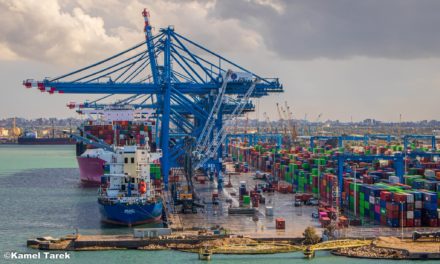
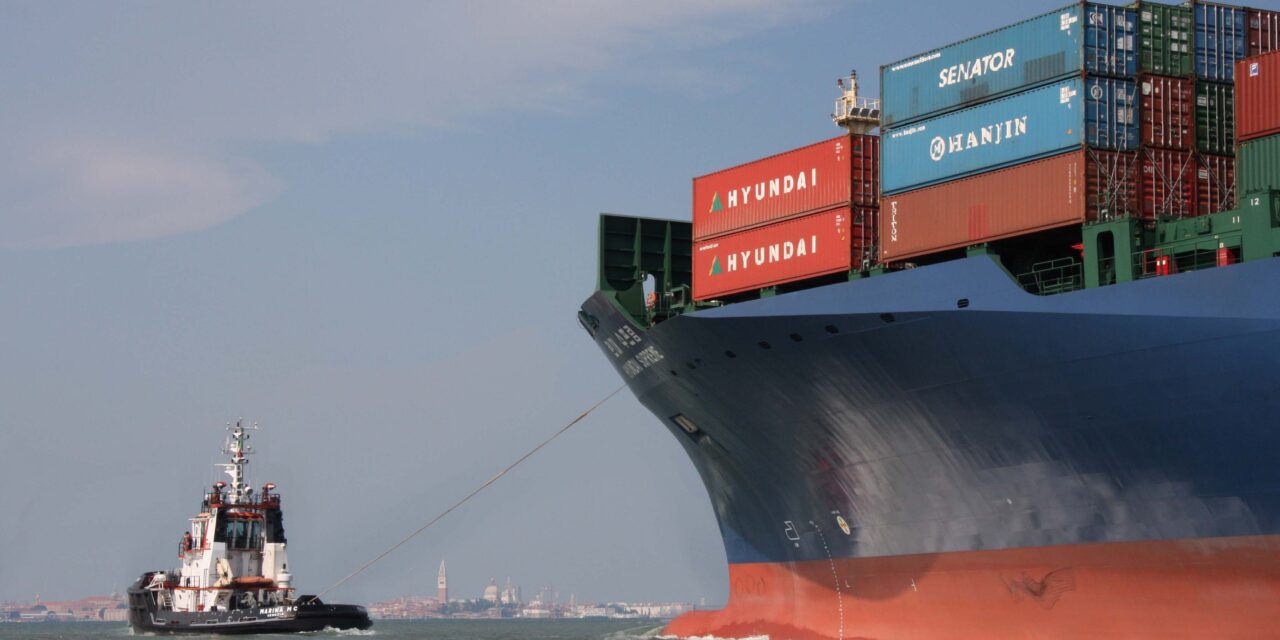
In the container segment in Venice, the 500,000-container threshold was comfortably exceeded (more precisely 532,762 TEU, according to the statistics released by the Port System Authority), equal to an 11.2% increase compared to 2024. Ro/Ro traffic remained stable overall, standing at 2,361,293 tonnes and 108,777 units handled (+0.9%) in Porto Marghera;
Solid bulk volumes also rose sharply, reaching—despite the decline recorded in Chioggia—almost 8.3 million tonnes overall. In particular, in Venice there was a 42.5% increase in cereals, a slight dip in animal feed and oilseeds (for a volume of over 1,530,822 tonnes) and a positive result of 23.1% (for a total of 2,373,758) in the minerals, cement and lime sector;
Liquid bulk, concentrated in Porto Marghera, recorded a slight decline (-1.9%), closing 2025 at 6,988,710 tonnes.
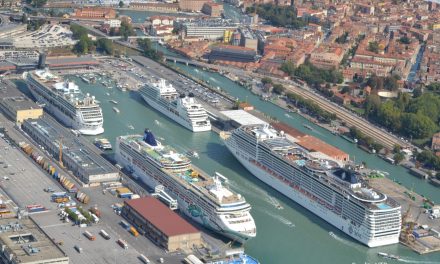
The cruise sector was also very positive. Following the introduction of Decree-Law No. 45 of 1 April 2021, converted into Law No. 75 of 17 May 2021, cruise traffic had been virtually wiped out. Four years on, however, 2025 closes with an overall increase of +3.4% (617,454 passengers welcomed across the ports of Venice and Chioggia) compared to the previous year. Cruise traffic saw Venice confirm its appeal (584,284 passengers in 2025, up 6.7% versus 2024), while Chioggia registered a decline, a port that needs further infrastructural and operational upgrades to establish itself as a destination for mid-sized and, above all, small-ship cruises.
«The figures released by the Northern Adriatic Sea Port System Authority are decidedly positive. Proof, if any were still needed, that the economy revolving around the port of Venice is essential for the area—Venice and the Veneto, but also the country as a whole». This was the comment from Davide Calderan, president of the Venice port community (VPC).
Results which, for the VPC president, do not come by chance. At the base are the investments carried out by terminal operators and the Port System Authority. Calderan points in particular to projects already underway, such as the new island for dredged-material management, and those outlined in the inaugural address of the new president Matteo Gasparato. The goal is a modern, technological, environmentally attentive port capable of attracting traffic and generating jobs, with direct spillovers across the country. In this context, the Port Community reiterates its willingness to do its part.
Calderan then highlights the relationship between port and city. Without the port, he argues, Venice risks being overwhelmed by tourism that is hard to manage. Enhancing the port sector also means preventing the city from being reduced to a simple museum. The port and Venice, he recalls, have always been inextricably linked. In recent years the narrative has changed, but now is the time to rebuild that bond, focusing on work and planning. Without work, he adds, there can be no resident population. Hence the call to move past instrumentalisation and put operators in a position to work, in the interest of the city, the lagoon and the community.
On the planning front, the VPC president finally takes stock of the path launched after Deputy Minister Rixi asked for cooperation in defining the concept of a ‘regulated port’. A meeting is expected soon with the leadership of the Port System Authority, the Harbour Master’s Office and the Lagoon Authority.