

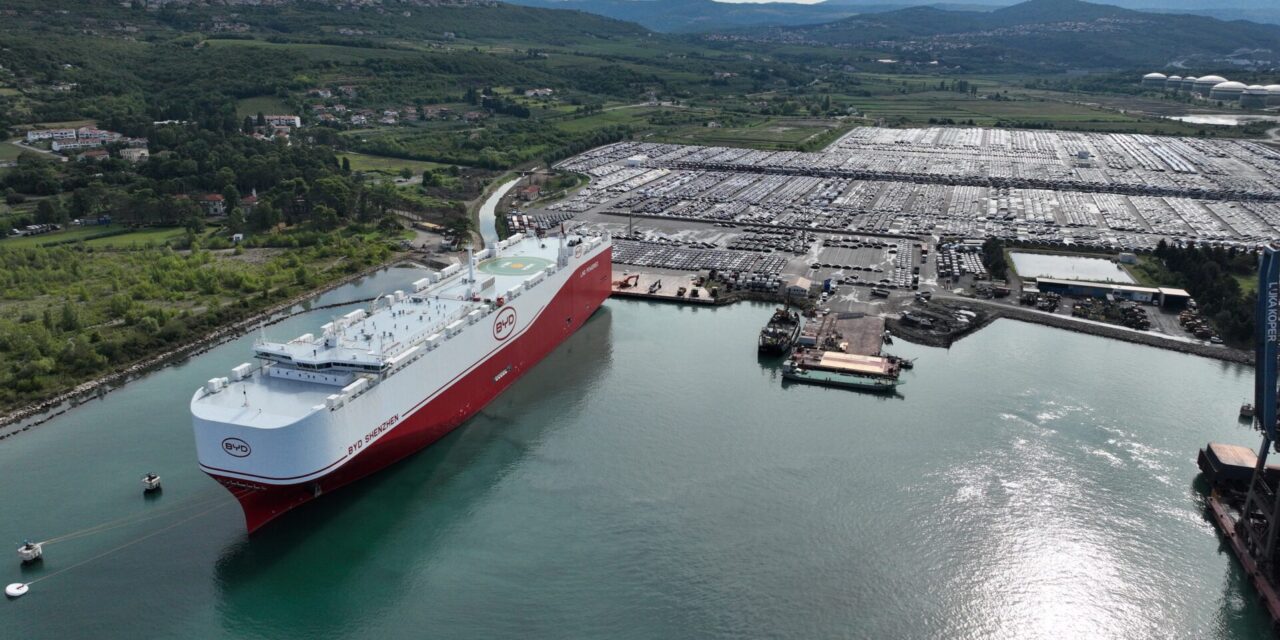
TRIESTE – The Slovenian government has approved a draft law to ratify the International Convention for the Control and Management of Ships’ Ballast Water and Sediments.
The legal step had been expected for years and introduces a regulatory and institutional framework for inspecting foreign vessels calling at the country’s ports.
The ratification marks a turning point, as it allows Slovenia to equip itself with tools that were previously missing. Ballast water is in fact one of the main vectors for the introduction of alien species, pathogens and harmful substances into the marine environment, with potentially irreversible effects on ecosystems and direct economic impacts. In a small and fragile basin such as Slovenia’s, the risk is amplified, making prevention a priority.
The measure has been prepared over several years, also due to the complexity of the required division of responsibilities. Implementation of the convention will be entrusted to the Ministry of Natural Resources and Spatial Planning, working with the support of other ministries and technical and inspection services to ensure coordinated and more effective controls to protect the marine environment and biodiversity.
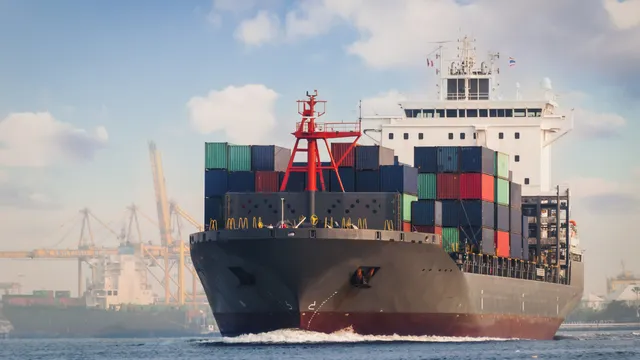
Until now Slovenia was not a party to the convention and lacked the so-called “conventional tools” to request and systematically verify from foreign vessels the International Ballast Water Management Certificate, an approved ballast water management plan and ballast water record book, as well as to carry out targeted inspections. With ratification, the state gains the legal basis to require compliance with international standards and to activate control and sanction mechanisms.
A structural limitation remains, however. Slovenia does not have terminals equipped with facilities for treating, cleaning or repairing ballast tanks. As a result, vessels calling at Slovenian ports cannot discharge ballast water for treatment nor carry out work on the tanks. After the law enters into force, the country will officially inform the relevant international maritime authorities of this situation.