

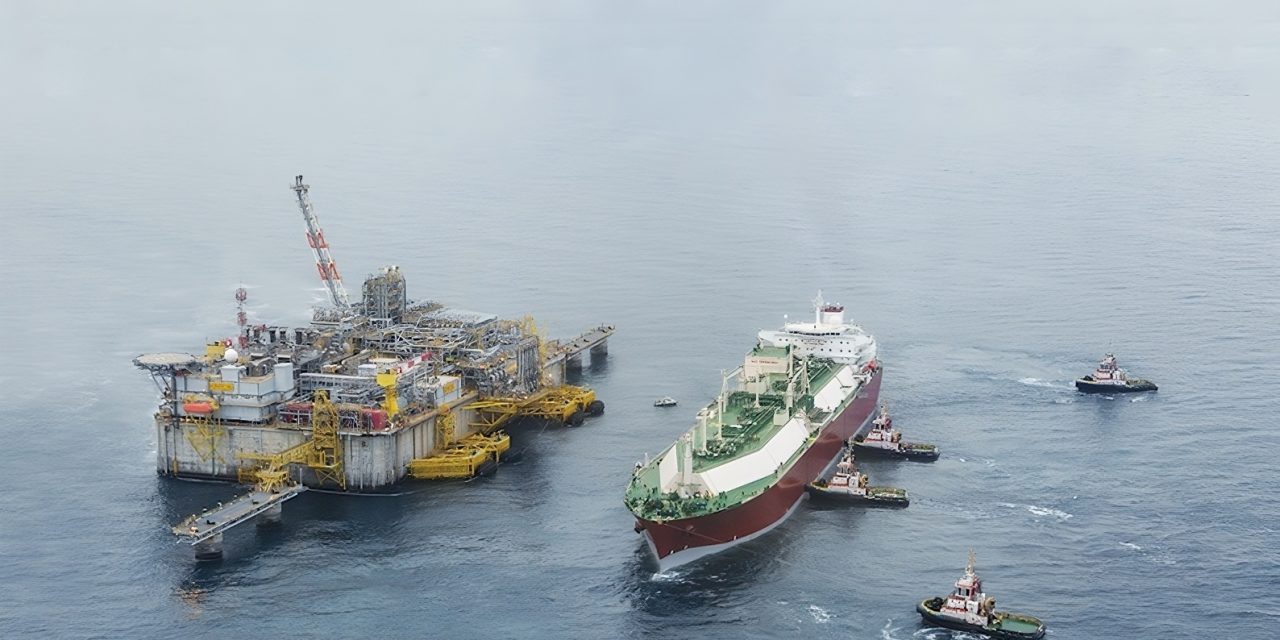
TRIESTE – In 2025, the offshore terminal off Porto Viro (Rovigo) once again confirmed its role as one of Italy’s main gateways for liquefied natural gas. The 8.2 billion cubic metres regasified account for more than 13% of national consumption, a result achieved despite a one-month shutdown for scheduled maintenance and capacity-upgrade works.
In a year marked by LNG’s growing share in Italy’s energy mix, more than 40% of the country’s total imported LNG volumes passed through the Veneto plant. A figure that further strengthens the terminal’s position as Italy’s leading entry point for liquefied gas.
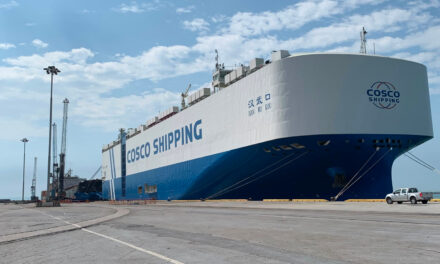
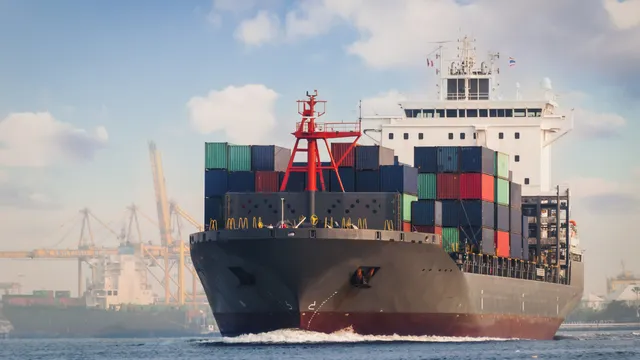
Over the course of 2025, 71 LNG carriers called at the terminal, mainly from Qatar and the United States, as well as from North Africa and South America. A large share of these vessels belonged to the Q-Flex class, among the world’s largest LNG carriers. Adriatic LNG is the only Italian terminal able to accommodate this type of ship, delivering advantages in terms of logistical efficiency and cargo optimisation.
On the infrastructure side, the project to increase the terminal’s baseline regasification capacity has been completed, raising it from 9 to 9.5 billion cubic metres per year as of 2026. Maximum daily capacity increases from 26 to 28.5 million cubic metres. The additional 0.5 billion cubic metres have already been fully allocated through December 2045.
“The increase in regasification capacity to 9.5 billion cubic metres per year will allow us to manage more flexibly an infrastructure that already has one of the highest utilisation rates in Europe,” said Alfredo Balena, Adriatic LNG’s Director of External Relations. “Our priority is to ensure a steady flow of energy, delivering operational reliability. In a European context where LNG is taking on a growing role, diversifying sources is crucial to strengthening the security and stability of the energy system.”
Since operations began in 2009, the terminal has received more than 1,215 LNG carriers and injected over 110 billion cubic metres of gas into the national grid, with supplies sourced from more than ten countries.