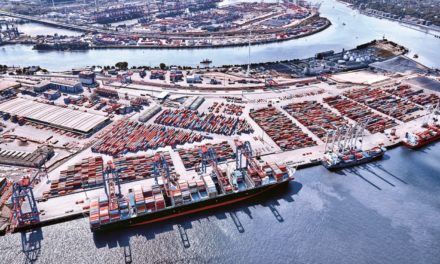


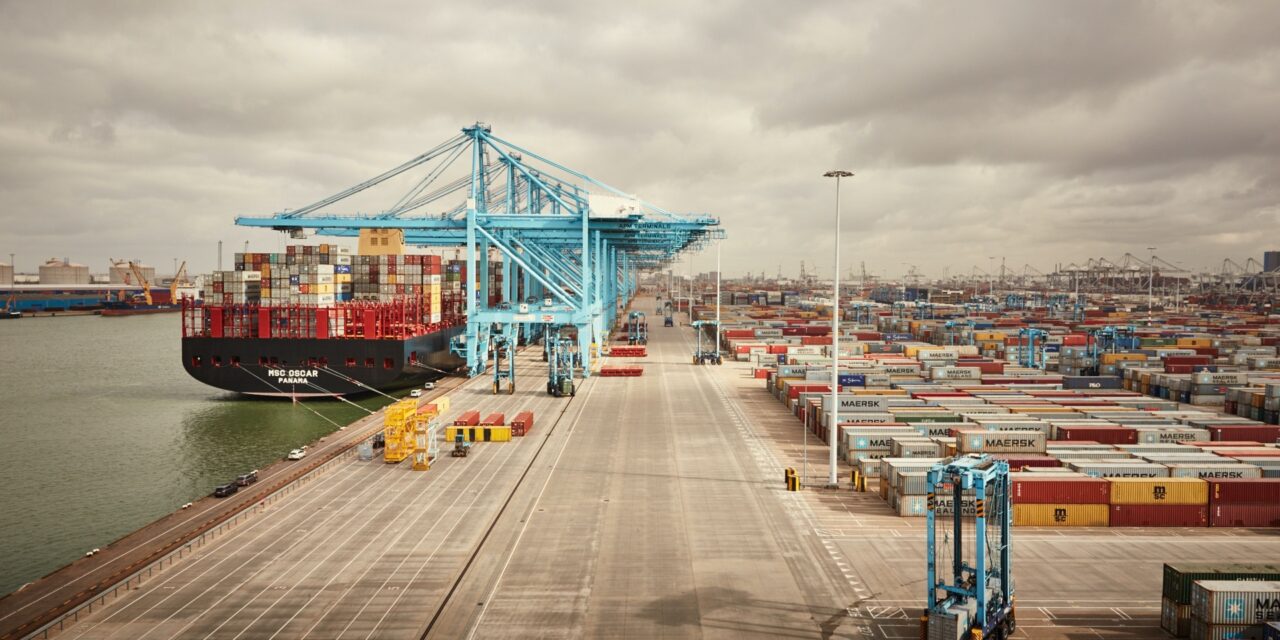
TRIESTE – The Port of Rotterdam ended 2025 with 428.4 million tonnes, down 1.7%, but with 14.2 million TEU handled, up 3.1%. In recent weeks, however, operators’ attention has focused on the impact of bad weather and delays in inland connections.
Official figures released yesterday by the Port of Rotterdam Authority show total throughput falling from 435.8 to 428.4 million tonnes between 2024 and 2025. The decline mainly concerns certain bulk segments, while container volumes in TEU rise from 13.82 to 14.245 million. In tonnes, however, container volumes are slightly down.
On the nautical side, according to the Harbour Master’s official 2025 figures, vessel calls fell from 27,617 to 27,384, while inland vessel movements increased from 91,356 to 93,680. From 1 April 2026, new speed limits will also enter into force in the Erasmusbrug area, along the urban stretch of the Nieuwe Maas. It is a safety measure, but it may affect transit times along the city’s river corridor.
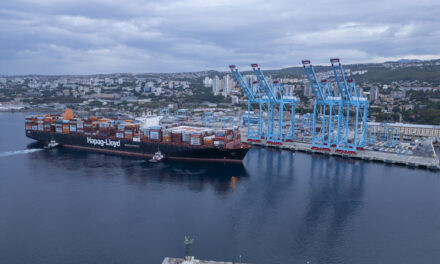
In the short term, however, the dominant factor has been the weather. In late January, Maersk and Hapag-Lloyd reported storms and snowfall in Western Europe, with vessels forced to slow down or seek shelter and terminals operating at reduced productivity. Reuters also reported the carriers’ statements on the effects of the disruptions on cargo flows.
The consequences also spilled over to Rotterdam. A weekly operational update by Kuehne+Nagel reported, in mid-February, an average vessel waiting time of around 1.28 days over the previous seven days. The same bulletin mentioned delays of between 12 and 48 hours on the “second modality”, meaning onward connections by barge, rail or truck.
A sector analysis, meanwhile, reported berthing delays of three to five days during the most critical phase of the bad weather. Another variable is yard saturation. In early February, some operational analyses pointed to very high density levels at Maasvlakte II, with possible restrictions on the pick-up and return of empty containers. In this case too, these are operator insights rather than official port communications, but they are consistent with a picture of concentrated arrivals after weather-related delays.
Overall, the official 2025 figures describe a port with slightly lower total volumes but a growing container component. In the short term, the operational tensions observed between late January and mid-February are mainly linked to bad weather and bottlenecks in inland connections. How vessel waiting times and yard density evolve over the coming weeks will indicate whether this was a temporary spike or a more structural signal for Q1 2026.