

TRIESTE – No legal closure of the Strait of Hormuz, but maritime traffic is virtually at a standstill after a series of incidents and attacks between 4 and 6 March.
Over the past forty-eight hours the situation in the Strait of Hormuz has deteriorated rapidly from an operational standpoint, despite the absence of any formal declaration closing the route. Major maritime-security sources indicate that commercial traffic has fallen to minimal levels and that companies are avoiding the area due to the high risk of attack.
According to the Joint Maritime Information Center, the threat level for shipping has been confirmed as “CRITICAL”, meaning the probability of an attack is considered almost certain. In the twenty-four hours preceding the latest update from the monitoring centre, only two commercial transits were recorded through the strait, both cargo vessels and not tankers.
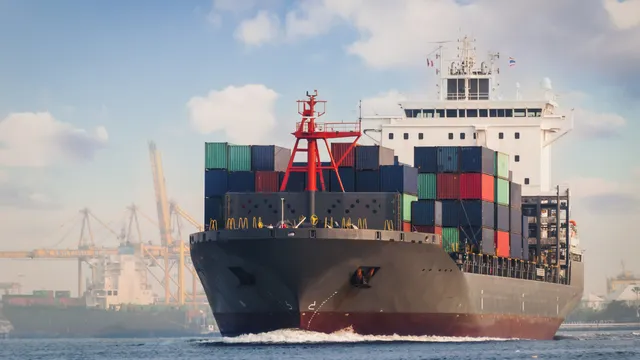
Data collected by Reuters indicate that tanker traffic fell to zero by 4 March, after 37 daily transits were still being recorded on 27 February. This means the route has not been formally closed, but a de facto shutdown has emerged due to military risk and soaring insurance costs. Between 4 and 6 March, at least four episodes involving commercial vessels were reported in the Persian Gulf and strait area. The first occurred on 4 March off Dubai, where the master of a container ship reported a “splash” in the water caused by a projectile of unidentified origin near the vessel. No damage or injuries were reported.
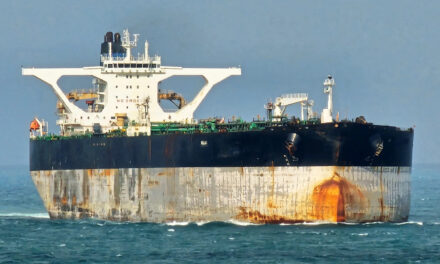
A few hours later, also on 4 March, the Maltese-flagged vessel Safeen Prestige was hit above the waterline while transiting the strait. The impact triggered a fire in the engine room and the crew abandoned the unit. All seafarers were evacuated without injuries and no spills were reported.
During the night between 4 and 5 March, an explosion was reported on the crude tanker Safeen Prestige, anchored about thirty nautical miles from the Iraqi port of Khor al Zubair. According to information released by the vessel’s operators, the unit was in ballast and was not carrying oil. The explosion caused water ingress in a ballast tank and a possible breach in the hull, but there were no casualties and no pollution. Sources reported a small craft approaching shortly before the explosion, but the attack vector has not been identified.
On 6 March, a tugboat was also reported to have been hit by projectiles of unknown origin about six nautical miles north of Oman, again in the strait. Available information does not yet indicate the unit’s name or the extent of the damage.
Beyond direct threats, navigational risks are also increasing. NAVAREA warnings (urgent messages containing critical safety-of-navigation information) reported an unlit buoy in the southern Gulf and, above all, the presence of the abandoned Safeen Prestige in the strait, with precise coordinates, creating an additional hazard for vessels transiting the area.
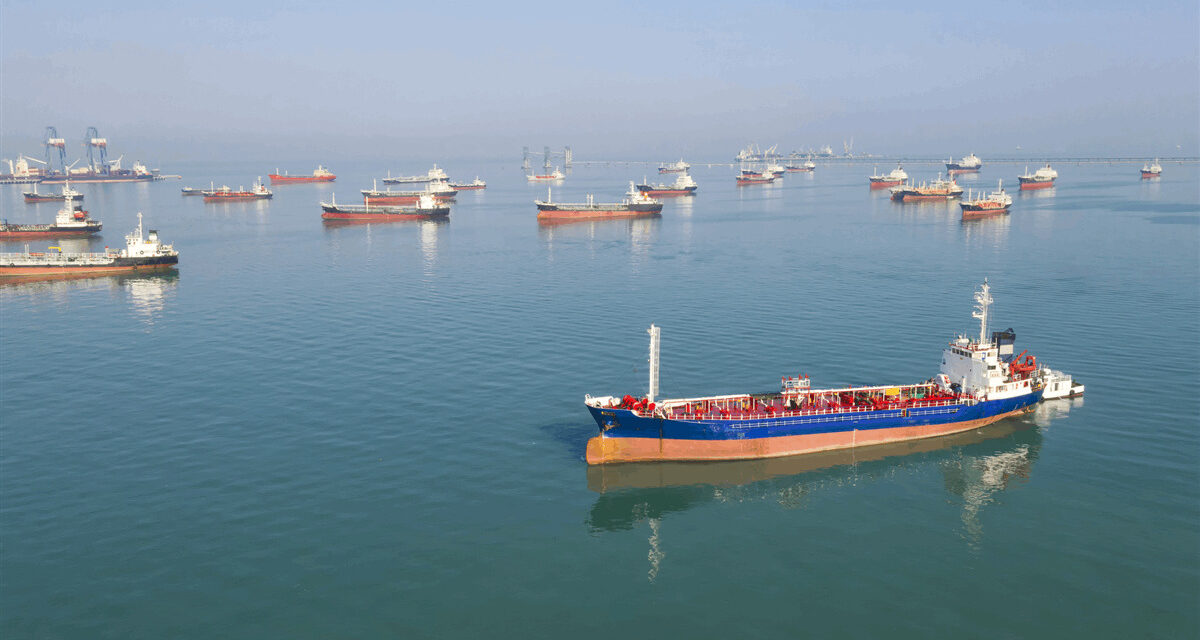
The operational picture is further worsened by interference with satellite navigation systems and AIS transmissions reported in the region. In an area already congested with vessels at anchor or awaiting instructions, these issues increase the risk of collisions or manoeuvring incidents. The combined effect of military threats, operational risks and insurance is pushing many shipowners to suspend transits. War-risk premiums have risen rapidly and, again according to Reuters, in some cases have exceeded 3% of the vessel’s value, with costs per voyage that can reach several million dollars.
At the political level, mixed signals are emerging. On the one hand, US sources have indicated the possibility of launching naval-escort missions for commercial ships, although the activation of regular convoys has not yet been reported. On the other hand, an Iranian representative publicly stated that the strait has not been closed and that there is no intention to close it for the time being.