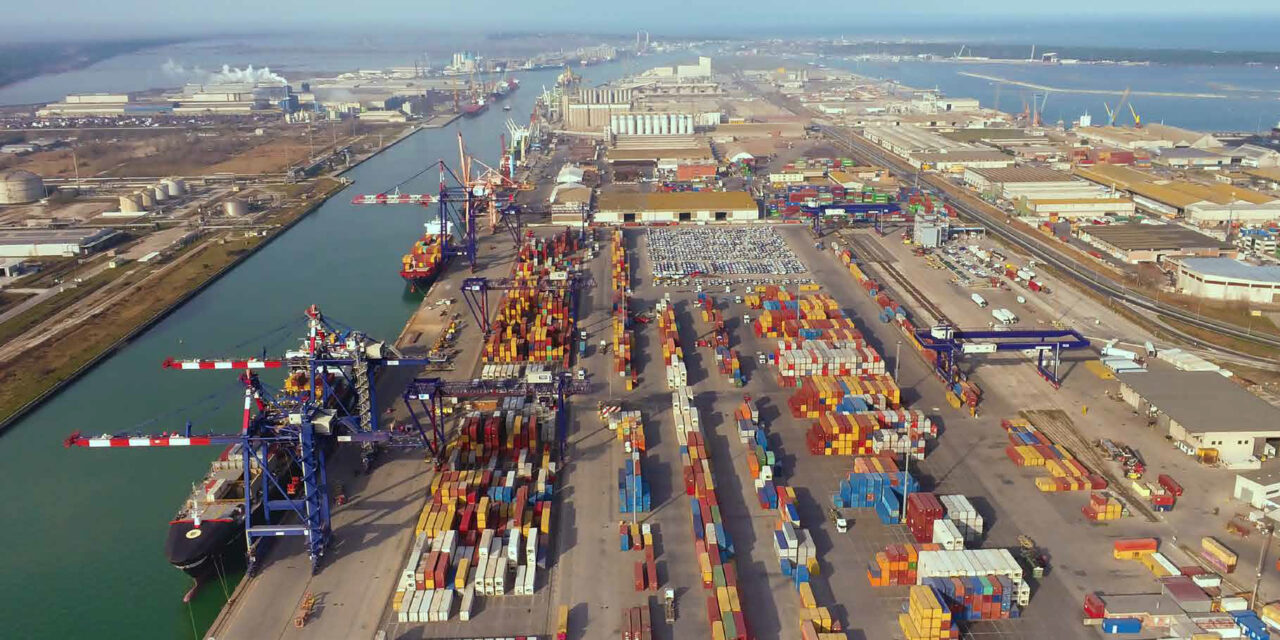


TRIESTE – Italy’s port reform is ready to begin its parliamentary process in the Chamber of Deputies, after receiving clearance from the State Accounting Office.The aim of the law is to combine local autonomy with a unified strategic vision for the national logistics system. This was announced by Deputy Minister for Infrastructure and Transport Edoardo Rixi, speaking in a message to the event “The Adriatic as a hinge between east and west. How emerging economies look at the Mediterranean”, currently taking place in Bari.
The measure, he explained, will represent a moment of discussion between institutions, public and private operators and local territories, with the aim of building a port system capable of competing on international markets. The Government’s line is to defend local autonomy while at the same time strengthening central coordination capable of maximising the efficiency of the logistics chain.
This is considered a crucial step to enable Italy to intercept trade flows from emerging markets and strengthen its maritime projection in the Mediterranean and beyond. At the same time, talks are under way with strategic countries such as Turkey, Egypt and Algeria to develop both passenger and commercial traffic. In an international context marked by tensions, particularly on the energy and hydrocarbon front, the Italian port system will have to focus on resilience and flexibility in order to adapt to geopolitical changes and new traffic routes. Among the pillars of the reform indicated by the deputy minister are also the digitalisation of processes, the strengthening of cybersecurity and the increase of control and surveillance systems in ports, elements considered essential to guarantee efficiency and security.
On the same line, Assoporti president Roberto Petri described the bill as “a great opportunity for the entire sector”. According to Petri, the reform could help address some structural critical issues, starting with the investments needed for last-mile works, which are essential to improve integration between ports and transport networks. Among the priorities highlighted is also the need for centralised planning, through multi-year plans capable of clearly identifying the strategic interventions needed to make Italian ports more competitive.
Another issue concerns the harmonisation of tariffs and procedures, which today often differ from port to port, with the aim of simplifying the system and making it more attractive as a whole. Finally, Petri stressed the urgent need to accelerate administrative processes through digitalisation and to launch a National Dredging Plan, essential to guarantee port accessibility and support traffic growth. In this framework, the reform emerges as a key step in the relaunch of Italian ports, which are called upon to play an increasingly central role in global logistics dynamics and in the new economic balances of the Mediterranean.
Port reform, parliamentary process starts in the ChamberMore national coordination and investment in logistics, digitalisation and international links