

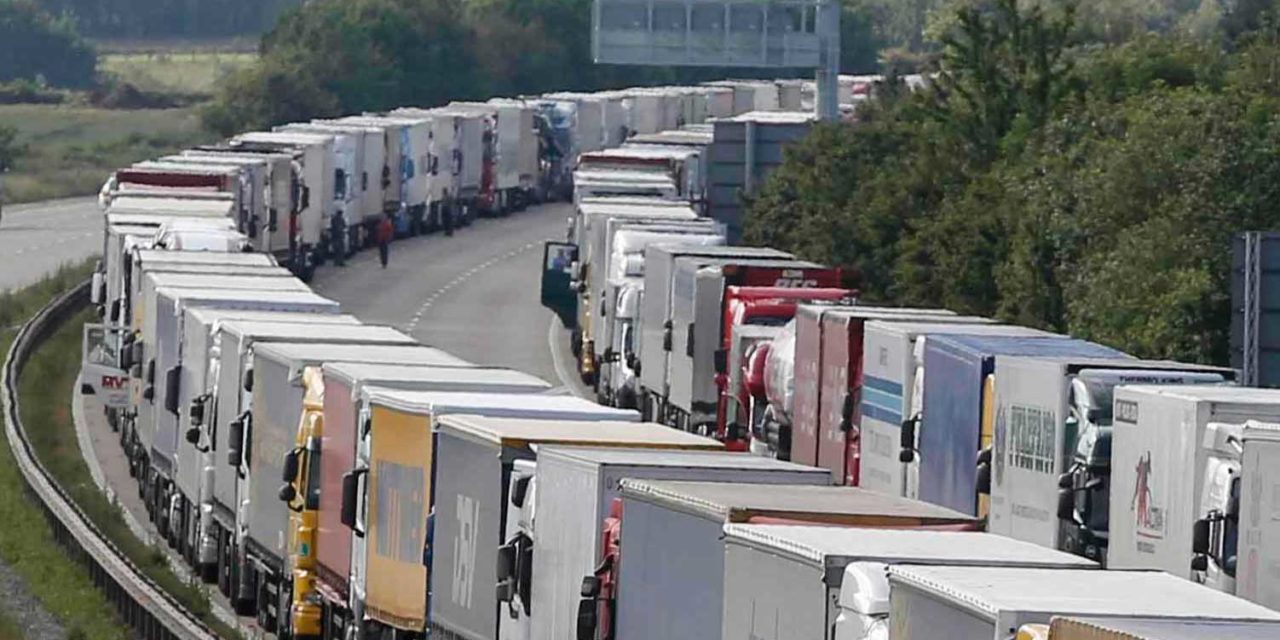
TRIESTE – The government of the Land of Tyrol is again pushing on traffic management along the Brenner corridor: a “slot” model has been proposed for heavy goods vehicles travelling between Italy and Germany. The initiative comes ahead of the ruling by the European Court of Justice on the traffic restriction system and aims to introduce a booking mechanism by time slots, similar to those already used in other service sectors.
“We are renewing our proposal for intelligent traffic management along the Brenner axis. This is our contribution to Italy and Germany: a slot system can replace border metering, reducing congestion on Tyrolean and German motorways”, governor Anton Mattle told the Tiroler Tageszeitung.
According to transport councillor René Zumtobel, the cross-border working group has confirmed the legal and technical feasibility of the project. The final report, not yet published, provides for the corridor to be divided into three areas: Lower Inn Valley, Brenner/Upper Eisack Valley and Eisack Valley/Adige Valley. Slots would have to be booked within 48 hours of transit for vehicles over 7.5 tonnes, with restrictions only on critical days. Local vehicles and those carrying perishable goods would be excluded from the system, while tolls would remain unchanged. The mechanism would be financed through penalties for unused bookings and sanctions for violations.
In parallel, the Land of Tyrol has also confirmed the reinstatement of transit bans on secondary roads from 1 May. The measure, already applied in previous seasons, will remain in force until 1 November in the areas of Innsbruck, Imst and Reutte, with the aim of countering diversion traffic by heavy goods vehicles.
The bans will apply on weekends, public holidays and long weekends, between 7 a.m. and 7 p.m., with checks by law enforcement authorities. Residents and local traffic will be exempt. According to governor Mattle, the measure is intended to “protect municipalities along the busiest routes by diverting transit traffic onto the main arteries”. During the winter season, the system already led to more than 411,000 vehicles being turned back.