

TRIESTE – Trieste and Monfalcone must remain at the centre of national strategies on ports, energy and logistics. This was the message delivered by Undersecretary at the Ministry of Economy and Finance Sandra Savino, as she entered the debate on port reform and the future of infrastructure development in Friuli Venezia Giulia.
According to Savino, the Upper Adriatic system represents an “ecosystem” in which ports, industry, rail and energy are closely connected and decisive for the competitiveness of the region and the country. The reference comes as Parliament prepares to address the issue of national port reform and the governance structures of the Port System Authorities.
For the undersecretary, the future reform will have to strengthen the national strategic vision without compromising the operational autonomy of the ports. This is considered a decisive step especially for Friuli Venezia Giulia, where the port system of Trieste and Monfalcone has built over the years a management model often cited as a benchmark in Italy.
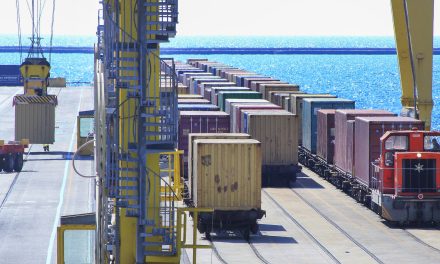
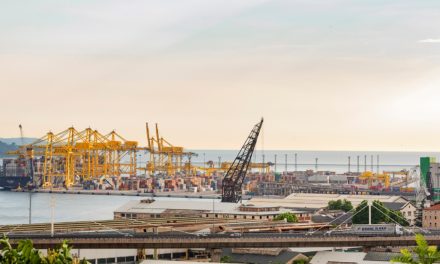
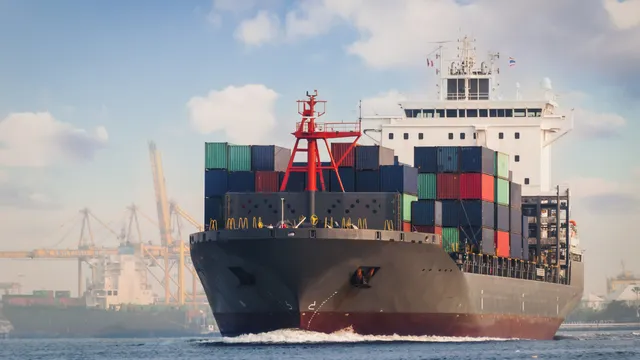
In her remarks, Savino also referred to the expansion project for Pier VIII in Trieste, regarded as one of the key investments for the future of the Julian port and for the strengthening of the regional logistics platform. The project, designed to increase container capacity and rail-port integration, is seen as part of a broader strategy based on intermodality, rail connections and industrial development.
Alongside port infrastructure, Savino underlined the role of the Customs and Monopolies Agency, also in light of the new ADM Regional Directorate, described as an essential outpost for supporting the growth of commercial traffic, speeding up procedures and ensuring security in controls.
The reference to Monfalcone instead concerns the path linked to energy projects and the transition, a topic that in recent months has gained increasing weight in the regional economic debate. Savino also linked energy development to the return of cruise traffic to Trieste, seen as evidence of the area’s ability to attract investment and new economic activities.
According to the undersecretary, the challenge for Friuli Venezia Giulia remains that of turning the strategic geographic position of the Upper Adriatic into a stable lever for economic and productive development, focusing on management autonomy, administrative simplification and integration between sea, rail, energy and the industrial system.