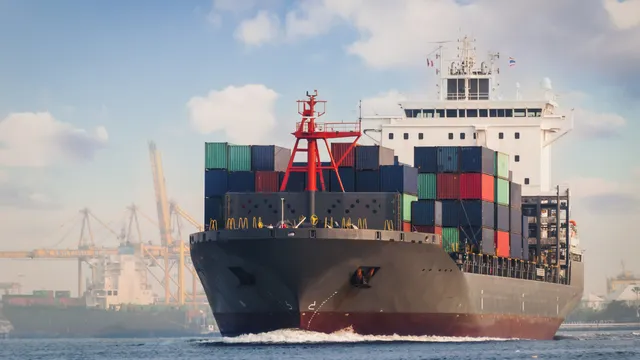


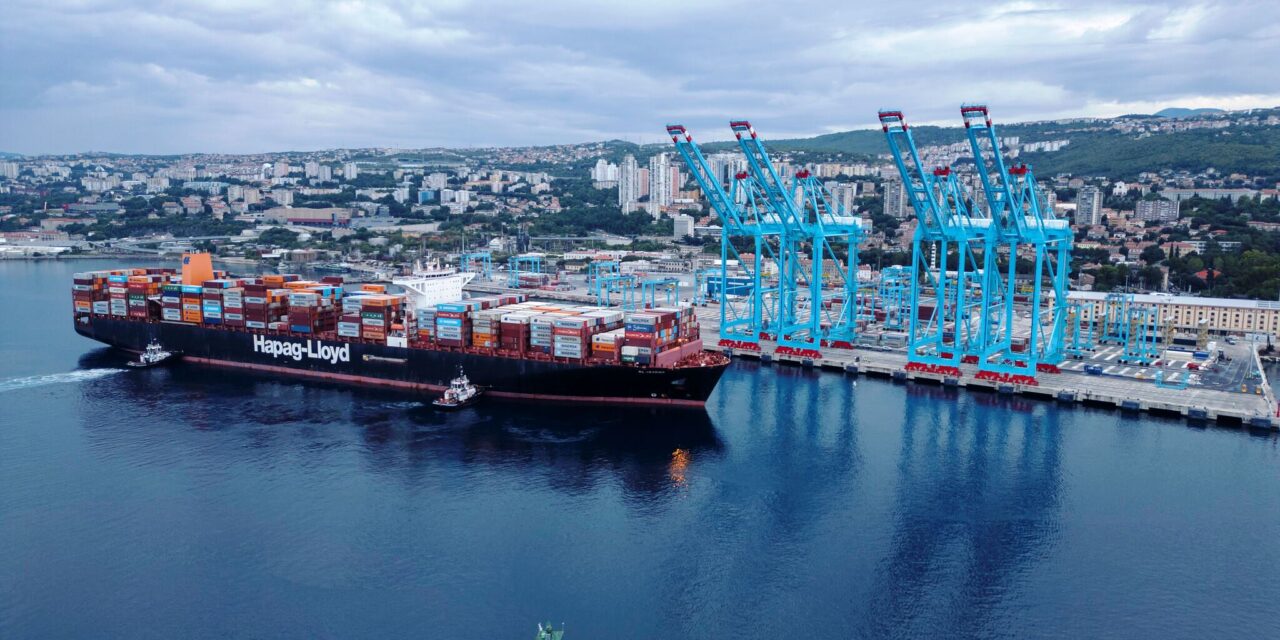
TRIESTE – The new APM Maersk terminal is driving growth in container traffic at the port of Rijeka, while Luka Rijeka is improving revenues and profitability despite lower volumes at AGCT Brajdica. General cargo also performed strongly, with an increase of around 20% in the first quarter of 2026.
The start of operations at the new Rijeka Gateway terminal, which in the first four months of 2026 has already helped bring total traffic at the Kvarner port close to 6 million tonnes, resulted in a 37% increase compared with the same period in 2025.
The most significant figure concerns containers. According to the Rijeka Port Authority, container traffic rose by 51% in the first four months, with 118,078 TEUs handled by Rijeka Gateway, while the Adriatic Gate Container Terminal (AGCT) at Brajdica recorded a 28% decline, falling from around 148,000 to 107,000 TEUs.
The decline at AGCT had been expected after the transfer of Maersk and Hapag-Lloyd services to the new terminal, controlled by APM Terminals, a Maersk group company. Despite this, AGCT is reportedly gradually recovering traffic thanks to the growth of CMA CGM and MSC services.
According to Port Authority director Denis Vukorepa, Rijeka could exceed 700,000 TEUs by the end of the year, with the possibility of overtaking Trieste in annual container volumes. Vukorepa also noted that rail-related critical issues remain due to works on the line towards Zagreb, while infrastructure investments continue on the route towards the Hungarian border and on the future Karlovac-Rijeka connection.
The Rijeka Gateway terminal, part of the Gemini Alliance network of Maersk and Hapag-Lloyd, is now regarded as a strategic hub on routes between the Far East and the Mediterranean. Since operations began last September, it has already handled more than 200,000 containers, over 50,000 trucks and almost 700 trains. The terminal also connects Rijeka with Trieste, Venice, Ravenna and Ancona through feeder services.
In parallel, Luka Rijeka — the mixed public-private company managing all other port activities — closed the first quarter with positive economic and operational results, while still feeling the effects of the redistribution of container traffic between Rijeka’s terminals. At group level, total traffic fell by 13%, from 1.51 to 1.32 million tonnes, mainly due to the 22% decline in the aforementioned container traffic at AGCT Brajdica.
By contrast, general cargo performed very strongly, growing by 20% in the quarter to 179,469 tonnes, compared with 150,030 in the same period of 2025. Growth was driven mainly by metallurgical products, vehicles and timber. Dry bulk also increased by 10%, reaching 256,871 tonnes thanks to demand for salt and stone aggregates, especially from the Italian market.
Financially, the group recorded total revenues of €10.39 million, up 11%. Revenues from the sale of services rose by 24% to €7.876 million, while quarterly net profit increased from €2 million to €2.6 million (+29%).
The improvement in operating profitability was particularly marked: EBITDA almost tripled, rising from €880,000 to €2.44 million, while the EBITDA margin increased from 12.6% to 27.12%.
Luka Rijeka expects investments of around €6 million in 2026 for the renewal of port equipment and the modernisation of the Rijeka, Bršica and Škrljevo terminals.
Energy traffic also continues to support growth across the Kvarner port system. At the JANAF terminal in Omišalj, 2.88 million tonnes of liquid cargo were handled, up 29% on 2025, mainly crude oil bound for Hungarian and Slovak refineries following operational difficulties on the Druzhba pipeline in Ukraine.
On the corporate front, the possibility of CMA CGM entering Luka Rijeka’s ownership structure remains open, an operation which, according to Vukorepa, could further strengthen the Rijeka logistics corridor and also support the future container terminal project on the island of Krk.