

TRIESTE – Interporto Centro Ingrosso di Pordenone has issued an information notice on the public-private mixed company that will manage the intermodal terminal.
The project provides for the establishment of a newco owned 40% by Interporto and 60% by a private partner to be selected through a public tender. The new company will be responsible for managing and developing the terminal, handling rail and road intermodal services and related activities. The concession will last 12 years, with the possibility of extension up to 19 years.
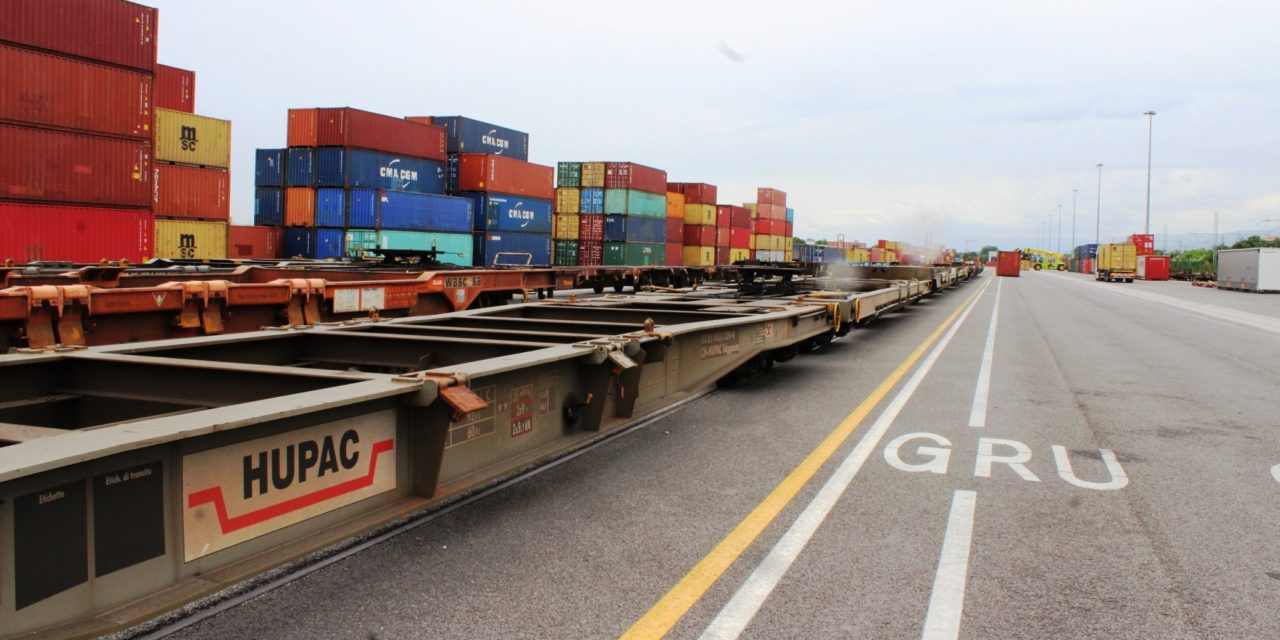
The decision is based on the intention to overcome some critical issues that have emerged in recent years with the outsourced management model entrusted to Hupac. According to Interporto’s analysis, the current system has shown limitations in its ability to integrate with the local production fabric, in commercial and marketing activities and in its capacity to respond to developments in the international logistics market. Added to this is the risk that traffic flows may be directed towards competing terminals.
The new company should instead make it possible to build stable partnerships with international logistics operators, railway undertakings and MTOs (Multimodal Transport Operators), fostering growth in handled volumes and the creation of new commercial relationships. The objectives also include stabilising traffic flows, reducing dependence on more speculative market dynamics and strengthening the role of the Pordenone terminal along the Baltic-Adriatic and Mediterranean corridors of the TEN-T network.
Interporto’s chief executive officer, Sergio Bolzonello, describes the newco as “a stable, industrial management model geared towards traffic development”, stressing the intention to create a model capable of maintaining a strong link with the local area while also engaging with major international logistics operators.
The future company is expected to take the form of an Srl and will be able to directly manage the terminal, rail services and road services. Its planned characteristics also include the possibility of operating as a railway undertaking, an element that would allow greater integration of the logistics chain. The possibility is also envisaged of absorbing the personnel currently employed at the terminal, maintaining the skills and professional expertise already present, while the handling equipment purchased by Interporto could be contributed to the new company.
A central aspect of the project concerns governance. While leaving the industrial partner with the majority of the share capital, the public shareholder will retain powers of direction and control through its presence in the corporate bodies, with the aim of safeguarding the strategic role of the infrastructure and enhancing the public investments already made.
The Pordenone intermodal terminal is part of the TEN-T trans-European transport network and is currently being assessed for recognition as an interporto of national importance. A recent site visit by the Ministry of Infrastructure and Transport is reported to have confirmed that the necessary requirements for obtaining this status are in place.