

TRIESTE – Italy’s blue economy continues to outpace the country’s overall economy and is now worth almost €225 billion including its wider economic impact. This is highlighted in the 14th Unioncamere-Tagliacarne-OsserMare Report, which confirms Friuli Venezia Giulia among the country’s most specialised regions and ranks Trieste as Italy’s leading province for the contribution of the Blue Economy to its local economy. Venice remains one of the country’s leading maritime provinces, while Ravenna is identified as a strategic hub for the energy transition thanks to its offshore CO₂ capture and storage project.
The sector generates €79 billion in direct added value, up 3.8% compared with 2.1% for the overall Italian economy. Including multiplier effects across the supply chain, the figure rises to almost €225 billion, equal to 11.4% of the country’s total added value. Employment increased by 4.2%, almost three times the rate recorded by the rest of the economy, while Blue Economy businesses now number 253,599, accounting for 4.3% of all Italian companies.
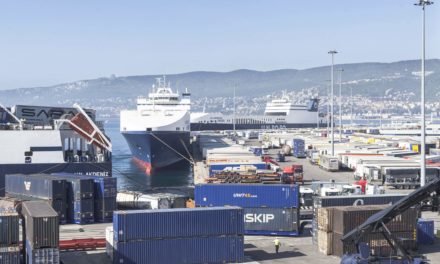
Friuli Venezia Giulia ranks third in Italy for the share of the maritime economy in regional added value, at 7.3%, behind Liguria and Sardinia. Employment in the sector accounts for 5.5% of total regional jobs, while Blue Economy companies represent 4.5% of the regional business base. Trieste records the most significant result nationwide. The maritime economy generates 21.4% of the province’s added value, equal to €1.872 billion, placing the city first in Italy. Employment figures confirm this leadership, with 15.3% of the workforce employed in Blue Economy activities, while 12.6% of local businesses operate in maritime sectors.
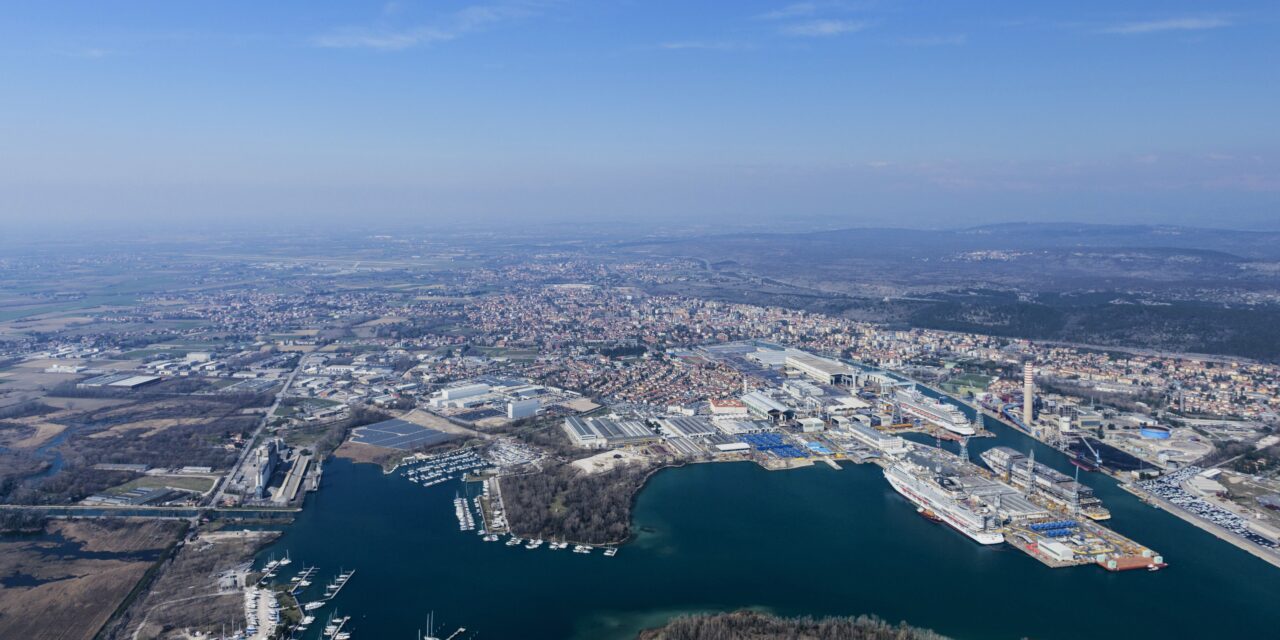
The report also highlights Trieste’s leadership in shipbuilding exports (Fincantieri), with €2.6 billion worth of exports. The sector accounts for 45.7% of the province’s total exports and, together with Lucca and La Spezia, represents around half of Italy’s naval engineering exports.
Gorizia also ranks among Italy’s most specialised provinces in the Blue Economy. It is seventh nationwide for the contribution of the maritime economy to added value, at 11.9%, corresponding to €503.9 million, while 10.9% of the workforce is employed in Blue Economy sectors. The province also records around €1 billion in shipbuilding exports, representing 47.8% of total exports, one of the highest levels of specialisation in the country. This performance is largely driven by the Monfalcone industrial hub, with Fincantieri and its extensive shipbuilding supply chain.
Venice also confirms its position among Italy’s leading Blue Economy hubs. It ranks sixth for the contribution of the maritime economy to added value, with 12.3% and €3.626 billion generated, seventh for employment, with 13.7% of the workforce, and fourth for the number of Blue Economy businesses, with 9,973 companies representing 13.3% of the provincial total. The lagoon city also ranks second in Italy for seafood exports, with €66.2 million.
While Ravenna does not stand out for specific economic indicators, the report assigns its port a strategic role in Italy’s energy transition. It is identified as the location of the country’s first offshore CO₂ capture and storage project using depleted offshore gas fields, regarded as a flagship initiative for the decarbonisation of industry and shipping.
The report also devotes considerable attention to European Blue Economy policies, ranging from the European Union’s new Port Strategy and the European Ocean Pact to Horizon Europe research programmes, which allocate around €9 billion to Cluster 6, covering the Blue Economy among other areas, within the framework of the programme’s total budget of €95.5 billion.