

TRIESTE – The Strait of Hormuz remains effectively blocked. The escalating military confrontation between the United States and Iran continues to paralyse one of the world’s most important energy corridors, with commercial traffic reduced to a minimum, more tankers struck by Iranian missiles, and Washington announcing further military operations. The United States plans to require commercial agreements for vessels seeking safe passage.
The latest data from maritime intelligence platforms MarineTraffic and Kpler confirm an unprecedented collapse in vessel transits through the Strait of Hormuz. On Sunday, only six to eight ships were recorded passing through the waterway, the lowest level in the past five weeks and only a fraction of the normal traffic in a strait that handles around 20% of global oil and liquefied natural gas trade.
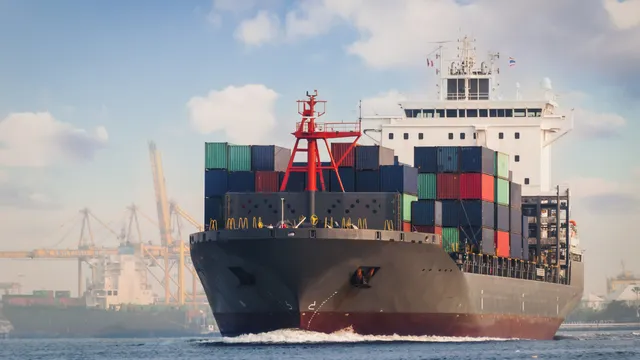
Commercial traffic along the internationally recognised shipping lanes established by the International Maritime Organization (IMO), as well as along Omani routes, has virtually come to a standstill. The few tankers and merchant vessels still crossing the area are often switching off their Automatic Identification System (AIS), effectively becoming “ghost ships” in an effort to reduce the risk of being detected and targeted by coastal missile systems. In recent hours, the situation has deteriorated further. The United Arab Emirates has reported Iranian missile attacks on two of its oil tankers in the Strait of Hormuz. Preliminary reports indicate one fatality and eight people injured. A Norwegian shipping company has also reported that one of its tankers was attacked near the strait, highlighting the growing involvement of civilian vessels in the escalation.
Iran has also reiterated that Hormuz “will not reopen as long as US aggression continues”, while a bill concerning the management of the strait has been introduced in Parliament. According to Iranian officials, the proposed legislation represents “only the first step” in the country’s response to US military operations. On the military front, US President Donald Trump announced the resumption of strikes against Iranian military capabilities linked to Hormuz, confirming that attacks could also be extended to the Pickaxe Mountain nuclear facility. Tehran responded by threatening a “devastating response” should the nuclear site be targeted.
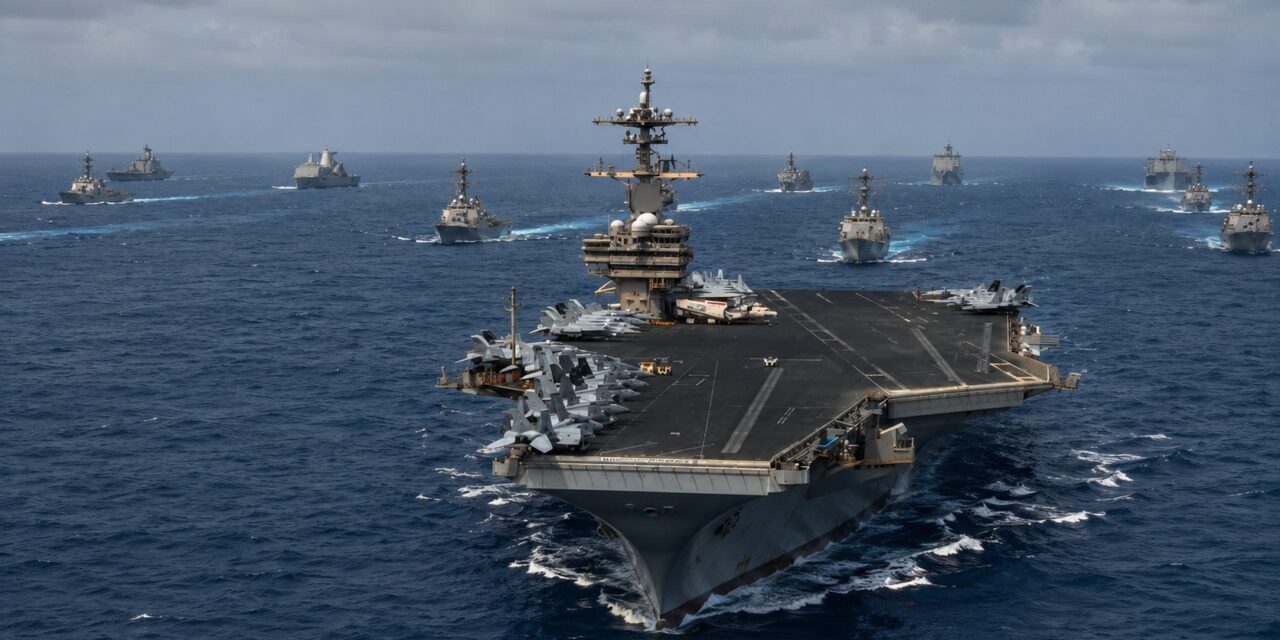
In recent days, US Central Command (CENTCOM) had already launched a major offensive against more than 140 strategic targets in southern Iran, striking coastal radar installations, air defence batteries, drone and missile depots, and naval bases in the areas of Jask, Qeshm and Bandar Abbas. Meanwhile, according to media reports, around a dozen US military aircraft have been detected operating over the Persian Gulf and the Gulf of Oman, while Iran has claimed attacks against US weapons depots and other military infrastructure in Bahrain. The Islamic Revolutionary Guard Corps (IRGC) also released a statement addressed to the Jordanian population, claiming that “the people of Jordan are not a target”.
The escalation continues to have a significant impact on global energy markets. Following a gain of more than 3.5% on 13 July, oil prices have continued to rise: WTI crude has climbed above USD 80 per barrel, while Brent remains at its highest levels in recent months. The increase is also affecting fuel prices, with the average self-service petrol price in Italy rising to €1.884 per litre. The closure of the strait and the attacks on commercial vessels are rapidly reshaping shipping strategies. Numerous tankers, including those operated by QatarEnergy, have turned back to avoid the Persian Gulf. Italian shipowners and charterers have also suspended or postponed transits through Hormuz in line with European maritime security guidance, while several operators, including the Messina Group, are rerouting services through alternative hubs in Oman, India and Pakistan.
Washington is also considering new economic measures. Trump has announced plans to require commercial agreements for all vessels transiting the Strait of Hormuz, as a contribution towards the costs incurred by the US Navy in ensuring the security of navigation. For the Italian port system, however, the direct impact remains limited, at least for the time being. The reorganisation of international shipping routes is continuing to strengthen the Mediterranean’s role as the main gateway for goods bound for Europe, allowing Italy’s major ports to maintain relatively stable cargo volumes despite the crisis in the Persian Gulf.