

TRIESTE – European Union member states have approved the Council conclusions recognising ports as strategic infrastructure for Europe’s security, energy, logistics and competitiveness.
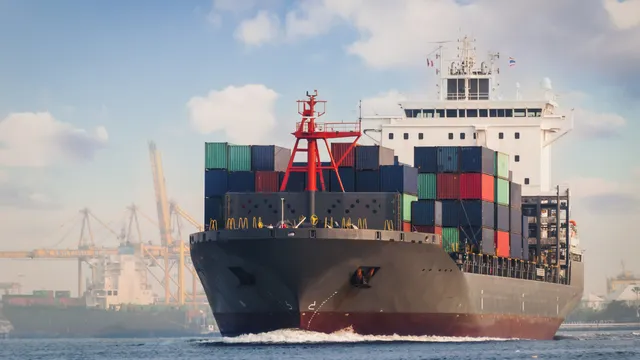
The document confirms the central role of seaports and inland ports in strengthening the EU’s strategic autonomy, protecting supply chains and supporting the energy transition. European ports, which handle around 74% of goods entering and leaving the Union and receive around 395 million passengers each year, are defined no longer simply as trade gateways, but as genuine multifunctional industrial hubs.
The conclusions call on the European Commission to ensure effective implementation of the strategy, also assessing new coordination and governance tools. Member states highlight the need to increase infrastructure capacity, accelerate digitalisation, strengthen resilience and continue the path towards decarbonisation without compromising the competitiveness of European ports.
Particular attention is paid to international competition. The Council calls on Brussels to counter distortions resulting from unfair practices by third countries and to ensure balanced access conditions to foreign port markets for European operators. At the same time, support is given to a risk-based system for screening foreign investment, with the aim of preventing forms of undue control over critical port infrastructure.
Security is also among the priorities. European ports are considered exposed to increasingly complex threats, including terrorism, sabotage, organised crime, corruption, cyberattacks, hybrid threats and the use of drones. For this reason, the Council supports the strengthening of the European Ports Alliance and greater international cooperation, as well as new initiatives for background checks on port personnel.
The strategy also assigns ports a growing role in European military mobility. Port infrastructure is considered an essential node for the rapid transfer of equipment and personnel, with coordination that will have to be consistent with both European programmes and NATO programmes.
On the energy front, the Council identifies ports as one of the main drivers of the transition towards a low-emission system. It calls for support for investment in electrification, cold ironing, smart grids, energy integration and alternative fuels, also through the use of resources from the European ETS system.
Member states, however, ask the Commission to carefully monitor the effects of climate policies on the competitiveness of the Union’s ports. Concerns include the risk of traffic being diverted to non-EU ports, carbon leakage and the shift of investments to areas subject to fewer environmental constraints.
The conclusions finally address the issue of funding, calling for simpler procedures and greater access to European funds, as well as labour issues, with investment in training, reskilling and attracting young people and women to maritime and port professions. The European port strategy was presented by the Commission on 4 March and represents one of the pillars of the Union’s industrial and logistics policy for the coming years, in a context marked by geopolitical tensions, energy challenges and growing global competition.