

VENEZIA – The Advisory Committee of the Venice Lagoon Authority has given the green light to the three-year programme of works. The plan will now move to review and approval by the Management Committee, a decisive step for implementing the scheduled interventions.
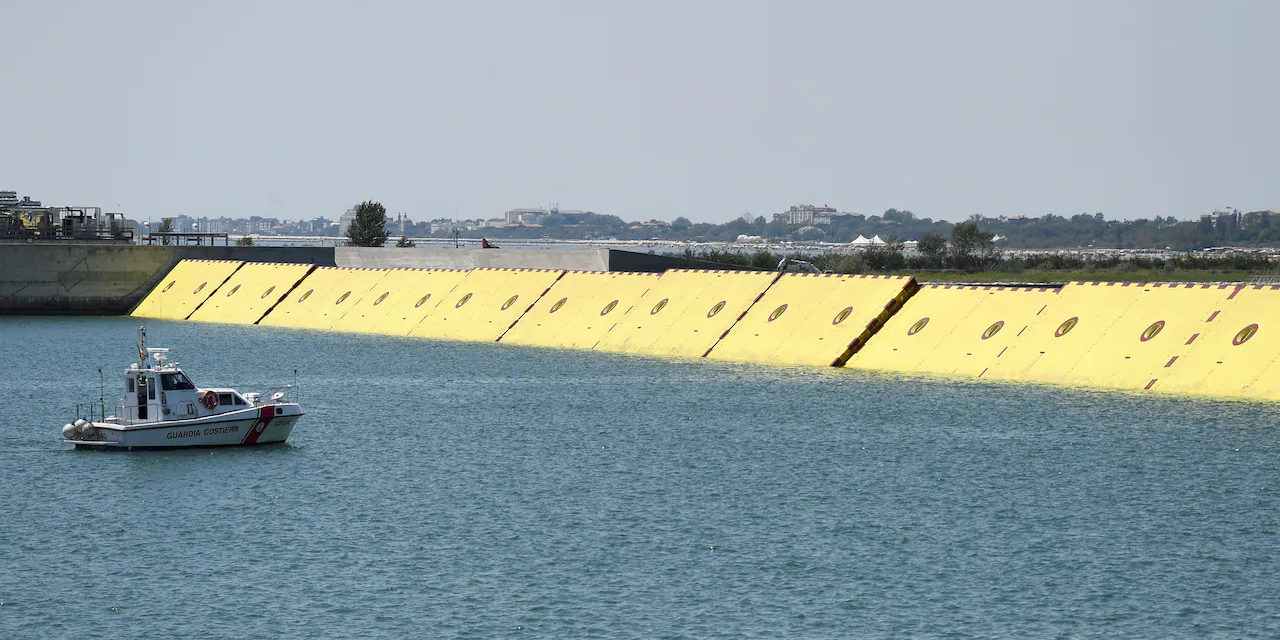
The programme sets out a broad funding package to ensure the maintenance and operation of infrastructures that are vital to safeguarding the Venice lagoon, with a particular focus on MOSE and the system of mobile barriers. The Ministry of Infrastructure and Transport has in fact formalised the disbursement of the funds for 2025 and the remaining balance for 2024, recently confirmed.
Specifically, the plan totals €97.1 million: €24 million is allocated to the operation of MOSE and of the Lagoon Authority, for fiscal year 2025; €34.1 million is earmarked for maintenance of the mobile-barrier system in 2025; and €39 million covers the 2024 residual for maintenance of the barriers.
With approval of the programme, MOSE maintenance and operational activities can be definitively launched, in line with the establishing law. The Advisory Committee’s go-ahead is a key step for an infrastructure that is crucial to protecting Venice from high-water events.
The plan’s future, however, is also tied to the resources that the Government will allocate for 2026, as part of the maxi-amendment to the Budget Law recently presented.
Meanwhile, Luca Miani, liquidation commissioner of the Consorzio Venezia Nuova, has written to the Ministry, warning that the freeze on state transfers opens a worrying scenario for the progress of works. Without those funds, even MOSE gate-raising operations could be at risk. The freeze imposed by the Ministry of Economy and Finance on other ministries’ available funds threatens salary payments, invoices to be settled and contracts to be signed—besides the maintenance activities needed to keep the mobile-barrier system operational.
The issue has also prompted intervention from CGIL, CISL and UIL, which expressed “strong concern” over what they describe as a “critical situation” involving more than “€41 million”. The timing increases alarm, given the “real risk of operational stoppages, potentially undermining continuity of maintenance and system management precisely in the most delicate seasonal period”. The unions are therefore calling for the funds to be “immediately unfrozen and made available”, avoiding any paralysis of activities and further deterioration of working conditions.