

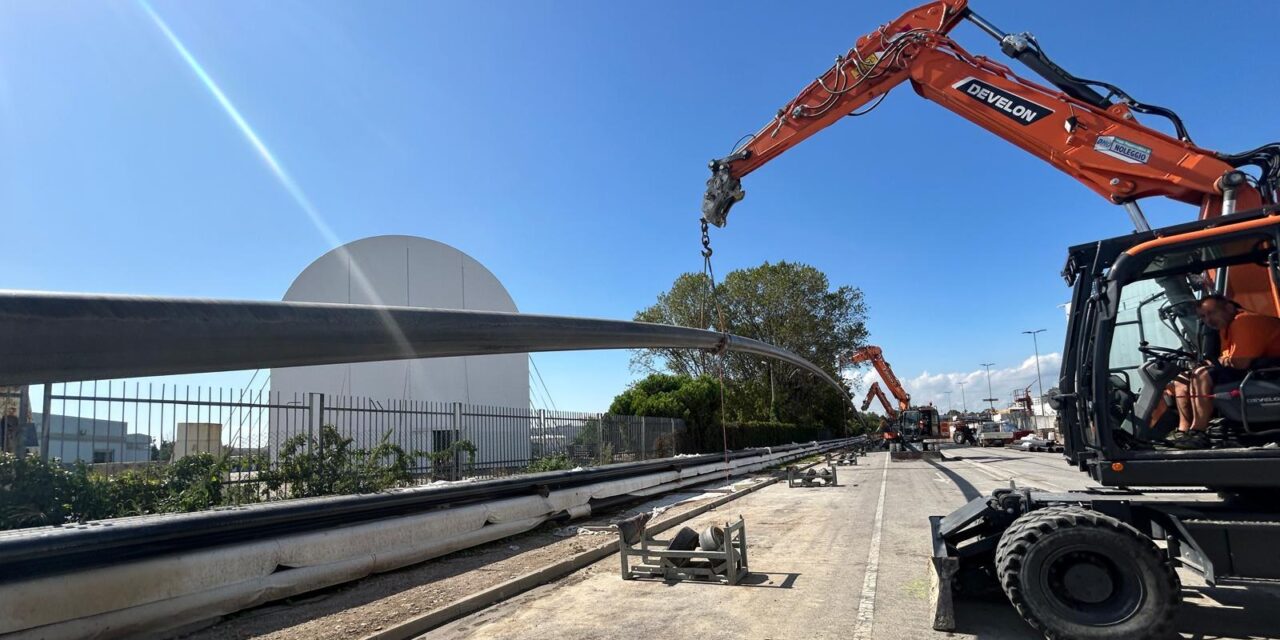
TRIESTE – The new underground pipeline built by Cereal Docks at Porto Marghera to transfer vegetable oils between two Group facilities has entered into operation.
The infrastructure directly links the production plant on Via Banchina Molini, where ship unloading takes place, with the coastal storage depot on Via Righi, home to the tank farm. The project is part of the three-year operational plan of the Northern Adriatic Sea Port System Authority.
The work cost €5 million and consists of a 3.1-kilometre buried pipeline. It can transfer up to 300 cubic metres per hour of vegetable oils. It is Italy’s longest single-line pipeline dedicated to a single terminal and one of the leading ones in Europe.
The new link eliminates more than 10,000 truck transfers per year between the two Marghera sites, with an estimated reduction of around 28 tonnes of CO₂ per year. Internal road safety and supply-chain operational continuity also improve.
From a technical standpoint, the pipeline reaches depths of up to 50 metres, crosses more than twenty private properties and three canals of the Venetian Lagoon. Construction used the “Meeting in the Middle” technique, with two worksites operating in parallel until the final connection. The line is equipped with pressure-boosting stations and internal systems for inspection and cleaning.
The project is part of a broader investment plan for Porto Marghera. The Via Banchina Molini plant, acquired in 2011 and the subject of over €88 million in investments, is now a key hub for the port of Venice’s agribusiness. It has a processing capacity of around one million tonnes per year and storage capacity of 80,000 tonnes, in addition to the 33,000 tonnes available at the Via Righi depot.
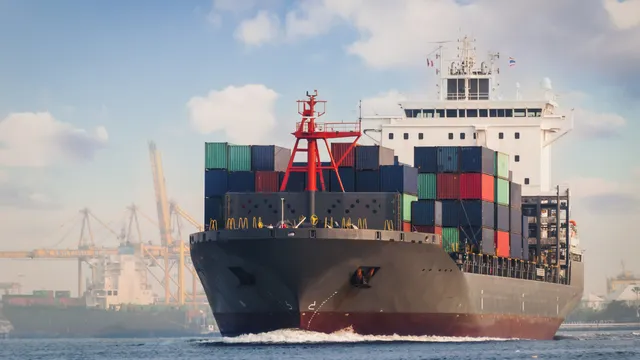
The pipeline solves a long-standing bottleneck: the coastal depot cannot receive ships due to draught limitations, and in the past oils were transferred by truck after unloading. The direct connection makes the cycle more efficient and sustainable. Looking ahead, dredging of the West Industrial Canal could allow access for larger ships, further strengthening Marghera’s role.
Mauro Fanin, chairman of Cereal Docks Group, noted that from 2011 to today the plant has processed almost 10 million tonnes of vegetable raw materials, accounting for around 50% of port traffic linked to agribusiness. The aim of the industrial plan to 2028 is to increase processed volumes by 50%, to 1.5 million tonnes per year, provided adequate infrastructure is available.
For Port Authority president Matteo Gasparato, nautical accessibility at Porto Marghera remains a decisive factor. The Environmental Impact Assessment Commission’s approval of the new sediment disposal site south of Isola delle Tresse is seen as a key step to ensure steady dredging and navigational safety, together with the planned works on port canals, starting with the West Canal and the Malamocco–Marghera channel.