

TRIESTE – Ravenna is positioning itself as Italy’s national hub for raw-materials logistics. At the Chamber of Deputies, the discussion promoted by ONTM and the Port System Authority of the Central-Northern Adriatic Sea put bulk cargoes and their weight in the Italian economy at the centre of the debate, with the Romagna port singled out as an operational benchmark. The initiative, entitled “Not just containers – Raw-materials logistics for the country’s development”, brought together government figures, institutional representatives and industrial operators. Across the various speeches, a shared line emerged: dry and liquid bulk cargoes are not a technical niche of port activity, but the physical foundation of production supply chains—from agrifood to energy, from chemicals to steelmaking. The figures presented during the meeting reinforced this message.
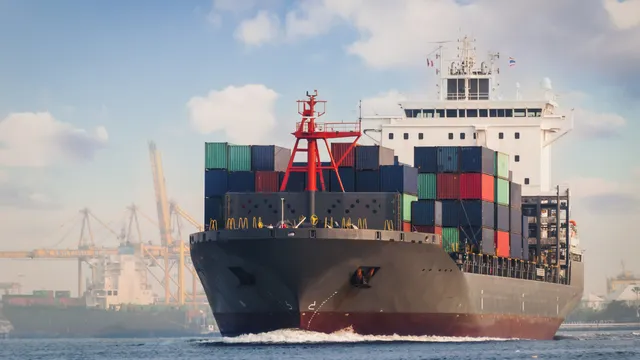
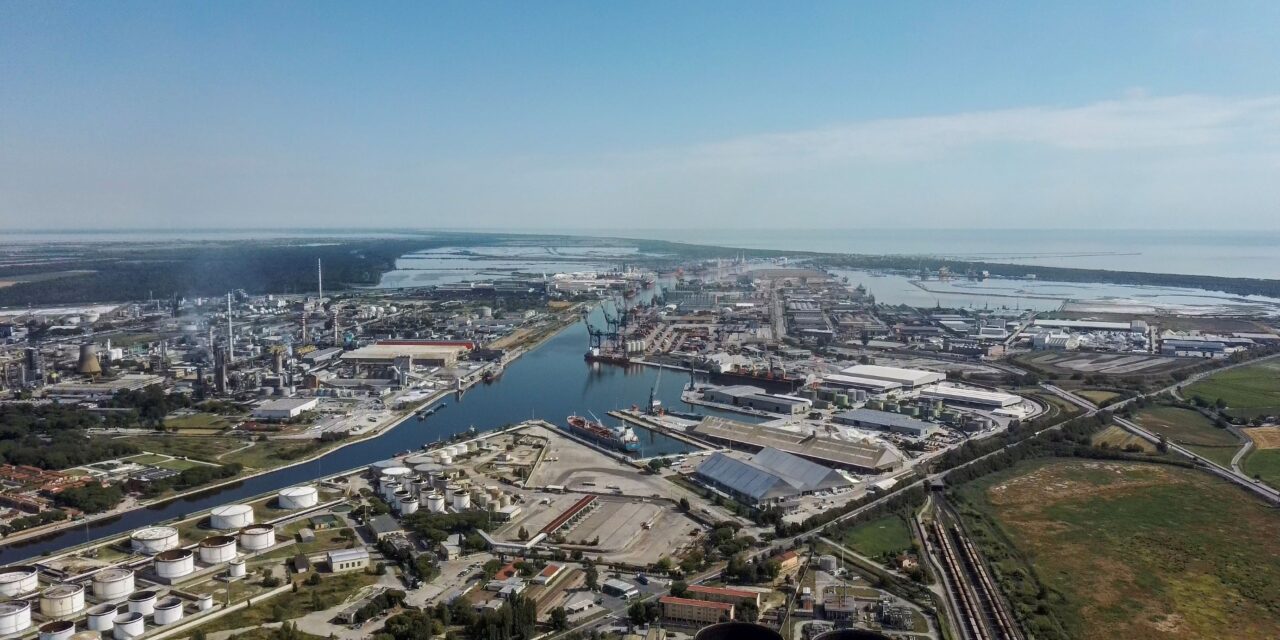
According to an SRM study, around 77% of cargo moved by sea worldwide consists of bulk. In Italian ports, these cargoes account for almost half of total traffic. A Steer Group analysis quantified the economic impact of bulk-related sectors at around €420 billion in value added, representing a significant share of the national total, with tens of thousands of direct jobs. In this framework, Ravenna was described as a strategic hub. The port is Italy’s leading port for dry-bulk traffic and one of the main entry points for raw materials destined for manufacturing in Northern and Central Italy.
Its long-standing specialisation in cereals, metallurgical products, chemical and energy commodities makes it an infrastructure closely tied to business continuity for industry. The debate also clearly highlighted the issue of security of supply. Critical raw materials are viewed as a factor of economic sovereignty. Ensuring regular, competitive flows means strengthening the country’s industrial resilience. In this sense, the Port of Ravenna is seen as a gateway and distribution node that must be supported by adequate rail and road links, as well as coherent planning between logistics and industrial policy. Institutional speakers called for a national vision integrating ports, inland logistics hubs and land infrastructure. Among the proposals discussed was also the idea of a permanent working group dedicated to bulk cargoes, to monitor trends in strategic raw materials and coordinate public and private action.