

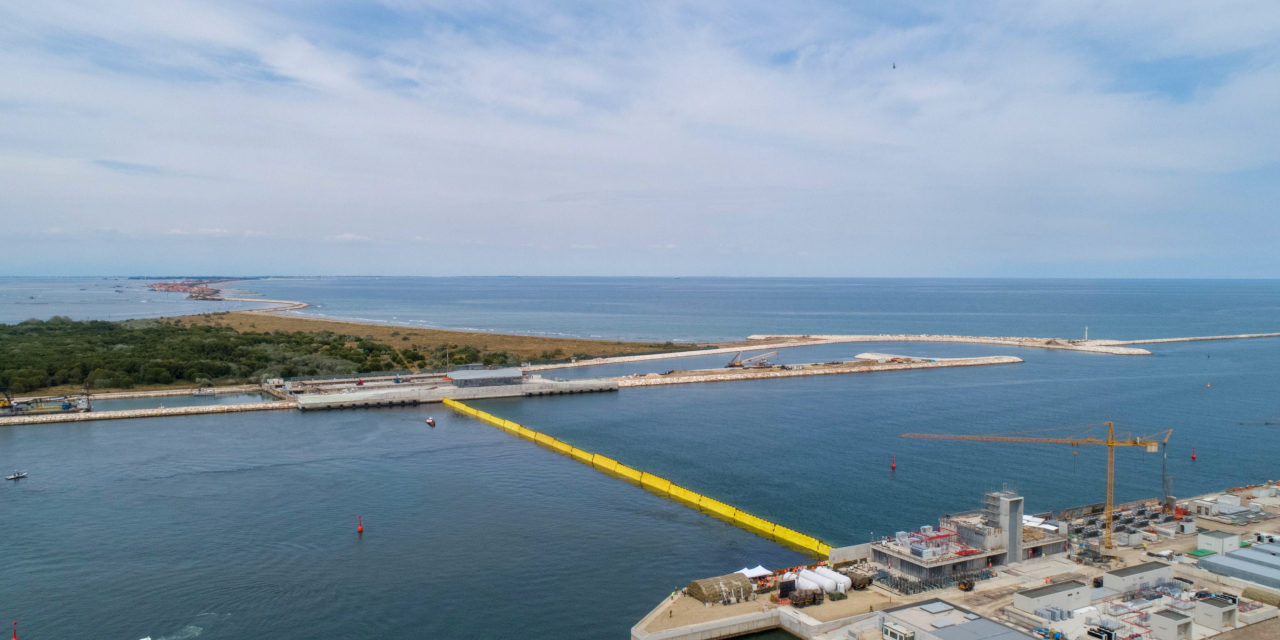
VENEZIA – Twenty-one times in fourteen days, MOSE has protected (and is still protecting) the city, but at the same time it is creating problems for the port.
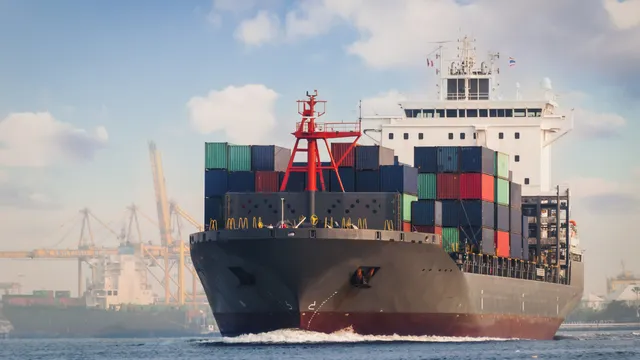
Not everything is going smoothly, says Venice Port Community president Davide Calderan: «We have asked the Authority for the Lagoon and the Port Authority for a meeting, given the difficulties arising from the constant MOSE activations. We understand safeguarding the city—Carnival, the Olympics—but we also need to recognise the importance of the economy generated by the port, which is fundamental for the city. In this period there have been many activations, causing a 15% rescheduling of ships inbound to Venice. There is a need to improve and reorganise planning».
It is difficult to quantify the costs generated by these operations precisely because, in reality, a number of factors come into play. However, estimates seem to converge around €200,000 per day, so, considering what has happened in the first month and a half of the year, we are talking about millions. Figures (those used for activations below 110 centimetres) which, according to the Venetian port community, would be better invested in completing the complementary works to MOSE, to finish it and bring the trial phase to an end.
In the city, the debate is in fact about MOSE’s activation threshold. The various bodies agreed on 110 centimetres, but on more than one occasion in this period it was decided to raise the barriers below that level, even at 98 centimetres. A threshold that is hard to swallow for those operating ships, since it means significantly increasing the degree of rescheduling for port calls.
What is certain is that the debate will continue. As Calderan has stated, next week a roundtable will bring together the presidents of the Authority for the Lagoon, Roberto Rossetto, and the Ports of Venice and Chioggia, Matteo Gasparato, along with operators who will certainly ask for clarity.
The key issue is the reliability of the forecasts, which the Tide Centre almost never gets wrong. Proper predictability allows for efficient planning at the port, generating less damage and ensuring Venice remains competitive and attractive on the market. The game has started, but it is destined to continue for a long time. After all, there are economic activities at the Procuratie Vecchie in St Mark’s Square that ‘go under’ already at 78 centimetres, while, according to the Municipality of Venice’s official statistics, at 100 centimetres 5% of the city floods.
Adding to the pressure is the weather, which does not seem ready to ease off, given that at least four peaks above 100 centimetres (plus one at 95) are expected in the coming days, through to the night between 16 and 17 February.