

TRIESTE – Three merchant vessels have been struck by projectiles of unidentified origin in the Strait of Hormuz, a strategic maritime passage for the oil trade.
The incidents are part of the escalation in tensions following the US and Israeli attacks on Iran at the end of February. According to maritime authorities and security firms cited by several international media outlets, at least one of the vessels hit caught fire and part of the crew was forced to temporarily abandon the ship.
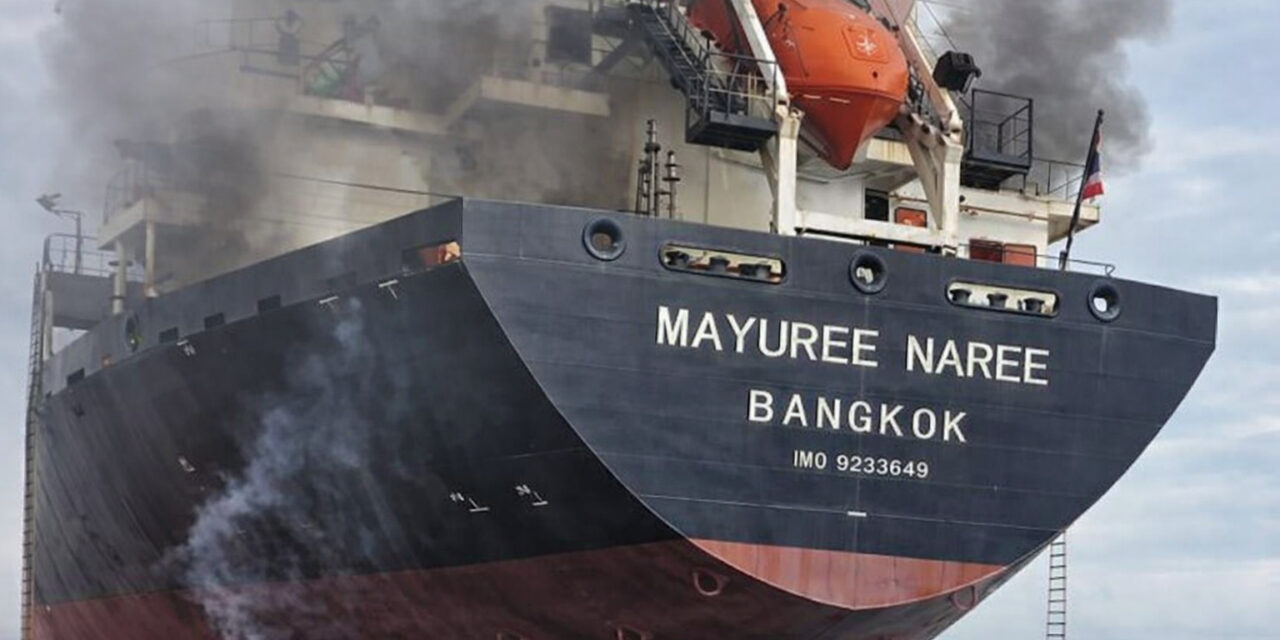
The first incident involved the Thai bulk carrier Mayuree Naree, hit about 11 nautical miles north of Oman. The impact caused a fire on board. The UK Maritime Trade Operations (UKMTO) agency reported that the blaze was later brought under control and that no environmental damage had been recorded, while part of the crew remained on the vessel. A second attack involved the Japanese container ship One Majesty, hit by a projectile about 25 nautical miles off the coast of the United Arab Emirates, near Ras Al Khaimah. The damage was described as limited and the vessel is heading for a safe anchorage. The crew is reported unharmed. The third incident concerns the bulk carrier Star Gwyneth, sailing under the Marshall Islands flag, hit about 50 miles north-west of Dubai. According to maritime risk management company Vanguard, the projectile damaged the hull but the crew is safe.
Authorities are investigating the origin of the attacks. Since the start of the conflict in the Gulf region, there have been at least thirteen suspected attacks against commercial vessels. The situation fits into a context of severe instability in the Strait of Hormuz, the passage through which about 20% of the world’s oil transits. Maritime traffic in the area has dropped sharply in recent weeks, while energy prices have recorded strong fluctuations.
Washington said it had destroyed more than a dozen Iranian boats potentially capable of laying mines in an effort to prevent a blockade of the route. US president Donald Trump said there was no evidence that mines had been placed in the strait. Meanwhile, some tankers continue to transit the area, often making so-called ‘dark transits’, that is, with their AIS switched off so as not to transmit their position. This behaviour is frequent among vessels involved in the transport of sanctioned Iranian crude oil. According to security firm Neptune P2P Group, since 8 March only seven ships have crossed the strait and five are said to be linked to Iran-associated trade. Commodity tracking company Kpler also reports that Tehran has resumed oil exports from the Jask terminal, on the Gulf of Oman, with a tanker that loaded about two million barrels on 7 March.