

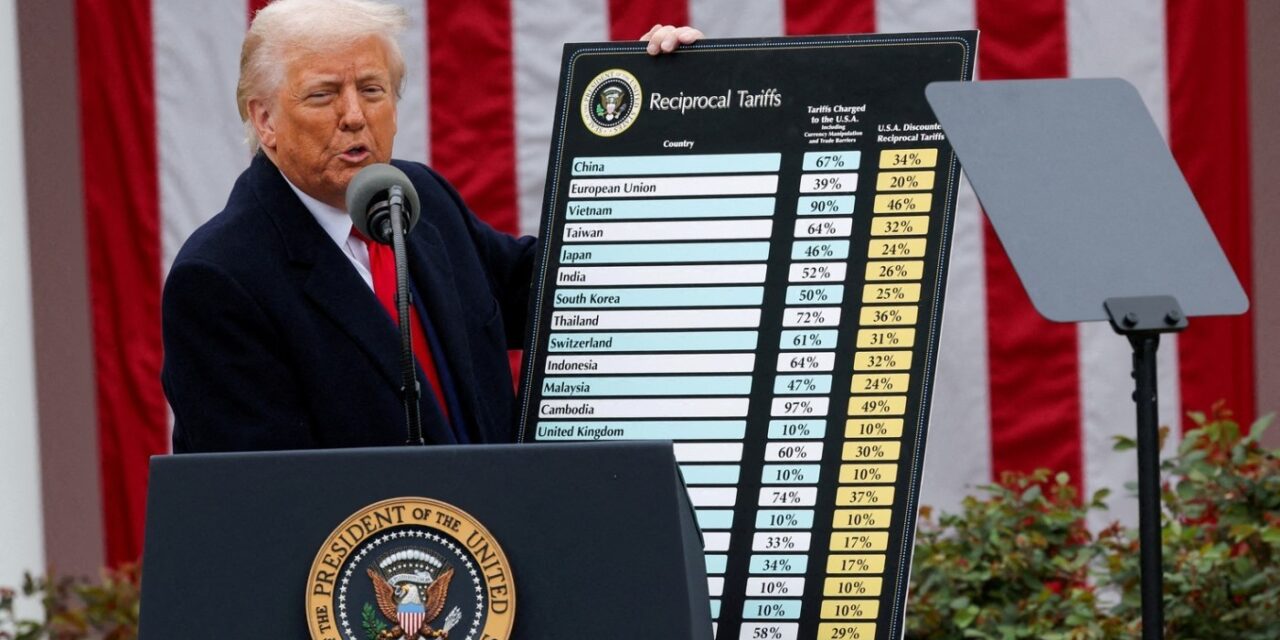
TRIESTE – The US Supreme Court has ruled most of the tariffs imposed by Donald Trump’s administration unlawful, finding that the president did not have constitutional authority to introduce them without Congress’s approval. The decision was handed down by a six-to-three vote.
The dispute concerned sweeping duties imposed on almost all US trading partners using the International Emergency Economic Powers Act (IEEPA), a law never used in this way before.
According to the Court, the Constitution assigns Congress the power to set customs duties; for this reason, the measures unilaterally adopted by the president were struck down.
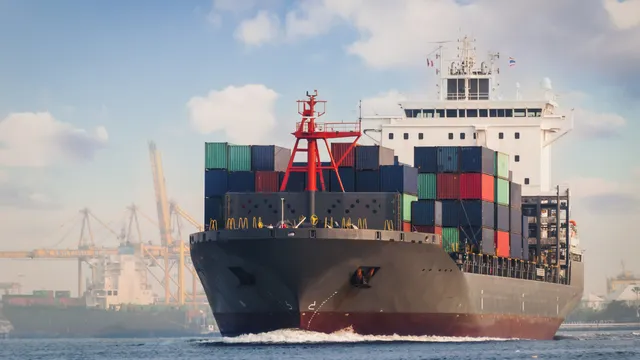
The ruling has implications for global trade policy and maritime flows. The removal of broad tariffs on goods imports reduces uncertainty on trade routes and transport costs for global operators, at least in the short term, because ocean freight rates and demand for container handling could stabilise without additional duties.
Analysts warn that the decision could still trigger fresh tensions. The US administration may seek alternative legal bases to impose sector-specific tariffs, keeping the risk of retaliation by trading partners—and knock-on effects on global maritime supply chains—on the table.
Markets and international transport operators are watching the ruling as a ‘macro’ event that can influence maritime trade volumes. According to comments from global investment managers, the Court’s decision could support import-export activity and container flows, narrowing the gap between demand and supply for seaborne logistics services.
The Court did not clearly define how to handle any refunds of tariffs already collected, an element that could prolong legal and commercial uncertainty in the coming months.