


TRIESTE – A new parliamentary cross-group dedicated to the IMEC — the India–Middle East–Europe Corridor linking India, the Gulf, Israel, Egypt, the Mediterranean, and Central Europe — has been launched in the Italian Chamber of Deputies.
The initiative was presented by Deborah Bergamini, who described it as a geopolitical project capable of reshaping global routes, involving India, Gulf countries, Israel, and Egypt. She also recalled Minister Tajani’s ongoing work on the dossier and the major IMEC event planned in Trieste in 2026.
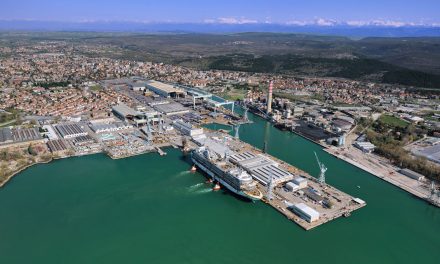
Members of both government and opposition took part in the conference. Antonio Giordano defined the IMEC as a decisive step to strengthen the role of the Mediterranean, offering an alternative to the Belt and Road and to Arctic routes. He highlighted the presence of several ambassadors and the video message from special envoy Francesco Talò. Paolo Formentini stressed the wide parliamentary support and pointed to the port of Trieste as a future hub of the corridor toward both eastern and northern Europe.
Tatjana Rojc underlined the strategic importance of stability in the Suez Canal, the opportunity to extend the corridor to the Western Balkans, and the role of the Trieste Free Port along the historic “Cotton Route.” She reiterated the importance of the extraterritoriality provision introduced through her amendment to the Budget Law.
Giulio Centemero placed the IMEC within the new geopolitical map of the wider Mediterranean, stretching from the Gulf to Asia, highlighting infrastructure, energy, digital connectivity, and political coordination as key pillars. He described parliamentary diplomacy as essential to anticipate risks and give voice to local territories.
Marco Dreosto recalled the strategic value of the corridor for Italy’s North-East and for the port of Trieste as a European gateway, announcing that the Senate will open a dedicated proceeding on the Cotton Route. In his view, Italy must play a leading role in a vision that reconnects India, the Middle East, Israel, and Europe, creating new opportunities for competitiveness and security.
The event was also attended by the ambassadors of Cyprus, Egypt, India, and Israel, confirming the strong international interest in the Indo–Mediterranean corridor.