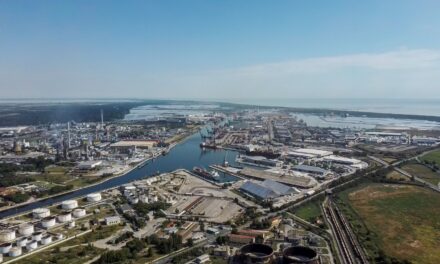


TRIESTE – The Port System Authority of the Eastern Adriatic Sea has launched the tender for the design of the second phase of the quayside development of the new Hungarian terminal in Trieste’s former Aquila area.
With a resolution signed by president Marco Consalvo, the Port Authority approved the design brief and opened the public procedure to award the technical and economic feasibility design service for the project named “Partial quayside development of the Noghere Ro-Ro terminal – Phase II”.
The tender is worth more than €6.1 million in total, of which €2.87 million is the base amount for the main design service. The contract also includes an option for future works supervision and health and safety coordination on site. The procedure will be awarded according to the most economically advantageous tender criterion, with 80 points allocated to the technical component and 20 to the financial offer.
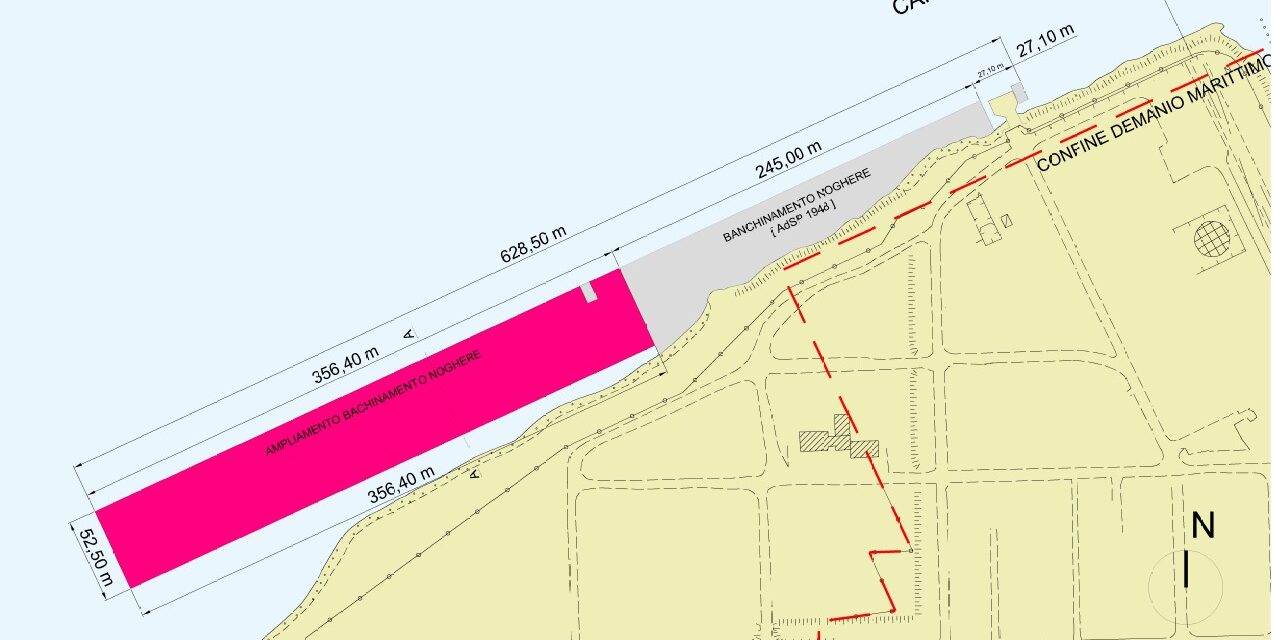
The new intervention will complete the southern side of the terminal already launched with the first phase of works, awarded in 2024. The project provides for the construction of a new 356.4-metre quay and around 16,000 square metres of new waterside operational areas, built using a reinforced concrete deck founded on piles. The facility will be equipped with bollards, fenders, emergency ladders, lighting towers and provision for shore power supply to ships.
The resolution approving the design guidelines also stressed the strategic link between the Italian public works and the private investments launched in the neighbouring areas by the Hungarian public company Adria Port, controlled by the Budapest government. The synergy is considered functional to increasing logistics flows along central and eastern European routes and attracting new industrial and commercial investment.
The overall economic framework for the work is estimated at around €83 million, while the timetable sets final testing by the last quarter of 2029, subject to any changes during the design phase.
The first phase of the project, already under way, included an initial 245-metre quay, around 8,000 square metres of operational areas, two mooring dolphins and dredging of the access channel to a depth of -11.7 metres.