

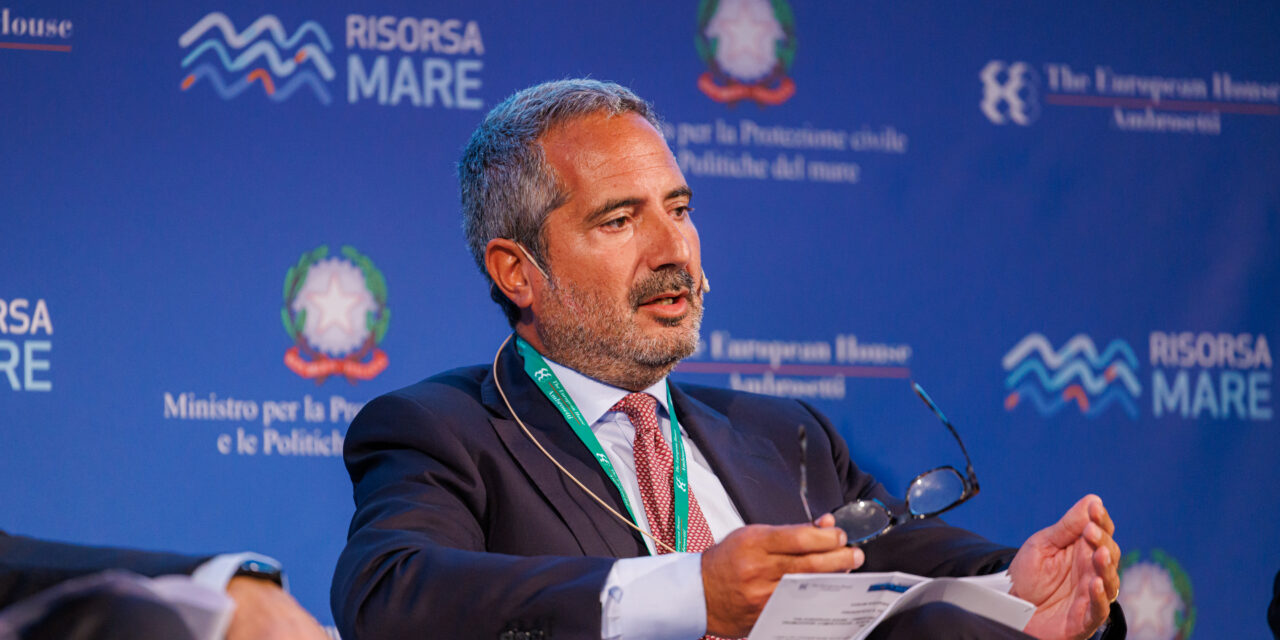
TRIESTE – Reducing subcontracting chains to a minimum and strengthening the solidity of the industrial supply chain. This is one of the guidelines of Fincantieri’s new business plan announced by CEO and general manager Pierroberto Folgiero, speaking in Ancona on the sidelines of the presentation of a book dedicated to the history of Italian shipbuilding.«We know that when subcontracting chains are long, they fray and behaviours we do not like can take root», Folgiero explained, underlining that the new business plan provides for «minimum recourse to subcontracting chains» and a reduced number of counterparts, with companies «of suitable stature» to support long-term industrial programmes.
The manager then addressed the international economic situation and tensions over energy costs, reaffirming the group’s solidity while warning of the risks of a prolonged crisis. «As Fincantieri, we are not experiencing difficulties – he said – but all crises, if they last long enough, become systemic». According to Folgiero, the most dangerous effect would be inflationary pressure, capable of affecting the entire production system, including supply chains considered robust and integrated, such as shipbuilding.
Fincantieri, the CEO added, is currently «very solid and covered» thanks to hedging instruments on energy costs, but there remains strong concern over the possible consolidation of a phase of structural inflation, described as «a toxin that is not good for business».
The remarks came during the presentation of the book “History of Italian shipbuilding in the contemporary age. From the Unification of Italy to the Giolittian era (1861-1913)”, written by economic historian Roberto Giulianelli and published by Laterza with the Fincantieri Foundation. The volume traces the evolution of the Italian shipbuilding industry from its first technological transformations — from wood to iron and then steel, from sail to engine — through to the strategic role taken on by the sector between industrial development, state contracts and transoceanic emigration. A journey through the country’s economic history which, in the Foundation’s intentions, also aims to offer tools for interpreting the future challenges of Italian shipbuilding.