

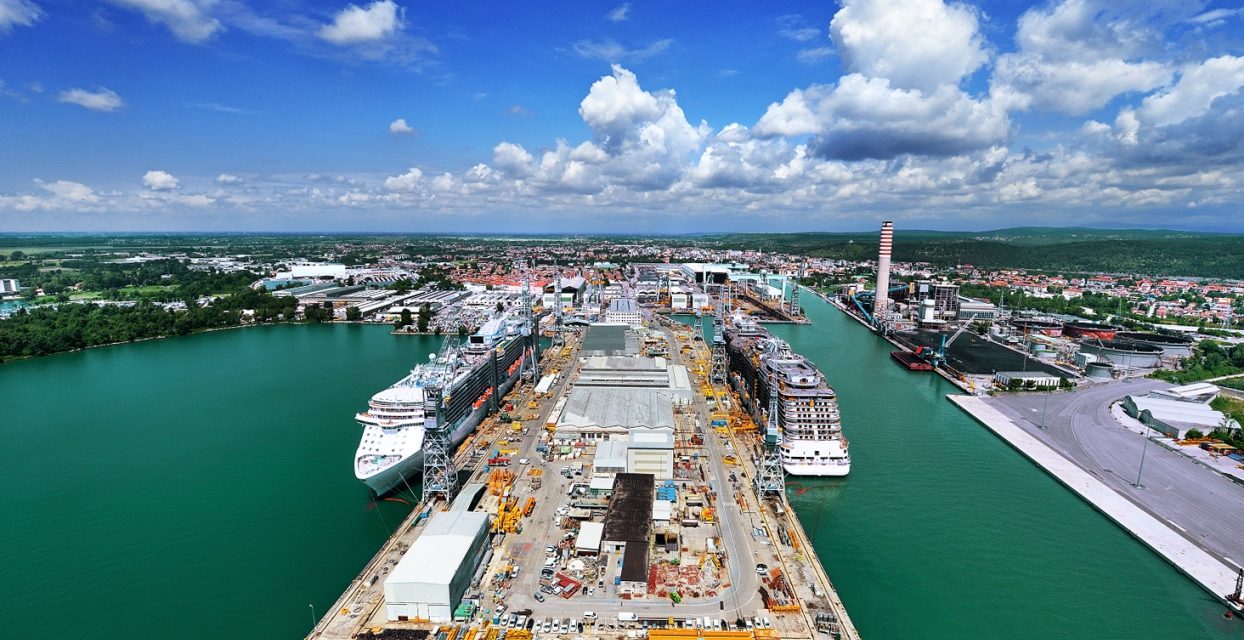
TRIESTE – A €3.5 million dispute could open between Fincantieri and the Municipality of Monfalcone over night-time works at the Panzano shipyard, while in Rome the Government confirms the site’s industrial centrality.
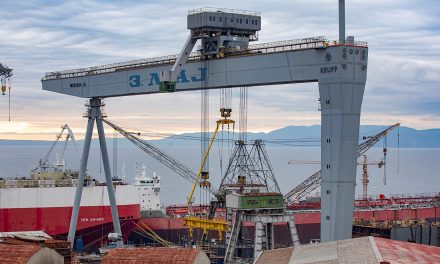
The compensation claim could be brought by Fincantieri Infrastructure Opere Marittime, a Fincantieri subsidiary, after the municipality refused a waiver on noise limits to allow activities between 10 pm and 6 am. The company says it has suffered economic damage because it has been unable to operate at night in an area under its own responsibility, in particular for the installation of new cranes for the construction of maxi cruise ships already covered by signed contracts.
A first refusal order had been signed by Mayor Luca Fasan. The measure was challenged by Fincantieri and later annulled by the TAR, as it was deemed not to fall under the mayor’s competence. The municipality then issued a new measure, this time signed by a senior official. Against this latest act, the company has requested a stay, with the hearing scheduled in the coming days.
The municipal administration believes the night works, planned for more than three consecutive months, would have too high an acoustic impact on the city, arguing that the activities could be carried out through alternative methods, albeit at higher cost.
The local confrontation fits into a broader context. In Rome, the Undersecretary at the Ministry of Economy and Finance, Sandra Savino, met Fincantieri’s CEO, Pierroberto Folgiero, to take stock of the group’s industrial outlook, with a specific focus on the Monfalcone plant.
During the meeting, the strategic role of the shipyard was reiterated: one of Europe’s main shipbuilding hubs and a central asset for the Friuli Venezia Giulia economy. Monfalcone makes a significant contribution to regional exports and employment stability, with a supply chain involving hundreds of companies.
On the employment front, more than 270 new direct hires have already been made at the site. A plan to attract skilled labour is also ongoing, including initiatives linked to the Mattei Plan and structured training paths, including Italian-language courses. Since 2024, 26 courses have been launched for a total of 1,300 hours, involving over 400 workers across the group’s Italian facilities.
Strengthening the supply chain was also addressed through the “Evoluzione Indotto” and PartnerSHIP projects, aimed at reducing subcontracting, encouraging aggregation among companies, and improving financial robustness, digitalisation and safety. On legality, reference was made to the National Framework Protocol with the Ministry of the Interior, cooperation with the Guardia di Finanza, and the adoption of structured audit and monitoring systems.
Finally, the Monfalcone shipyard’s innovation path was outlined, as it is consolidating its role as an R&D hub thanks to a laboratory of around 1,200 square metres dedicated to robotics, cobotics, 3D printing, Internet of Things and digital twin, with a training area also open to schools.
In the coming days Undersecretary Savino will visit the plant, while on the judicial front the TAR’s decision on the requested stay is still awaited.