

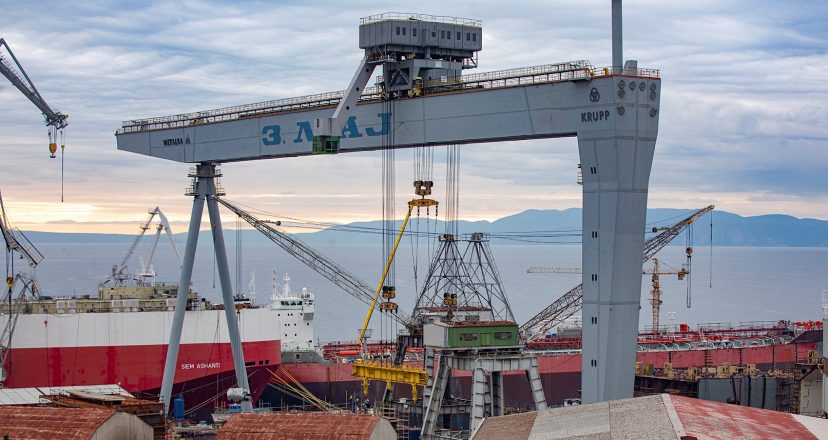
RIJEKA – The Board of Directors of the Centre for Restructuring and Sale (CERP) unanimously approved the offer submitted by Iskra brodogradilište of Šibenik to acquire the Rijeka-based company “3. maj 1905”. A new chapter is opening for Rijeka’s historic shipbuilding and repair yard “3 Maj”, which for more than a century has been a symbol of the city’s industrial and maritime tradition. The announcement was made by Finance Minister and CERP Board President Tomislav Ćorić, who stressed that the core aim of the transaction is to safeguard the site’s shipbuilding vocation. «The offer, worth €6.665 million, fully complies with the tender conditions. What matters is that Iskra brodogradilište undertakes to maintain shipyard activity in the “3 Maj” area in Rijeka», Ćorić said after the meeting.
The new owner is aware that fully restarting production will require further investment. According to the minister, this is an unavoidable step to restore full operations at one of the city’s most important industrial hubs. Ćorić recalled how the experience gained by Iskra at its Šibenik shipyard, where since 2020 shipyard activity has recorded positive development, is an encouraging sign for the future of the Rijeka complex as well. «Their track record shows tangible results and there is no reason to doubt that a similar approach can be applied in Rijeka too», the minister added.
As for ownership and legal aspects, Ćorić said the situation is fully defined from a legal standpoint. Proceeds from the sale will be transferred to the bankruptcy estate of the former “3. maj” company in liquidation, in line with the agreement reached between the parties and the Croatian state. The CERP decision provides that the full amount be allocated to the bankruptcy proceedings of the former shipyard company, helping to settle outstanding liabilities. The transaction marks a significant moment for the yard’s future—an entity that for generations has shaped Rijeka’s industrial identity and its relationship with the sea. Confirmation of continued shipbuilding activity is being viewed as a key element not only economically and in employment terms, but also symbolically, as it keeps alive a productive tradition rooted in the city’s history.