

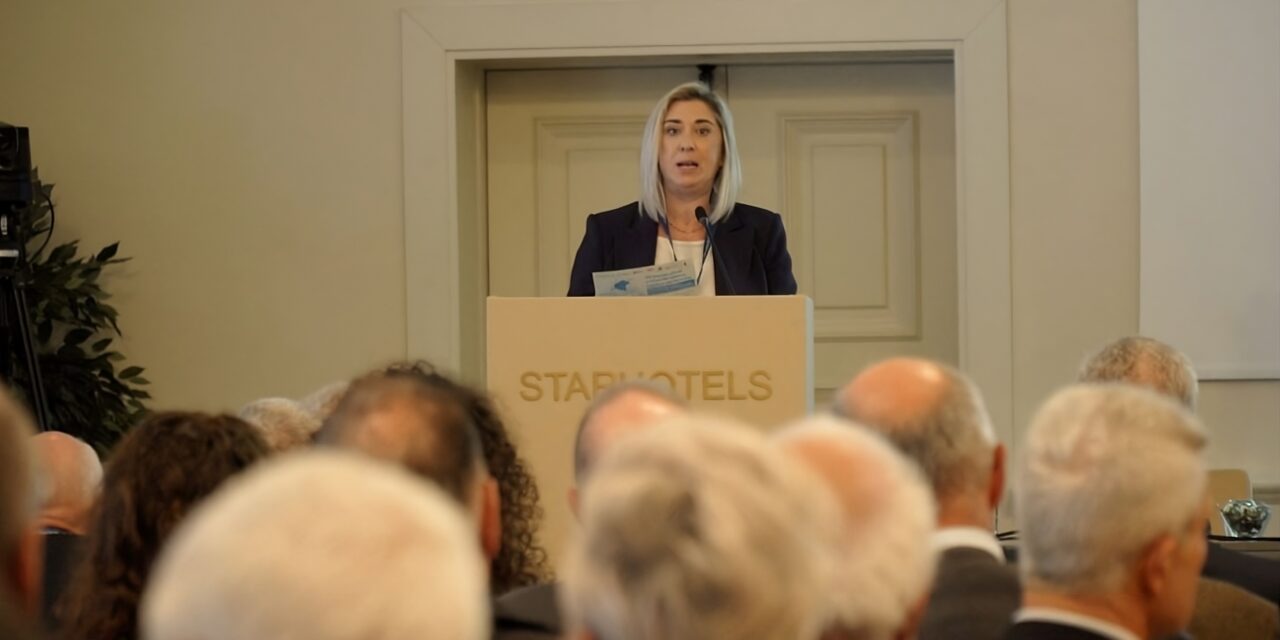
TRIESTE – «One of the challenges ahead of us is certainly to further strengthen our infrastructure, which is already functioning adequately. Our motorway system handles traffic that is the highest in Europe, a very positive figure for our territory. We must do the same when it comes to rail transport and make our logistics platform—made up of rail and road networks as well as ports and inland terminals—ever more efficient and sustainable».
This was stated yesterday in Trieste by Cristina Amirante, Friuli Venezia Giulia’s Regional Councillor for Infrastructure and Transport, on the sidelines of the North-East Logistics General Assembly. A national-level event organised by the Region to foster dialogue between institutions and industry operators on the development of logistics, freight transport and innovative strategies.
«We are working in close synergy with all the stakeholders in the sector, together with the Government and the Regions of Veneto, Lombardy and Emilia-Romagna, as well as the Autonomous Provinces of Bolzano and Trento, because we see ourselves as part of a more complex system», Amirante stressed. «We are convinced that this team, working with this vision and with great determination, can achieve even better results». The event forms part of the activities of the permanent interregional technical working group for the coordination and promotion of the North-East logistics system, established under the Memorandum of Understanding signed in March 2023 by the Friuli Venezia Giulia Region with the Ministry of Infrastructure and Transport (Mit), the Regions of Veneto, Lombardy and Emilia-Romagna, and the Autonomous Provinces of Bolzano and Trento.
In her opening remarks, Councillor Amirante recalled how necessary it is today for the North-East to continue to be the driving force of our country. According to Amirante, this issue—together with those linked to infrastructure and logistics development—must remain central to building the vision for the future of our manufacturing companies, for attracting new businesses to the area and for the creation and growth of innovative start-ups. All of this, to be more competitive internationally». During the initiative, which concluded today with a discussion among councillors from the Regions and Autonomous Provinces, several topics of strategic relevance for the entire logistics and freight-transport sector were explored: the Imec Corridor, maritime and rail intermodality, infrastructure digitalisation and Simplified Logistics Zones.