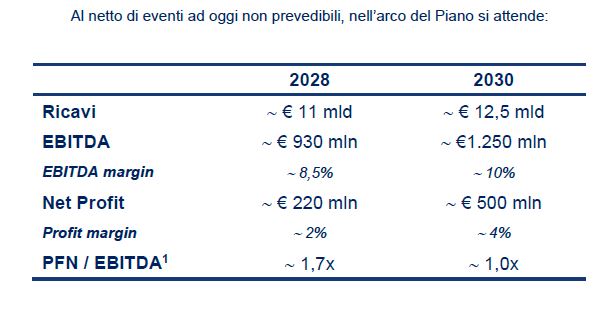


TRIESTE – Fincantieri’s board of directors has approved the 2026–2030 industrial plan, outlining a phase of structural growth for the group, with rising revenues and margins, strong cash generation and an expected net profit of €500 million by the end of the period.
Compared with 2025, the plan targets a 40% increase in revenues and a 90% increase in EBITDA by 2030. At the same time, a sharp acceleration is expected in the deleveraging path, supported by the group’s ability to generate cash throughout the plan horizon.
Over 2026–2030, Fincantieri estimates new orders of more than €50 billion, with the first Defence-sector contracts expected as early as 2026. Market conditions—both civil and military—are described as favourable and characterised by structurally high demand, especially for complex, technologically advanced platforms with a reduced environmental footprint.
According to CEO and general manager Pierroberto Folgiero, the 2026–2030 plan is a true industrial manifesto, built on a long-term vision in a phase of positive macro-trends for the shipbuilding industry. The group is entering a new growth stage, with strengthened production capacity, higher competitiveness and a continued focus on core business and operational efficiency.
One pillar is Defence: Fincantieri plans to double the production capacity of its Italian yards dedicated to this business, in response to accelerating domestic and international demand. Investments aim to shorten delivery times, increase the number of units that can be built and structurally strengthen the group’s competitiveness in foreign markets, with particular attention to the United States, South-East Asia and the Middle East.
The geopolitical context is indicated as one of the main growth drivers. Global defence spending is expected to reach $2.93 trillion in 2030, up almost 19% from 2025. Against this backdrop, Fincantieri aims to leverage its role as a platform integrator and its track record in international programmes, strengthening its presence with the world’s leading navies. Commercial opportunities identified over 2026–2028 exceed €56 billion, of which around €23 billion carry a medium-to-high probability of success, with the first effects on revenues expected already from 2026.
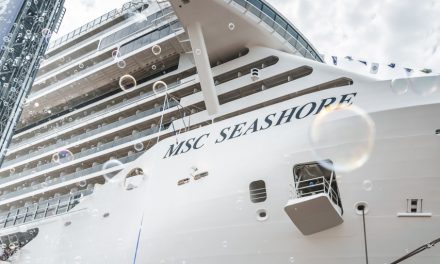
In the cruise segment, Fincantieri confirms a global leadership position, with a market share above 49%, 34 ships in its backlog and deliveries scheduled through to 2036. The sector’s industrial cycle is described as supported by average annual cruise passenger growth of 4.5% between 2024 and 2032, by European yard capacity being fully booked, and by demand increasingly oriented towards digital ships and next-generation propulsion.
As for offshore and specialised vessels, Fincantieri remains among the leading global players in a market supported by rising energy demand. Offshore wind is expected to grow at an average annual rate of 6–7% through 2050, while offshore oil & gas still accounts for around 16% of global energy supply. High-growth segments such as cable-layers and icebreakers also feature, tied to the development and maintenance of energy and communications infrastructure.
The group has a portfolio of advanced offshore units equipped with remote control and green propulsion solutions, with engines also designed for the use of green ammonia. Over 2026–2030, Fincantieri’s addressable market in this segment is estimated at between 130 and 140 new units.
A central role in the plan is assigned to the underwater segment, launched in May 2025 and expected to grow rapidly. The reference market is forecast to double between 2026 and 2030, from around €22 billion to €43 billion. In the military domain, demand is driven both by conventional systems—such as submarines and effectors—and by new needs linked to mine warfare, surveillance, intelligence and anti-submarine warfare. In the civil domain, attention is growing towards the protection and monitoring of subsea infrastructure, from submarine cables to port assets. The dual-use sector represents a further growth driver, thanks to technologies such as underwater drones and advanced sensing, command and control systems.
Through a path of technological and organisational transformation, Fincantieri aims to accelerate the energy and digital transition, inspired by blue economy principles across the entire value chain. The 2026–2030 sustainability plan covers the group’s main impacts and material risks and seeks to seize opportunities created by growing demand for green ships, technological evolution and the international regulatory environment.
To support this trajectory, strategic initiatives have been identified at production, technology and human-capital level, including opportunities for inorganic growth, with the aim of strengthening Fincantieri’s global leadership in high-complexity shipbuilding and consolidating its role as a supply-chain aggregator and industrial engine for the country.