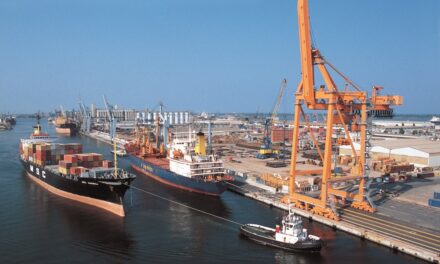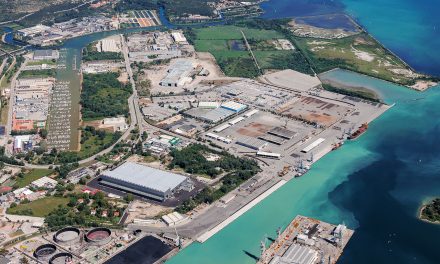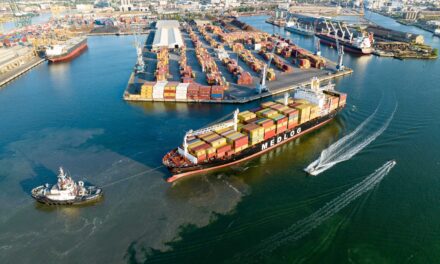


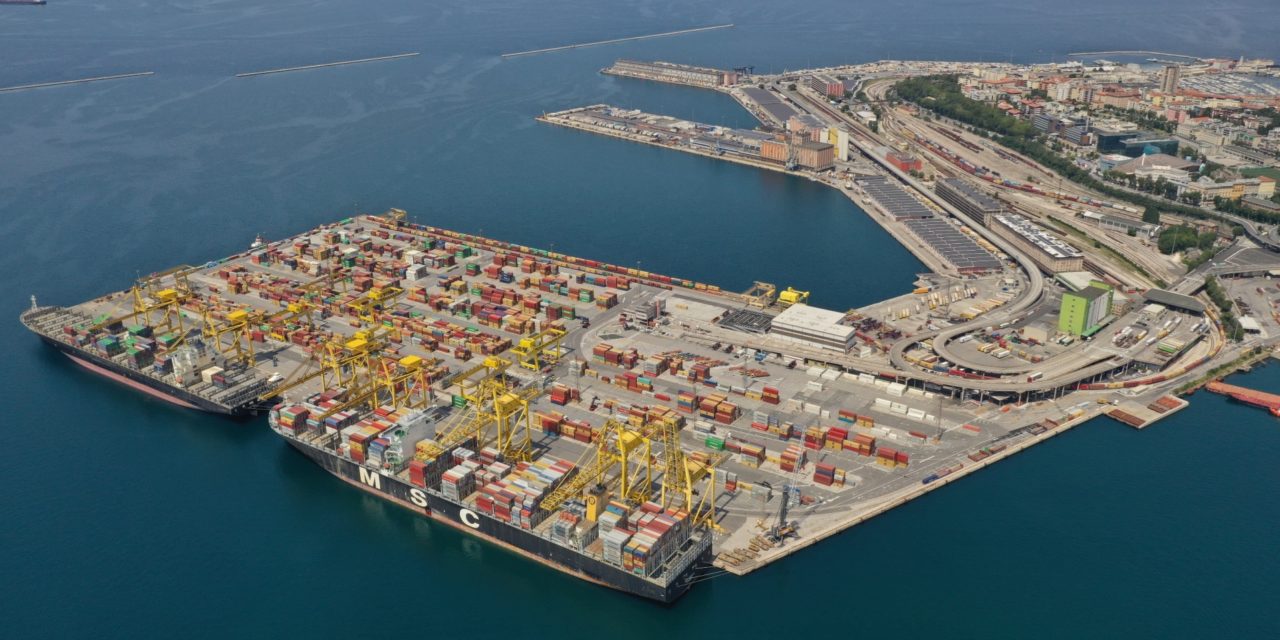
TRIESTE – The port of Trieste is recording a significant 12.3% contraction year-on-year (change over the last quarter 2024–25) in container shipping connectivity to global liner networks.
This is shown by the assessment of ports’ connections to the worldwide network of maritime services, according to the survey for the last quarter of this year of the Port Liner Shipping Connectivity Index (PLSCI), UNCTAD’s index.
The Friuli Venezia Giulia port is the only one in the Upper Adriatic area to post a decline. Venice, according to the same analysis, makes a major jump (+17.0%), reflecting a strengthening of its position in global container networks. A higher PLSCI implies more regular connections, greater attention from shipping lines, and a potential increase in frequencies and vessel capacity served. Ravenna, while starting from a lower level than the other ports, shows growth to +10.6%, a sign of progressive integration into the network of scheduled liner services.
Positive signs also emerge for the ports of Koper in Slovenia and Rijeka in Croatia. With a value of 179.88 in the last quarter of 2025, Koper maintains its role as the main Adriatic–Alpine gateway, with a 3.4% increase compared to Q4 2024. Even if the percentage growth is moderate, the absolute level remains among the highest in the wider area, reflecting high service frequency and connectivity with the main European hubs. Traffic statistics confirm that the Slovenian port saw an increase in the number of containership arrivals/departures and in container volumes during 2024, consolidating its central role for the Northern Adriatic and for Central European hinterlands.
Rijeka increases its index from 124.20 to 129.29 (+4.10%), consolidating a trend of moderate expansion in maritime connectivity. The increase, while smaller in percentage terms than Venice or Ravenna, still signals stronger container connections—useful for attracting traffic and competing within the Adriatic–Balkan network.
In summary, for the upper and mid Adriatic: Venice and Ravenna are strengthening their connectivity within global networks. Rijeka continues steady, gradual growth. Koper consolidates its position as the leading regional hub. Trieste, despite its infrastructure strengths, records a significant drop in liner connectivity in this year-on-year comparison.
The picture for other Italian ports. Genoa, the national port with the highest degree of connectivity, stands at (439.9) up +5.8%. The second most connected Italian port, Gioia Tauro, is assigned 318.5, broadly unchanged (+0.2%). Indices are also up for La Spezia, Salerno and Livorno, at 275.1 (+7.8%), 222.3 (+20.3%) and 159.4 (+2.1%), as well as for Naples (142.9, +9.2%), Vado Ligure (133.9, +54.8%), Civitavecchia (97.8, +14.1%), Ancona (81.6, +4.6%) and Cagliari (34.5, +32.1%).