

TRIESTE – HHLA is strengthening its port operations decarbonisation pathway with a new investment at the Container Terminal Tollerort in Hamburg.
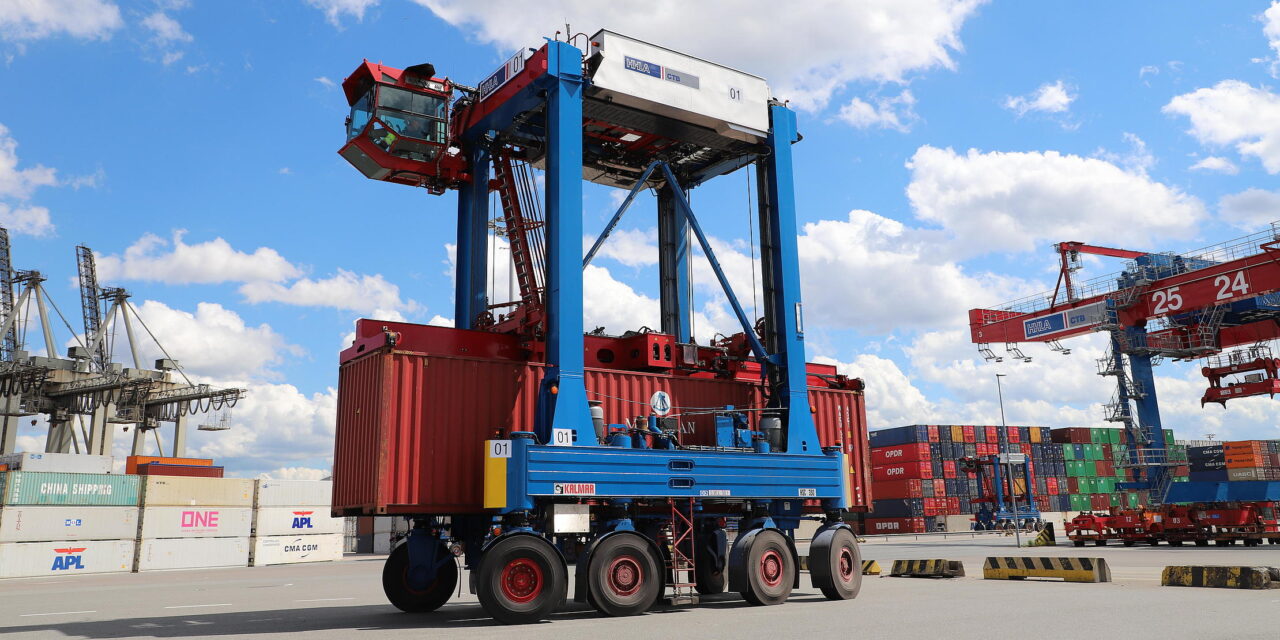
The terminal has ordered from Konecranes eight newly designed hybrid straddle carriers, the Konecranes Noell NSC 644 EHY model. The order was booked in the fourth quarter of 2025, with commissioning expected by the end of 2026.
The new machines will be used to transport containers between quay and yard, for stacking operations and for landside handling on trucks and rail. They will replace older diesel units currently used for the same tasks, helping to significantly reduce fuel consumption and exhaust emissions.
Each straddle carrier is equipped with a diesel generator set paired with an onboard battery system. This configuration delivers operational performance equivalent to conventional units, but with a lower environmental footprint. The machines also feature the Powerlift system, which raises the driver’s cabin to improve operator comfort and visibility. According to Ingo Witte, Managing Director of HHLA Container Terminal Tollerort GmbH, the investment fits into the terminal’s long-term development plans. Experience gained with Konecranes Noell straddle carriers and the reliability of the hybrid solution are key factors in achieving CO₂ reduction targets while maintaining high levels of productivity in day-to-day operations.
The new units are based on Konecranes’ latest design concept, which focuses on a modular drive system. The platform has been developed to allow relatively straightforward upgrades to other energy solutions, such as fully battery-electric drive or hydrogen, giving terminals the option to adapt the machines’ configuration over time as technology and environmental strategies evolve.
For Konecranes, the order confirms its long-standing relationship with HHLA across terminals in the Port of Hamburg and aligns with the “Ecolifting” roadmap, the group’s step-by-step programme towards zero tailpipe emissions. The pathway includes solutions ranging from engines running on renewable diesel to hybrid and electric systems, and on to emerging options such as hydrogen, designed to support the energy transition of port operations.