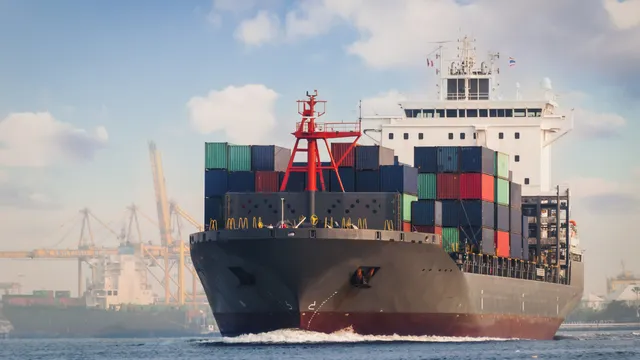


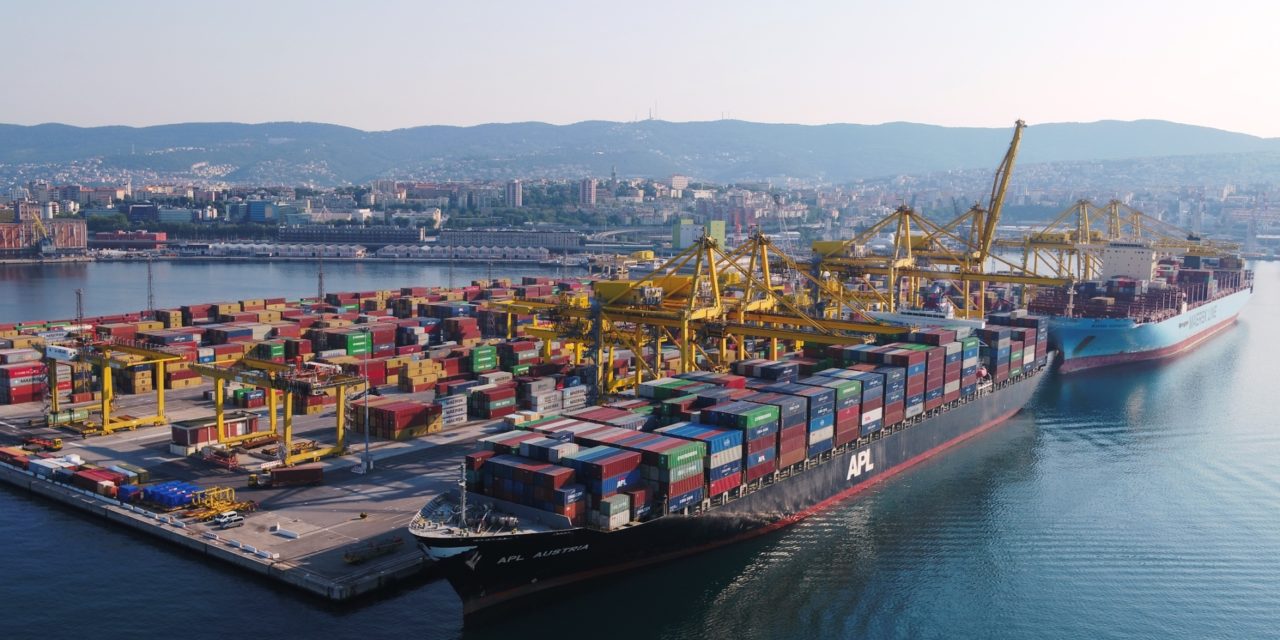
TRIESTE – The Port of Trieste is in a delicate phase, suspended between the natural post-alliance reorganisation of shipping lines and a new wave of international instability that risks reshaping, once again, the routes of global trade. This, in short, is the picture emerging from the latest analysis published in the AIOM (Agenzia Imprenditoriale Operatori Marittimi) newsletter, which looks to 2026 as a year of consolidation but also of strategic uncertainty. Among the other noteworthy items in the newsletter analysis are the 1,138 new container ships ordered, with a total capacity of around 11 million TEU, scheduled for delivery between 2026 and 2030, as reported by the World Orderbook Container Vessels report—a figure set to affect the balance of global maritime transport.
Returning to the Port of Trieste, after the dissolution of the 2M Alliance—the operating axis between Maersk and MSC that had ensured significant volumes until 2024—container traffic at the Port of Trieste recorded a marked contraction, falling in 2025 to just over half a million TEU compared with peaks above 730,000 in previous years. Maersk’s decision to concentrate its transhipment activities in Rijeka has inevitably impacted the figures of the TMT terminal (Trieste Marine Terminal), which today is effectively tied to MSC’s strategy, as the reference shareholder and the only major carrier able to drive a structural step change. According to AIOM, 2026 will be a transition year, with volumes estimated between 600,000 and 650,000 TEU.
A partial recovery, therefore, but still not enough to bring Trieste back to pre-2024 levels. The decisive variable remains the possible introduction of a second stable Asia–Adriatic ocean service string, capable of generating a further 200,000–250,000 TEU per year. MSC—today the only independent “big” outside tight consortium constraints—would have the flexibility to make such a choice in relatively short order. Up to this point, that is the industrial dynamic. But the geopolitical context is adding a major element of discontinuity.
The new military escalation between Iran, the United States and Israel has brought the Strait of Hormuz back to the centre of systemic risk, a strategic chokepoint for global energy and trade flows. Iranian threats and rising insurance premiums have led several shipping companies to temporarily avoid the Persian Gulf or to rethink their itineraries, forcing a return to longer routes via the Cape of Good Hope. For the container sector, this means longer transit times, rising freight costs and greater volatility in service planning. It is not only an energy issue: the lengthening of Asia–Europe routes directly affects flows to the Mediterranean and, by extension, also to Adriatic ports. If the situation were to persist, we could see a structural reshuffle of services, with a duplication of corridors—one via Suez, the other via the Cape—to manage geopolitical risk.
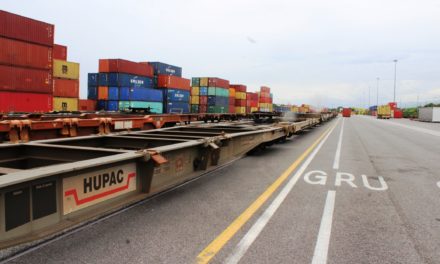
In this scenario, Trieste presents a distinctive profile. While in terms of deep-sea traffic dependence on MSC’s choices is evident, on the intermodal front—according to AIOM specialists—the port retains significant solidity. Rail connections with Central Europe, more than 7,000 trains per year, and total unitised traffic approaching 1.5 million TEU equivalents, thanks also to Ro-Ro, constitute a non-negligible resilience factor. Cargo diversification and strong integration with the hinterland act as a buffer against the volatility of ocean routes. The war in Iran, therefore, is not an external and distant element, but a factor that can concretely affect carriers’ strategies and container flows to Europe. For Trieste, the challenge is twofold: on the one hand to consolidate its role as a continental rail hub; on the other, to capture any traffic reallocations in a maritime system seeking new safe routes.