

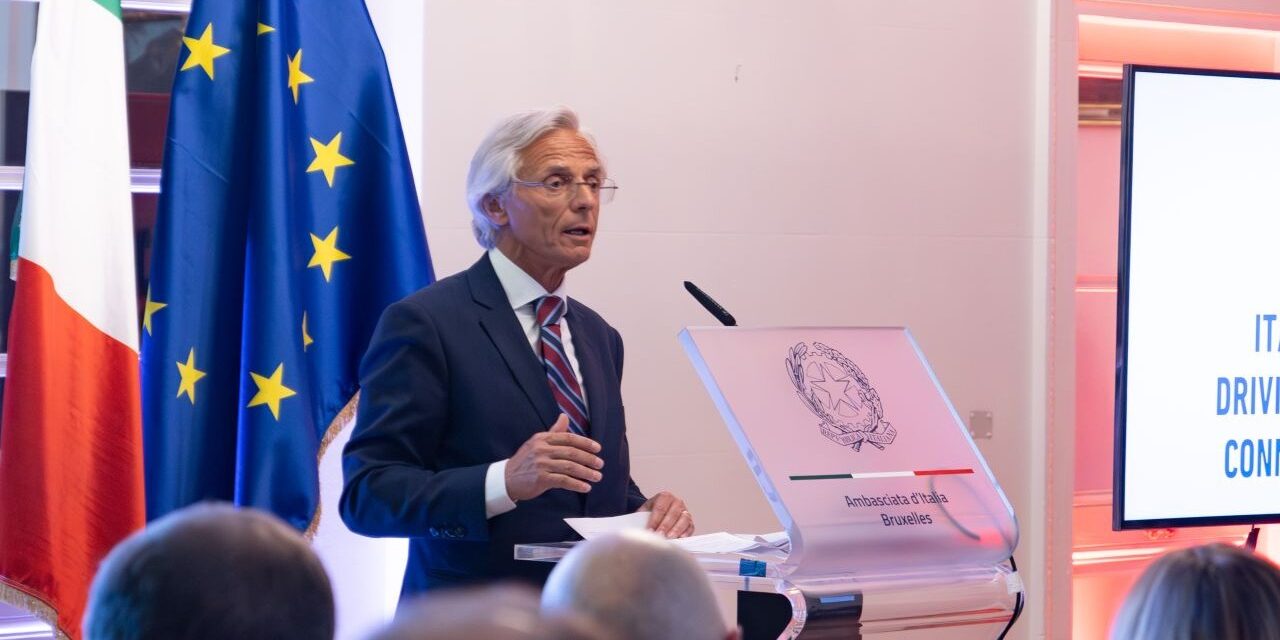
TRIESTE – Assarmatori is again putting pressure on the European Union for a revision of the ETS system applied to maritime transport. From Brussels, at the end of the annual mission of the association’s Board of Directors, president Stefano Messina launched a harsh attack on the current structure of the European emissions tax.
According to Messina, the economic effects of the ETS on the most exposed segments of maritime transport are now comparable to those caused by major international crises, such as energy price increases linked to tensions in the Strait of Hormuz. The difference, he stressed, is that the geopolitical emergency is temporary, while the ETS system represents a structural pressure that is set to have a permanent impact on the sector’s competitiveness.
The shipowners’ association is focusing in particular on links with the islands, the Motorways of the Sea and container transhipment, which are considered particularly vulnerable to rising costs. Messina describes the ETS as a tax that is «unfair because it is non-selective», applied without distinguishing between different types of maritime traffic and services.
Assarmatori is also closely watching the future European Strategy for the Islands, followed by European Commission Executive Vice-President Raffaele Fitto. During the meeting at the Berlaymont building, the association reiterated the need to protect essential maritime links with the islands, arguing that an excessively high climate tax risks undermining the sector’s economic balance without generating a direct return in investments for shipping’s energy transition.
The president of Assarmatori also criticised what he described as an ‘inflexible’ attitude on the part of the European technocracy, calling for the revision scheduled for July to introduce concrete corrective measures to prevent a loss of competitiveness for the European maritime industry.
The mission to Brussels also included meetings with officials from DG MOVE and DG CLIMA dedicated to the application of the ETS regime, as well as discussions with Italian MEPs and representatives of European institutions and international maritime security. The appointments also included a summit with the European External Action Service and connections with the European naval missions Aspides and Atalanta.