

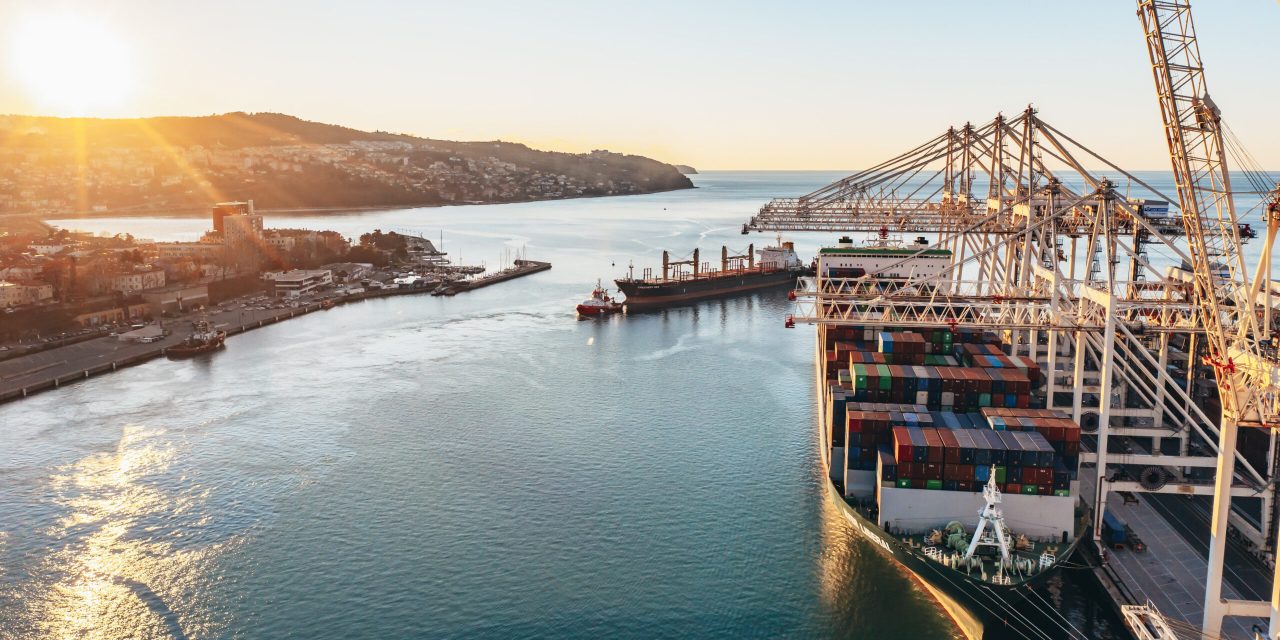
TRIESTE – The Municipality of Koper will begin the process of requesting that the Slovenian government amend the National Spatial Plan governing the port’s development. At the same time, Luka Koper reiterated that there are no plans for a liquefied natural gas (LNG) terminal and that proposals to expand Pier 2 are not yet final.
The city council—according to reports by several Slovenian media outlets, including Primorske Novice—unanimously approved a resolution instructing the mayor and the technical departments to draft an official proposal to amend the national land-use plan pertaining to the port. The document must be reviewed again by the city assembly before being forwarded to the relevant ministry.
The decision comes after the debate that has unfolded in recent weeks following the release of documents presented by the mayor of the neighboring municipality of Ancarano, who claimed there were plans for a significant expansion of the Second Pier and for the construction of new berths intended, among other things, for the transshipment of liquefied natural gas. The matter had led the Ancarano City Council to approve a resolution opposing the gas terminal and to urge other coastal municipalities to take a similar stance.
During the Koper City Council meeting, Nevenka Kržan, chair of the board of directors of Luka Koper, categorically ruled out the existence of a plan for an LNG terminal. She explained that such infrastructure has never been discussed by the company’s governing bodies and does not appear in the port’s strategic documents. She clarified that the drawings circulating in recent weeks are merely drafts and sketches with no planning value whatsoever. Kržan also reiterated that the company continues to respect the outcome of the 2012 city referendum, which voted against the construction of a gas terminal.
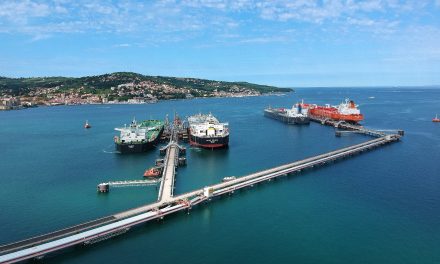
As for the Second Pier, the manager confirmed that the port is evaluating various possible design solutions, also in light of the future need to make changes to the current oil terminal, although no final decision has yet been made.
With regard to the Territorial Plan, the Second Pier is slated to be extended by approximately 370 meters. Existing operations—namely, the transshipment and storage of bulk, loose, and liquid cargo—will remain unchanged. Ships carrying liquid cargo will dock at the transfer platform, which will be built as an extension at the end of the pier for safety reasons. At the end of the second pier (protected by an additional breakwater), there will be moorings for service vessels. The bulk cargo terminal on the second pier is scheduled to be covered and enclosed.
Environmental issues were also addressed during the discussion. Several council members argued that the Territorial Plan approved in 2012 does not provide sufficient protection in terms of the environment and residents’ quality of life. Among the critical issues highlighted were the expansion of areas dedicated to liquid fuels and the impact of future port expansions.
Luka Koper’s management noted that the port operates exclusively in accordance with its strategy, the concession agreement, and the current national territorial plan. Among the initiatives outlined are the creation of green belts along the perimeter of the terminals to mitigate environmental impact, a new parking lot with a capacity of up to 11,680 vehicles, and an energy plan aimed at covering 30% of the port’s energy consumption with its own production by 2030.