

TRIESTE – The first phase of works on Slovenia’s H4 expressway—connecting the motorway to Ljubljana with the route toward Gorizia—was completed today. Heavy-vehicle traffic will resume from tomorrow.
The issue, however, will return next year, when a new three-month closure is planned for the summer, this time in the opposite direction (toward Ljubljana).
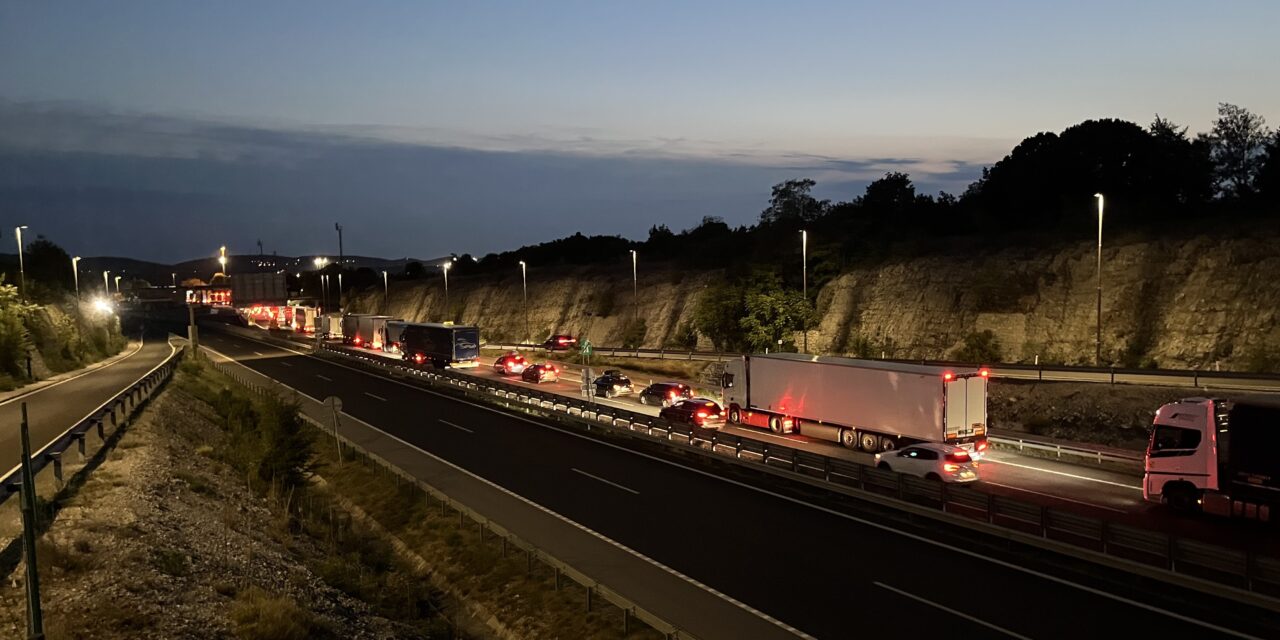
The interruption and subsequent restriction of heavy-vehicle traffic created significant pressure on parts of Friuli Venezia Giulia’s road system, particularly at the Fernetti border crossing and the Lisert toll gate on the A4. Starting in August, the region was forced to deploy an extensive operational response.
Data from Autostrade Alto Adriatico show a complex situation: between 18 August and 7 September, heavy-vehicle traffic entering Trieste/Lisert toward Venice increased by 54%, with almost 18,000 additional trucks per week compared to 2024, while flows from Slovenia toward Gorizia dropped accordingly.
From 8 September, after the H4 reopened to vehicles over 3.5 tonnes heading into Italy—while closing in the opposite direction—traffic progressively rebalanced: light-vehicle entries at Trieste/Lisert fell by 40%, heavy-vehicle entries by 16%, while heavy-vehicle exits toward Central and Eastern Europe rose by 43%. The Villesse–Gorizia crossing also saw major shifts, with a 117% increase in inbound traffic and a 33% decrease in heavy vehicles heading toward Slovenia.
In response, the Region, the motorway operator and the Prefecture of Trieste introduced several measures: suspension of roadworks between Redipuglia and Lisert during peak holiday periods; increased operational staffing up to 300 units; emergency resurfacing at Fernetti (completed 25 September, restoring two lanes); optimisation of entry and exit lanes at Trieste/Lisert through conversion to electronic tolling; and extensive traffic messaging via variable-message panels on the A4 and near Villesse.
With this first phase now complete, the current layout maintains closure of the slow lane toward Italy, while both lanes are open toward Slovenia. This configuration will remain in place until the second phase of works begins, currently scheduled for September 2026. Regional authorities have stressed the need to avoid interference with summer peaks and spring traffic.
The Friuli Venezia Giulia Regional Councillor for Infrastructure and Territory, Cristina Amirante, stated:
«The management of the H4 closure required strong coordination among all involved parties, both Italian and Slovenian. The system responded effectively, limiting impacts on citizens, workers and transport operators during an evidently critical phase. We will continue to monitor the evolution of the works closely, ensuring that the second phase does not interfere with summer traffic flows, while maintaining constant dialogue with DARS and all competent institutions. Our goal is to guarantee safety, predictability and quality in cross-border connections, which are essential for the economy of Friuli Venezia Giulia and the entire Upper Adriatic area».