

TRIESTE – Strengthening land-based intermodality, the efficiency and sustainability of logistics flows, the rational use of land, the completion of TEN-T (Trans-European Networks) infrastructure, and the promotion of environmental, social and economic sustainability in logistics.
These are the cornerstones of the new rules forming the framework law on inland terminals, which in recent days received final approval in Rome by the Chamber of Deputies (76 votes in favour and 32 against), after a parliamentary process lasting nearly three years.
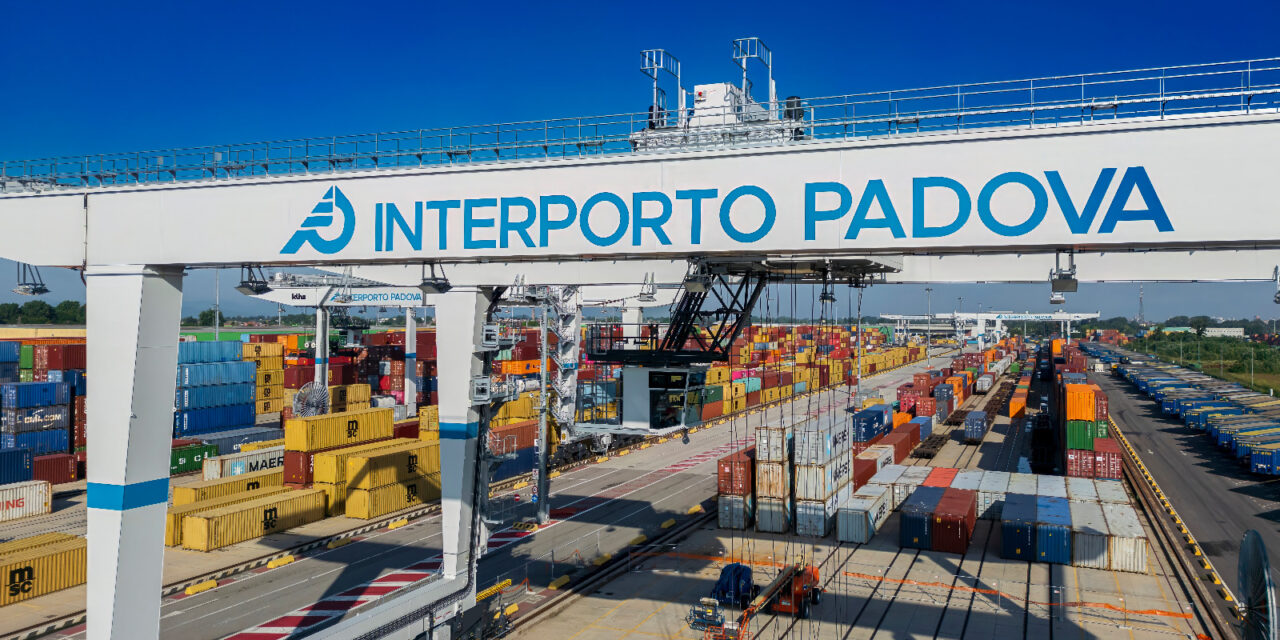
The purpose of the law is to increase intermodality and the efficiency of logistics flows, promoting links with ports or airports and major road networks, while ensuring a rail terminal suitable for forming and receiving complete or conventional intermodal trains, with fixed and mobile equipment for transhipping intermodal load units and goods from rail to road or inland waterways.
The new law, which will replace Law 240/1990, consists of 8 articles and defines the inland terminal as a strategic infrastructure of national interest, establishing a National Committee for Intermodality. The Minister of Infrastructure will carry out a survey of existing inland terminals and approve a general plan for intermodality; operators will work under private-law rules, with the possibility of acquiring ownership of the sites; the maximum number of inland terminals will be 30, with priority given to the most significant projects. The creation, by decree of the Ministry of Infrastructure, of the list of managing entities is also envisaged.
Article 2 regulates the planning of inland terminals through the drafting of the General Plan for Intermodality, prepared by the MIT following a survey of existing and under-construction terminals, after consulting the National Committee and the Unified Conference. The Plan is adopted by one or more ministerial decrees, to be issued within one year of the law’s entry into force, after obtaining the opinion of the National Committee for Intermodality and Logistics, hearing the Unified Conference and with its agreement. The MIT may also identify new inland terminals and improvement works on existing ones, subject to the opinion of the National Committee and the Ministry of the Environment. Spending (amended in the Senate) of 5 million euros for 2025 and 10 million euros for each of 2026 and 2027 is authorised.
Priority criteria emphasise consistency with the objectives of the framework law, with particular regard to environmental sustainability. Implementation methods are delegated to an interministerial regulation to be issued within two months. A simplified procedure is provided for project approval through Programme Agreements. Following amendments introduced in the first reading in the Chamber, it is established that rail operators may upgrade “last-mile” connections at their own expense and subject to cost-benefit analysis. Inland terminal operators must sign agreements with RFI. Ordinary-statute regions must adapt their regulations within six months. The same deadline applies to special-statute regions and autonomous provinces, in accordance with their statutes.
The Unione Interporti Riuniti (UIR) welcomes “with great satisfaction” the approval of the final text of the Framework Law on Inland Terminals. «It is a major achievement: in fact, the new law — comments the president of the association, Matteo Gasparato — largely incorporates the vision promoted by UIR, aimed at giving the Italian inland terminal system a modern regulatory framework consistent with the objectives of sustainable development and intermodality. Moreover, the text undoubtedly represents a solid basis from which to start for further improvements in the future».