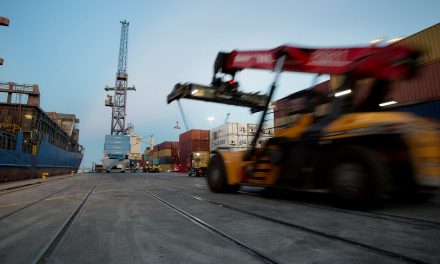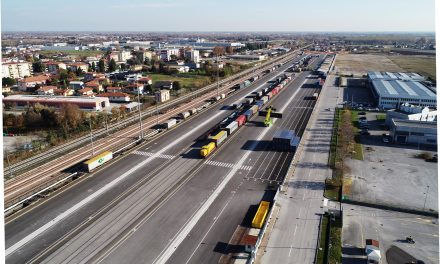


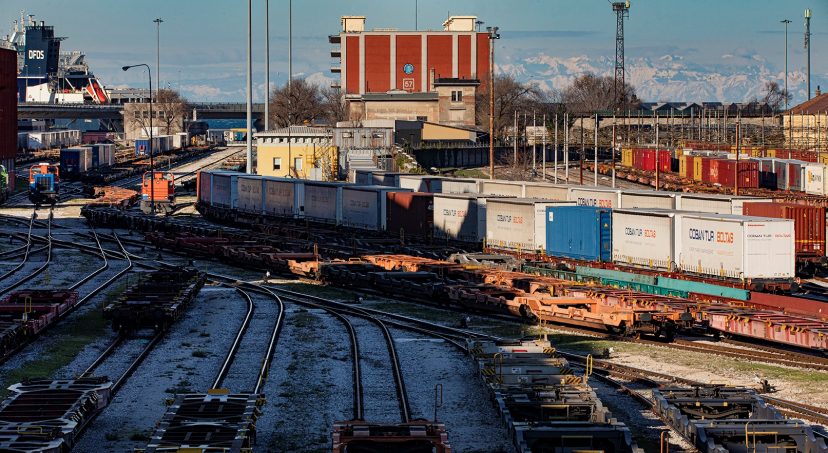
TRIESTE – Italian rail freight is slowing and risks a further hit from the works planned in Germany along the Scandinavian–Mediterranean Corridor.
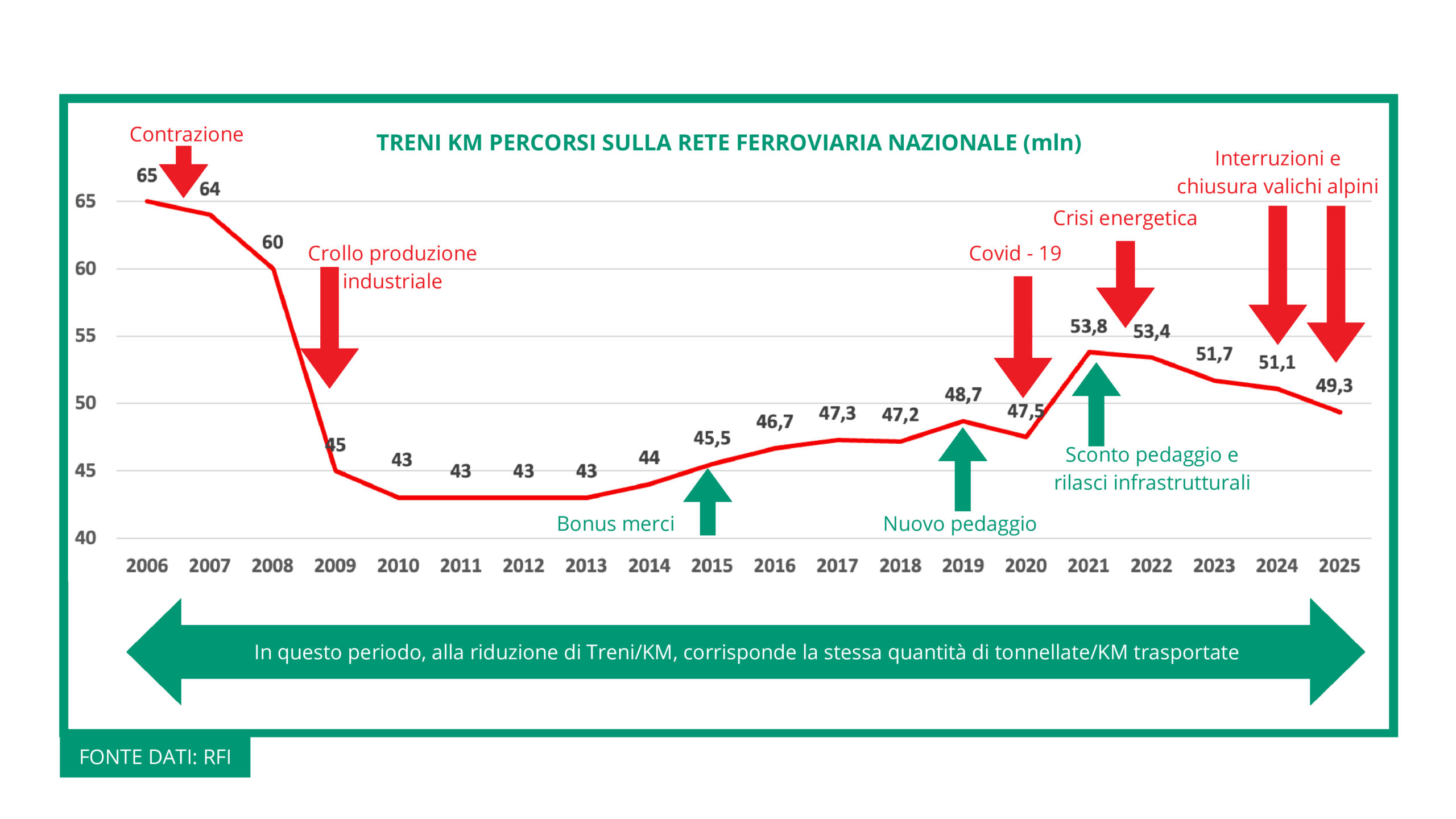
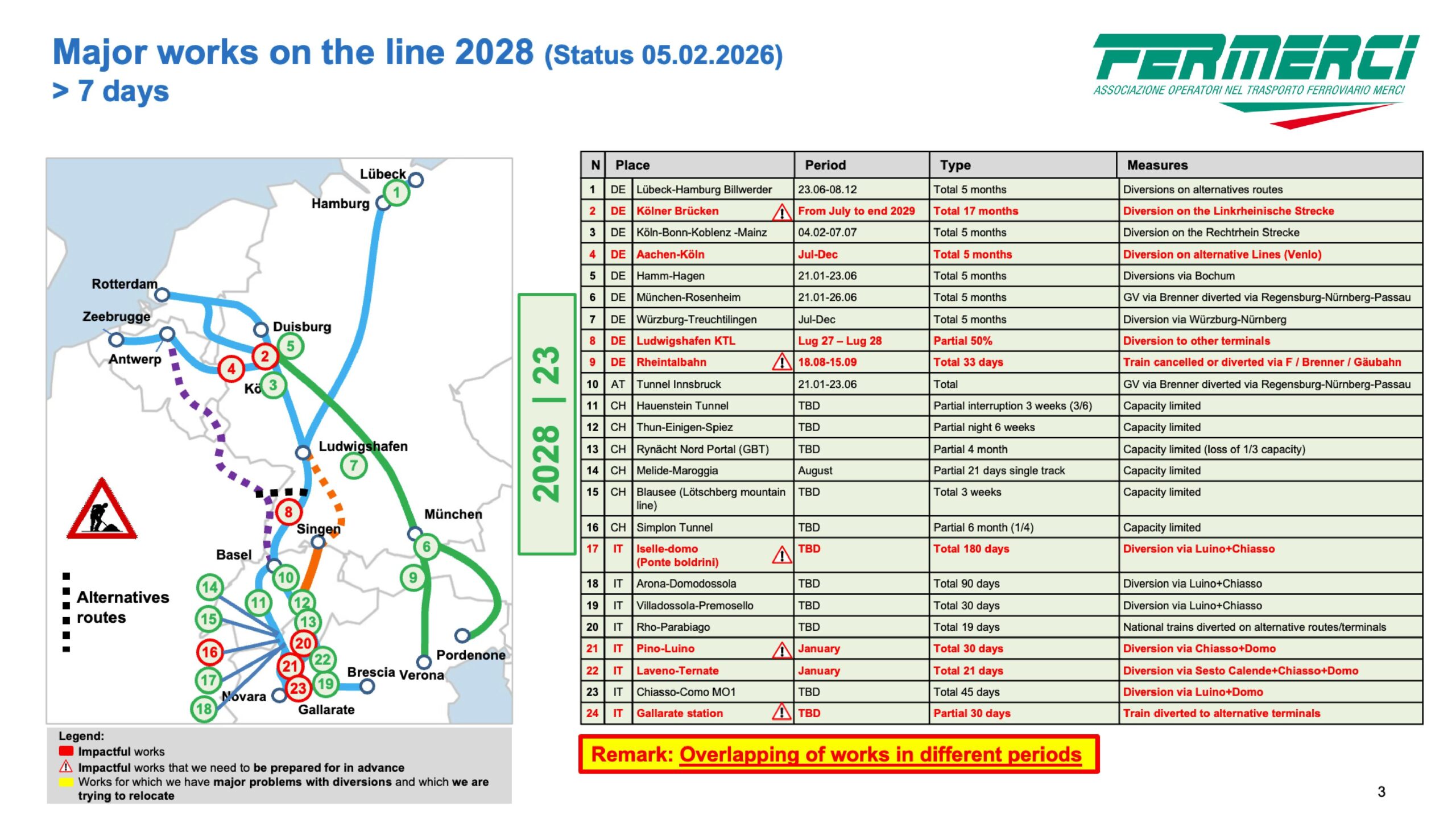
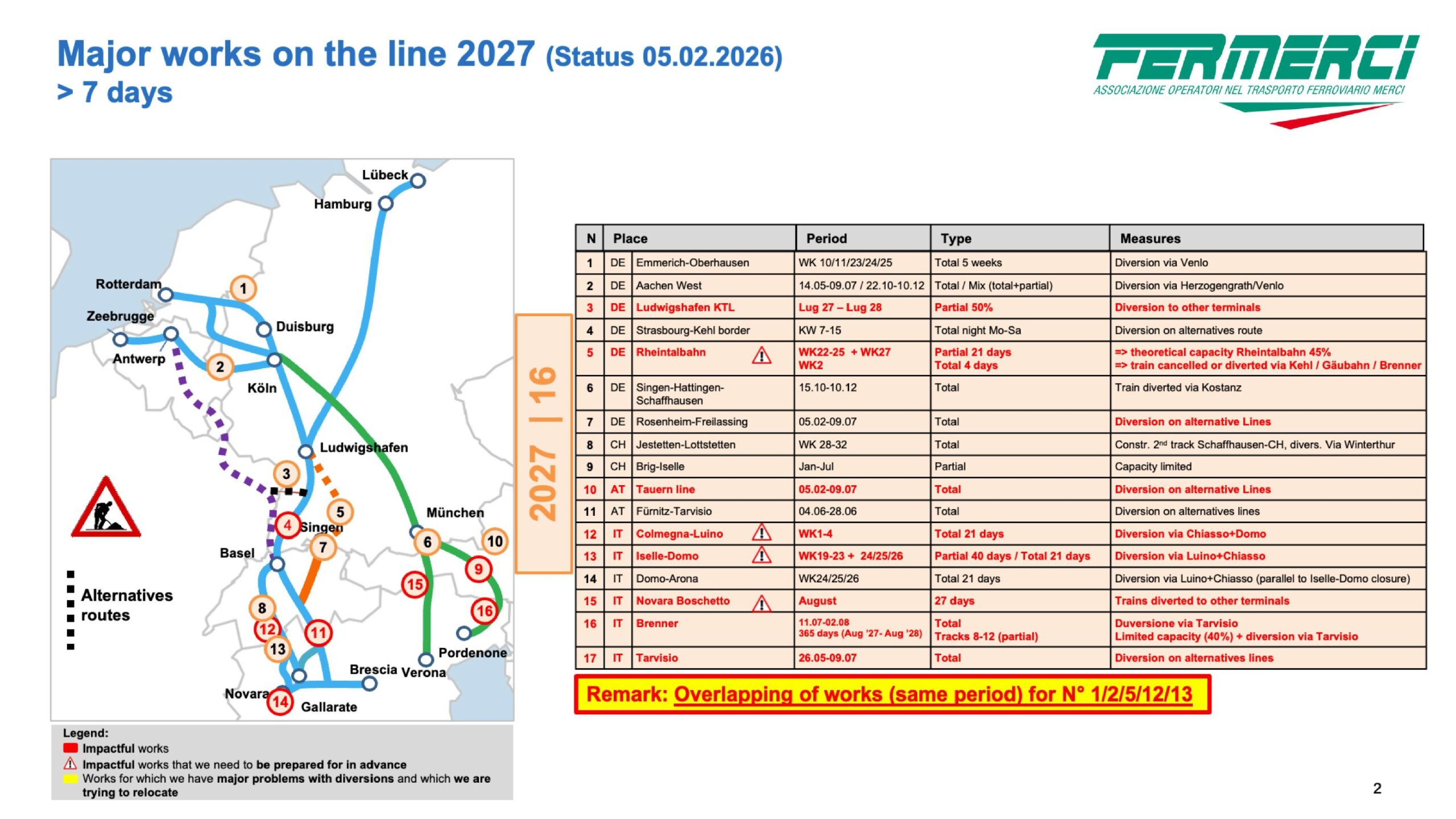
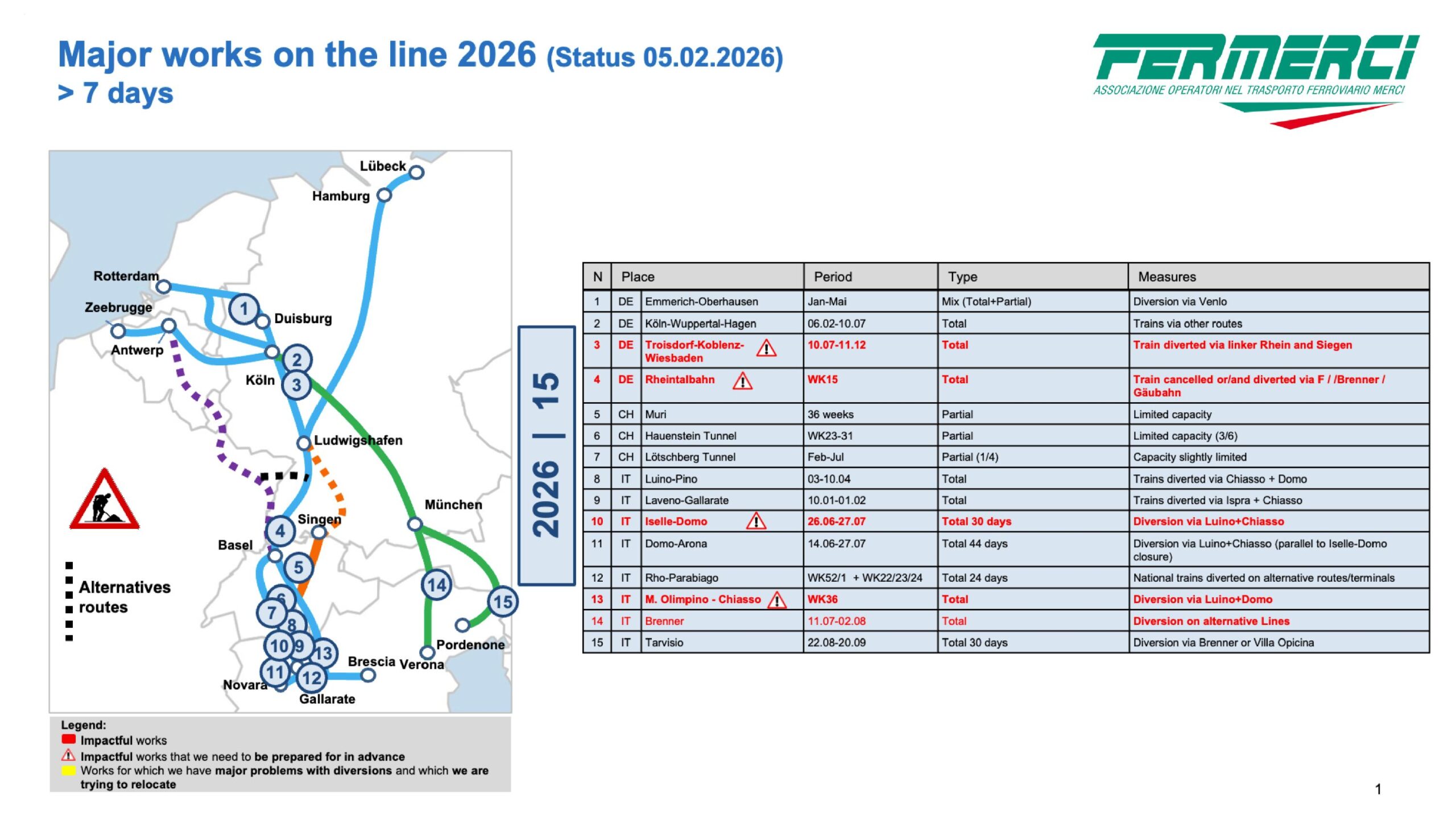
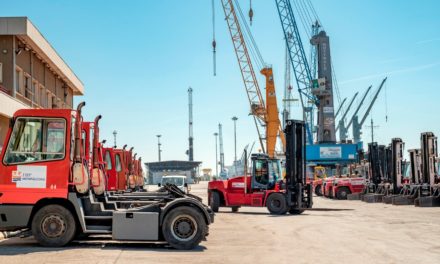
Data from Fermerci point to a 3.5% drop in freight-train kilometres run on the national network and a -2.51% fall in trains handled in ports. Capacity cuts already scheduled for 2026 could worsen the picture. Added to this are imminent interventions on Germany’s rail infrastructure, set to affect the main trade artery between Italy and Northern Europe. The section involved is on the Scandinavian–Mediterranean Corridor, a strategic axis for Italian manufacturing exports.
The 2017 Rastatt precedent remains a concrete reference point. According to a UIRR study, the seven-week closure of that stretch caused damage exceeding €2.2 billion, affecting numerous European factories and leading to production line shutdowns. To prevent a large-scale shift back to road haulage—with impacts on safety, energy costs and decarbonisation—Fermerci is calling for constant coordination among European infrastructure managers, a guaranteed residual capacity of at least 70–80% during works, the creation of a dedicated fund at national and European level, and the temporary suspension of penalties for service cancellations. Following the bilateral meeting on 23 January, the issue was discussed at the Ministry of Infrastructure and Transport with industry operators. Fermerci President Clemente Carta stressed the need to adopt a model similar to RFI’s, avoiding the isolation of entire industrial areas for months. According to the association, a different approach risks generating significant economic impacts not only for Italy, but for Europe’s wider production system.