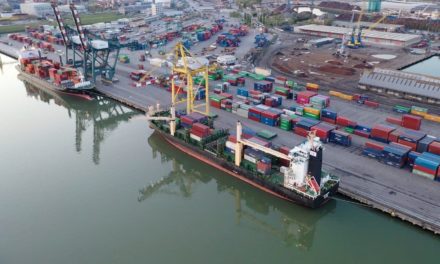


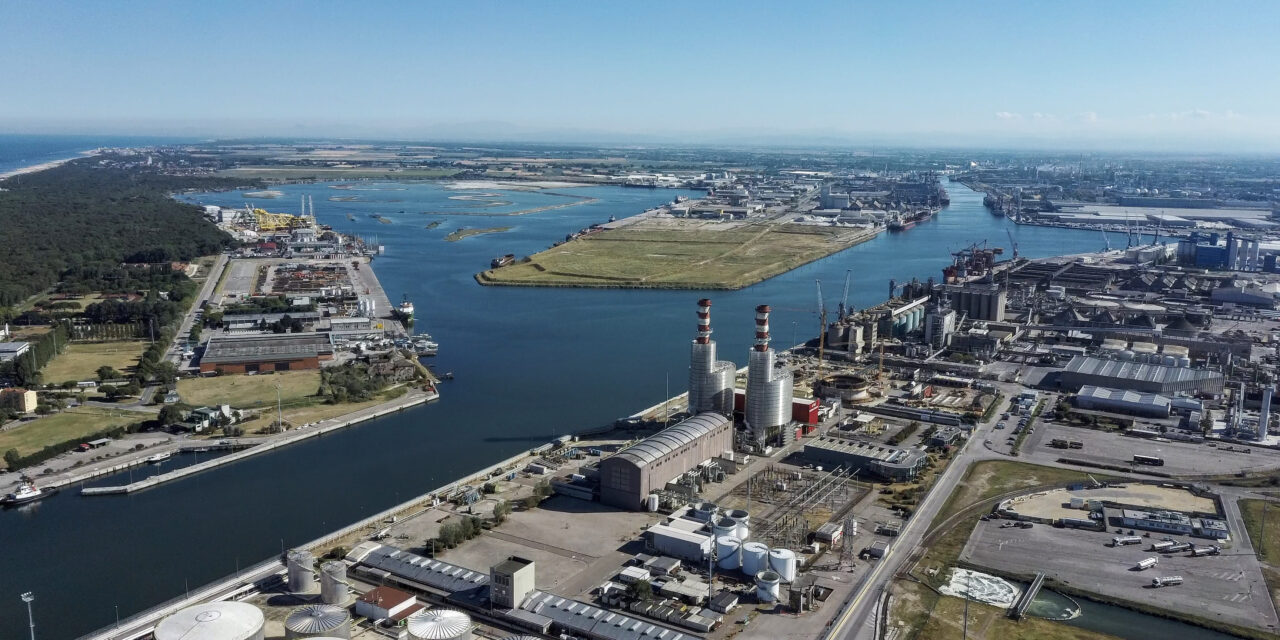
TRIESTE – At the port of Ravenna, associations representing shippers and road haulage operators have signed an agreement to jointly regulate times, rules and responsibilities in container loading and unloading operations.
The agreement was signed at the headquarters of the North-Central Adriatic Sea Port System Authority by Ravenna’s associations of freight forwarders (ARSI) and shipping agents (ASAMAR), together with the road haulage organisations CNA Ravenna, Confartigianato Imprese Ravenna, Confcooperative Romagna Estense and Legacoop Romagna, gathered in the Ravenna Road Haulage Joint Coordination Body (CUAR).
At the heart of the agreement is the definition of shared rules for managing waiting times in container loading and unloading operations, one of the most critical issues in the port logistics chain. The aim is twofold: on the one hand, to provide greater operational certainty for road hauliers; on the other, to encourage better organisation of flows for customers.
The document, drafted by lawyer Simone Bassi, forms part of a broader vision that sees the quality of relations between companies as a determining factor in the competitiveness of the port system. It is therefore not merely a technical intervention, but a true system-wide pact aimed at strengthening mutual trust and structured cooperation.
In a complex context such as container logistics, the introduction of uniform conditions, written contracts and clear procedures also represents a tool for preventing disputes. The agreement also provides for the establishment of a joint committee to manage disputes, thereby strengthening ongoing dialogue between the parties.
«Not just rules, but a true system-wide pact», stressed CUAR coordinator Veniero Rosetti, «aimed at strengthening relations between logistics operators and further qualifying the port of Ravenna as a context in which cooperation and competitiveness can grow together».
On the same line, Annagiulia Randi, president of ARSI, highlighted the operational value of the agreement: «It is an important agreement because it shows how, at local level, shared solutions can be built. Uniform contractual provisions on waiting times for loading and unloading provide greater certainty for operators and strengthen the strategic role of our category in the logistics chain».