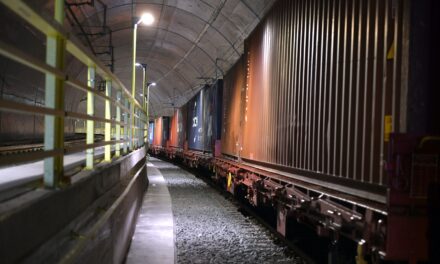


TRIESTE – Austrian railways ÖBB have announced the total closure of the Tauern Tunnel from 8 February to 9 July 2027 for the second phase of refurbishment and modernisation works on the line, one of the main north-south railway corridors between central Europe and the Adriatic.
The intervention, already known, is part of a broader programme to upgrade rail infrastructure along the Tauern axis, considered strategic also for freight traffic bound for the North Adriatic ports. Preparatory works will begin as early as autumn 2026, without any impact on traffic, while during the closure the tunnel will be completely unusable.
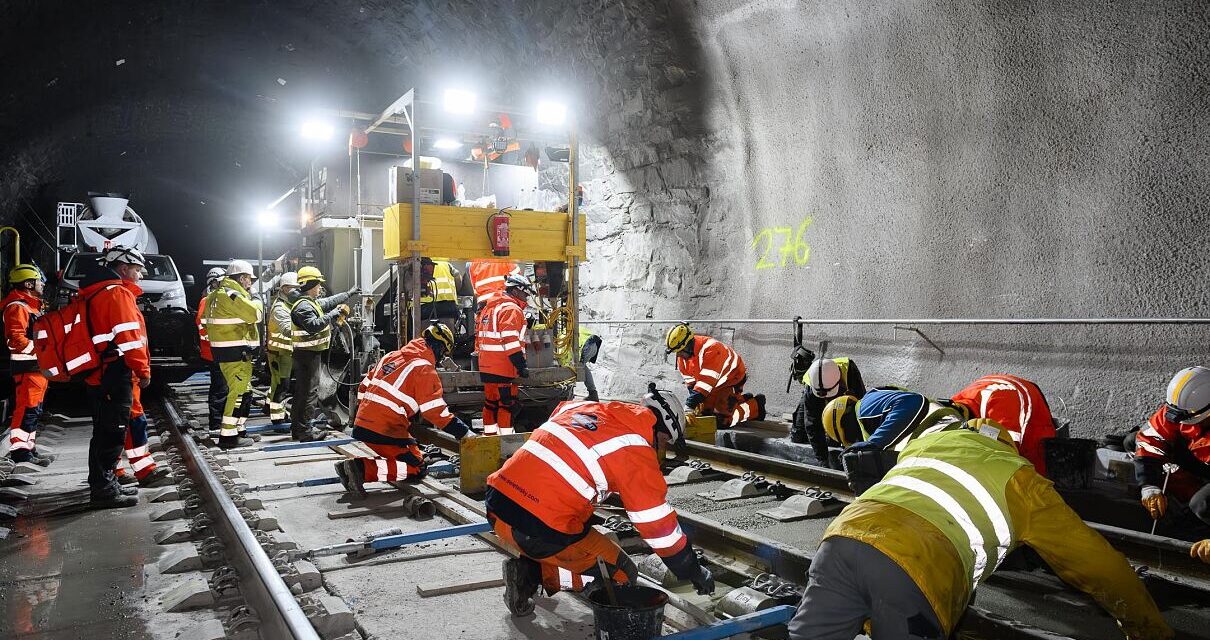
In detail, the second phase will concern the southern section of the tunnel, around two kilometres long near Mallnitz, with works to refurbish the vault and renew the railway technology systems. At the same time, ÖBB will concentrate other works along the line, including the renewal of viaducts, tunnels, overhead contact lines and tracks, as well as the modernisation of some stations and the car shuttle rail transport system.
From a logistics standpoint, the closure comes in a context already familiar to operators. Previous interruptions on the same route have had direct effects on rail flows towards the North Adriatic ports, particularly Trieste, which uses the connection via Tarvisio and Austria to capture traffic to and from Germany and central Europe.
In the past, the reduction in capacity along the Tauern line has led to traffic being diverted onto other Alpine corridors, with longer transit times and greater pressure on alternative infrastructure such as the Brenner. For the port of Trieste, which is strongly oriented towards rail transport and intermodal connections with central Europe, these dynamics can translate into operational critical issues, especially in segments most sensitive to transit times.
ÖBB explained that planning for the closure was coordinated with other infrastructure works, particularly Deutsche Bahn works between Rosenheim and Freilassing, in order to concentrate the impacts within a single time window and improve the overall management of freight traffic.
«Unfortunately, over these three years, spread across 2026, 2027 and 2028, there will be these closures, so much so that RFI had given timely notice of them. So all that remains is to adapt or try to find some measures to alleviate the inevitable disruption. The impact of the closures will be very significant», recalled Maurizio Cociancich, CEO of Adriafer and vice-president of Fercargo, «for the port system and for the regional logistics system. Solutions need to be found to get through these months of closure, especially for railway undertakings, which will have to pay a very heavy price for decisions that were not theirs».