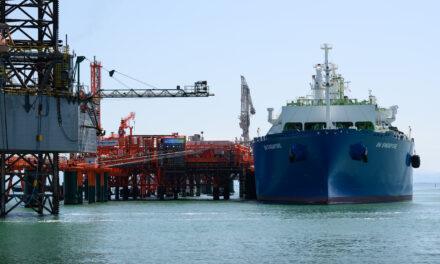


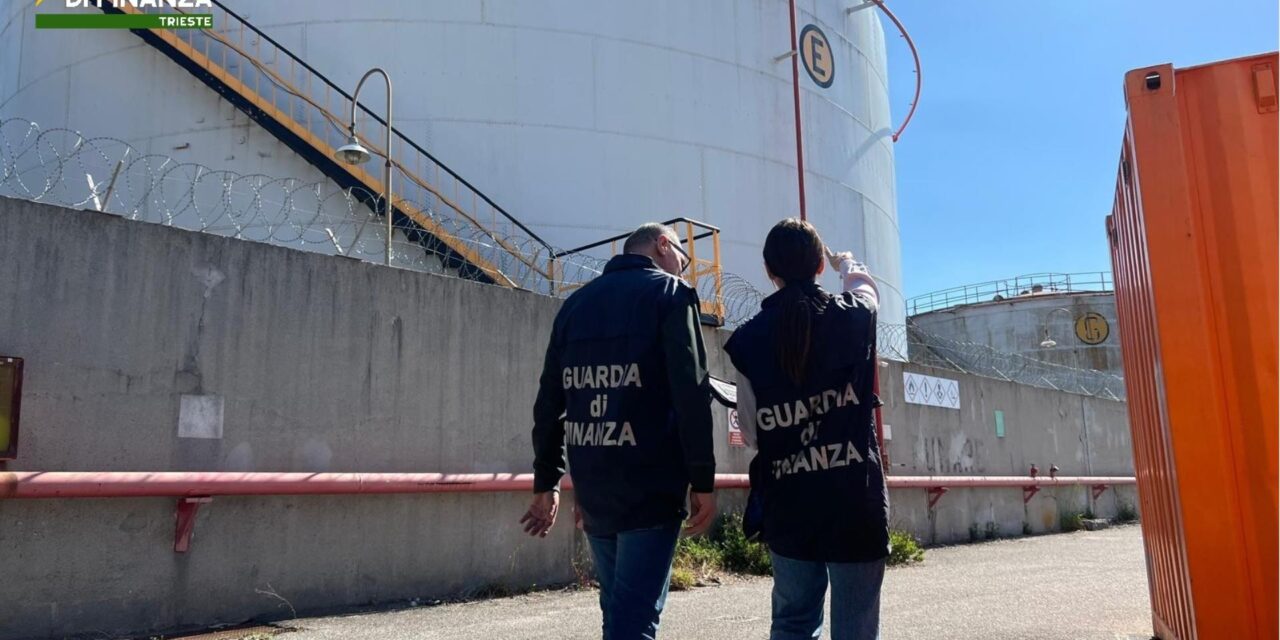
TRIESTE – The Guardia di Finanza in Trieste has carried out the final confiscation of movable and immovable assets worth 2.5 million euros as part of the investigation into the acquisition of Depositi Costieri Trieste Spa, a historic company operating in the storage and handling of petroleum products in the port of Friuli Venezia Giulia.
The measure, carried out by the Economic and Financial Police Unit of Trieste, concerns two companies and four individuals definitively convicted of tax offences, evasion of excise duties on hydrocarbons and self-laundering. The Court of Cassation rejected the appeal filed by the defendants against the second-instance ruling, making the confiscation final.
The investigation, coordinated by the Trieste Public Prosecutor’s Office, began with the purchase in 2017 of Depositi Costieri Trieste by four individuals from Campania. According to investigators, three of them had criminal records for mafia-type criminal association and links with Camorra clans in the Naples area. The investigations allegedly established that the suspects, formally hired as employees of the company, were in fact managing its operational and financial activities. The company was allegedly used to trade petroleum products while evading taxes, accumulating large unpaid tax debts and subsequently ending up bankrupt. A separate bankruptcy proceeding was also opened.
According to the reconstruction by the Guardia di Finanza, the system was also based on the use of shell companies created to issue false invoices and generate non-existent tax debts. The proceeds withheld from the tax authorities were then allegedly reinvested through self-laundering operations. Analysis of the financial flows made it possible to identify economic assets also held through cryptocurrencies and used, according to investigators, for luxury personal expenses: travel, high-end boutiques, five-star hotels, financial leases, yachts and cars.
During the investigations, assets worth around one million euros had already been seized, including cash, company shares, properties, cars and boats. These are now joined by further assets worth around 1.5 million euros identified in recent months: bank accounts, vehicles and company shares in two Campania-based transport firms, formally registered to front men but considered attributable to one of the convicted individuals.
The case had also led to the issue of an anti-mafia interdiction by the Prefecture of Trieste, with the consequent ban on access to state-owned port areas and the company being placed under special administration. The operation confirms the focus of the Guardia di Finanza on the port of Trieste, a strategic infrastructure for energy and logistics traffic in the Upper Adriatic, where in recent years the authorities have repeatedly strengthened controls against criminal infiltration and economic-financial offences.