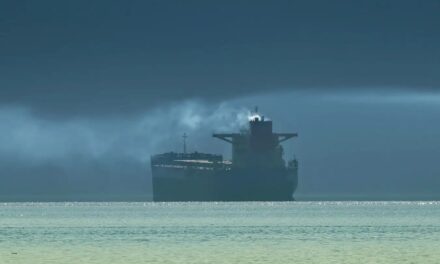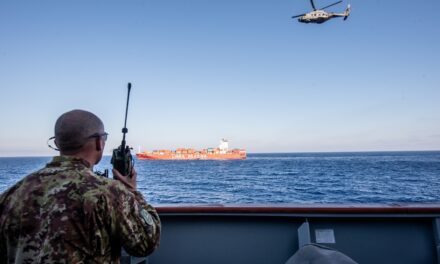


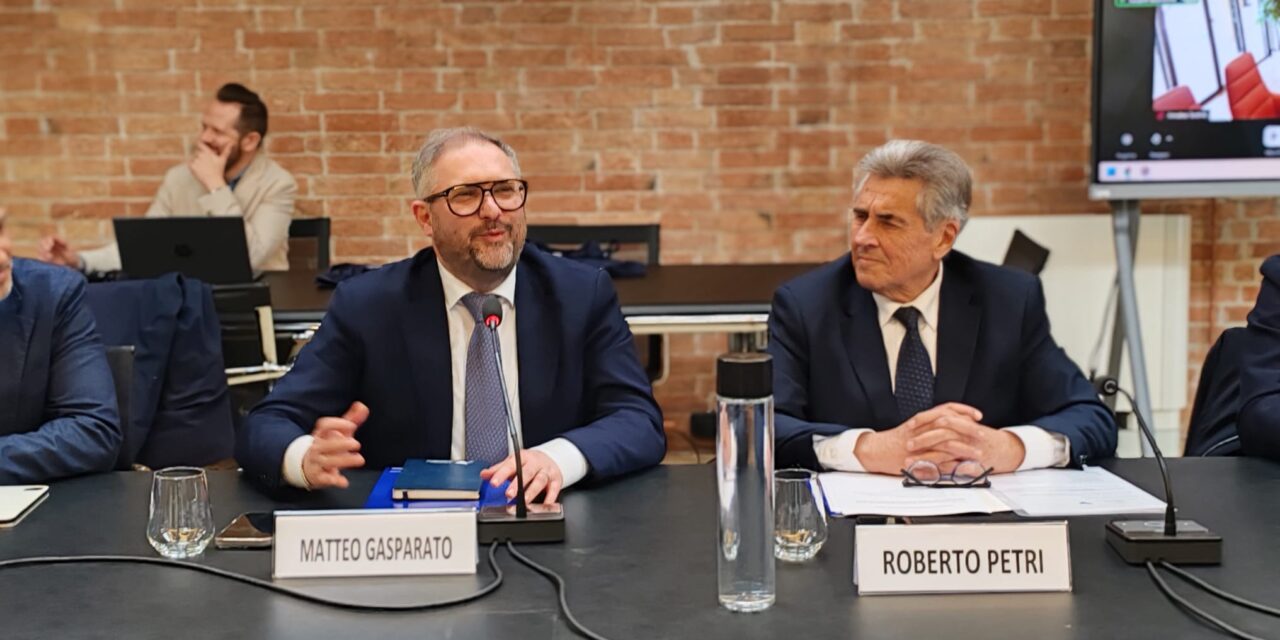
VENICE – The «heaviest crisis since the end of the Second World War». Assoporti president Roberto Petri did not hide his concern over the current moment, amid what is happening in the Suez Canal and the Strait of Hormuz.
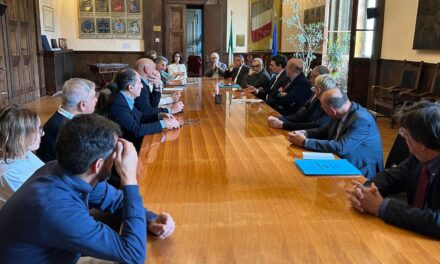
Petri chose Venice and the headquarters of the Venetian Port Authority for a series of meetings involving all the country’s port authorities, highlighting that: «The combined effect has almost halved traffic through Suez, with negative repercussions for maritime traffic and the port sector in our country. We are not in a position to identify the timeframe of these problems, so the longer it lasts, the more it works against us. We hope the right balances can be found, although, at the moment, without a crystal ball, we are unable to understand what the point of equilibrium for the conflict will be.»
The hope is that the crisis will end as soon as possible, «but it is not clear what the point of equilibrium is for the US and Israel», and therefore «there is some concern, this situation will affect cargo and cruises».
Petri, together with the president of the Venetian Port Authority, Matteo Gasparato, was cautious about estimates of the economic impact: «We are only in the first few days, it is not possible to identify figures, there will be an increase in tariffs and costs. Just consider that 20 per cent of the world’s energy passes through Hormuz. We will try to deal with the situation realistically, although for now there are no clear answers.»
Gasparato himself also spoke on the issue and, as president of the Northern Adriatic Sea Port Authority – Ports of Venice and Chioggia, added: «It is too early to assess the repercussions. Clearly I am more concerned about cargo than passengers; the rise in energy costs will affect the whole system. Much will depend on how long this conflict lasts, because we are waiting to see the repercussions, we are only at the beginning.»
The head of the Port of Venice then added: «Today there was the first stage of the meeting with Assoporti, which is following a travelling format. The choice of Venice confirms the great attention national bodies are giving to the city, just think that this is Petri’s first public appearance.» The president specified: «We are in Venice to give this city the proper weight, a reality that cannot be boxed into a frame».
Gasparato then returned to the city’s ‘specific’ needs: «As Deputy Minister Rixi had anticipated, an ad hoc regulation will be needed for the city, like the regulated port. These are issues that also matter at national level.»
The discussion with the president of the Venetian Authority also provided an opportunity to address the national reform: «Today there are contrasting situations among ports. It will be needed to bring uniformity to certain processes, especially where there are major investments and infrastructure works or dredging. At this moment it must be handled with great balance.»
The impression is that Assoporti is pushing to ‘kick the can down the road’, waiting for more favourable moments to address change: «Yes to the reform bill, but there must be stability and certainty for those operating in Italian ports.
Petri later added: «We need common-sense reflection. In emergency situations, operators in any sector need certainty and clear points of reference. The reform bill provides for some changes, including significant ones, necessary to improve the structure of Italian port activity. However, it is better for these to ‘move forward’ in times of calm for the sectors, because when there is an emergency, it is better to strengthen a visible point of reference for the professionals operating at that moment.»
For Petri, it is important that there be exchange between port authorities and stakeholders: «The authority of the port authorities must be strengthened; the fewer jolts there are, the better, while enhancing the role of the authorities.»
On the issue of ‘Porti d’Italia Spa’, the Assoporti president sidestepped the matter: «A balance must be found between investments and the resources needed to get this project off the ground. The need is to maintain links with the local area, since over time this has produced good results, an aspect that I believe must be safeguarded.»