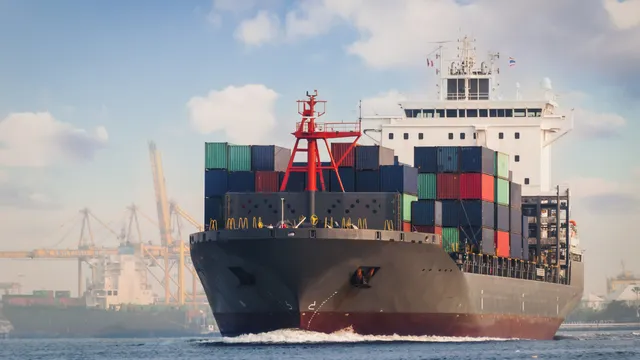


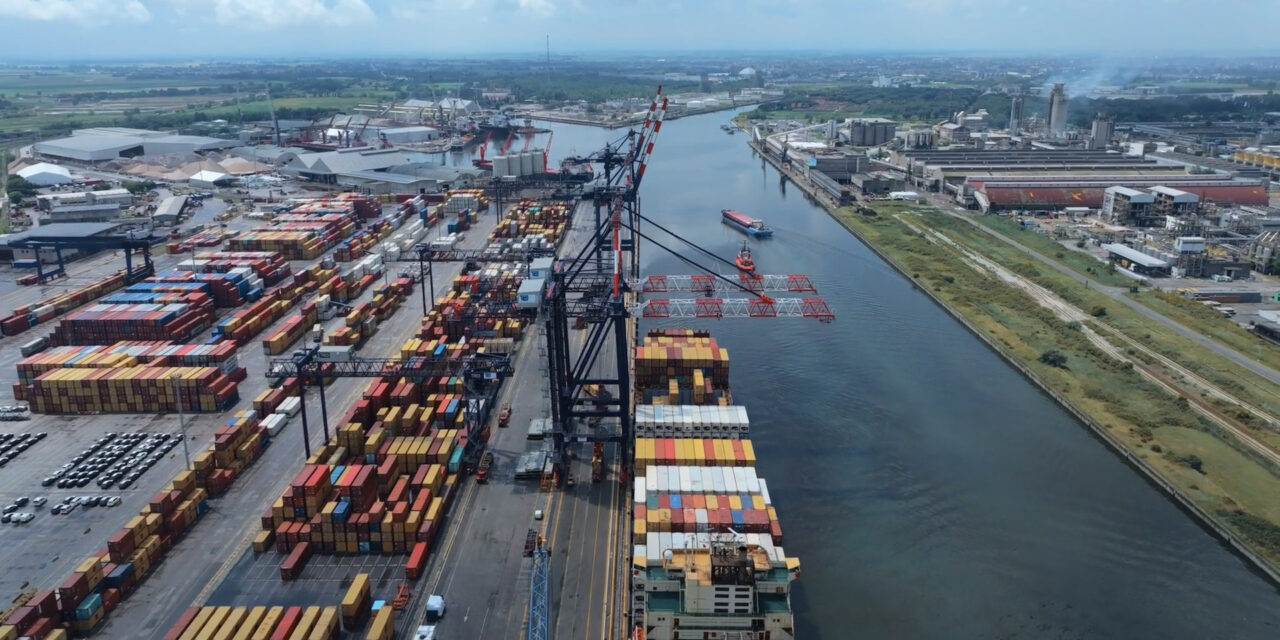
TRIESTE – Traffic at the port of Ravenna remained slightly up at the start of the year, with estimated throughput of just over 4 million tonnes between January and February 2026 and positive signs above all for containers and trailers.
The first data available from the Port Community System now point to an overall stable trend at the start of 2026. Between January and February, traffic is expected to post estimated growth of around 0.5% compared with the same period of 2025.
In detail, several cargo categories were up in February: petroleum products are expected to increase by more than 105,000 tonnes (+46.8%), solid chemical products by 25.7%, fertilisers by 12.4% and construction materials by 24.7%.
Steel products, by contrast, were down, with around 200,000 tonnes less than in February 2025, as were solid agri-food products, with an estimated drop of around 150,000 tonnes. The decline in steel products is attributed mainly to safeguard measures on steel imports into the European Union and to stockpiling in the final months of 2025, while agri-food cargoes were affected by more contingent factors linked to shipping traffic, weather conditions and some technical problems on port quays.
For both categories, forecasts nonetheless point to a possible recovery in the coming months.
Lastly, preliminary February data for unitised traffic were very positive: trailer cargo is expected to grow by 13.2%, the number of trailers by 16.7%, while containers would record an 18.8% increase in teu terms.
The first month of the year had already shown a favourable trend. In January 2026 the port handled 2,135,752 tonnes of cargo, 12.5% more than in the same month of 2025, with almost 238,000 additional tonnes. The figure – already anticipated in recent weeks by the Port Authority – is now confirmed in detail by the official statistics.
Inbound traffic reached 1,942,380 tonnes (+16.6%), while outbound traffic stood at 193,372 tonnes (-16.9%). Vessel calls totalled 201, two fewer than in January of the previous year.
From the cargo-type perspective, dry cargoes (dry bulk, general cargo and unitised cargo) totalled 1,669,368 tonnes, up 8.3%. Within this segment, containerised cargo reached 184,127 tonnes (+12.5%), while ro-ro cargo fell to 112,242 tonnes (-9.4%).
Growth in liquid bulk was particularly marked, reaching 466,384 tonnes, up 30.9% on January 2025.
Among cargo sectors, the agri-food segment stood out, with 579,030 tonnes handled (+53.6%). In particular, cereals reached 375,623 tonnes, more than doubling on the previous year (+116.7%). Oilseeds also performed positively, at 68,115 tonnes (+49.3%), while flour products fell sharply to 29,765 tonnes (-67.5%).
Construction materials totalled 354,986 tonnes (+2.9%), while raw materials destined for the Sassuolo ceramic district stood at 295,212 tonnes (-5.7%). Steel products were also down, at 357,644 tonnes (-20.3%).
Petroleum products increased to 346,487 tonnes (+72.4%), while chemical products stood at 57,913 tonnes (-39.4%). Fertilisers, by contrast, posted a positive figure, with 134,693 tonnes (+8.9%).
On the unitised traffic front, 15,227 teu were handled in January, equal to growth of 3.1% compared with the same month of 2025. Container ship calls totalled 38, against 41 in the previous year.
There was also a good result for trailers and ro-ro units, which reached a combined 6,757 units handled (+25.3%). The figure was supported above all by the arrival of 1,601 cars from China. On the Brindisi-Catania route, by contrast, handled units fell to 4,582 (-5.6%).