

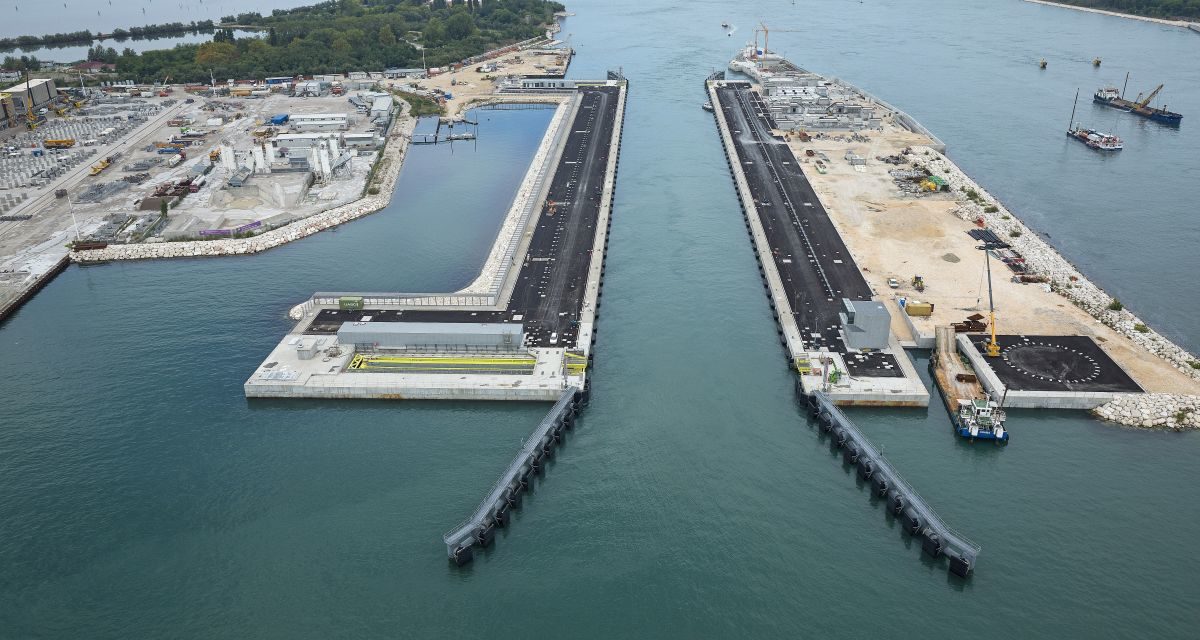
VENEZIA – To pass through the MOSE navigation lock (Malamocco), a five-month training course will be required.
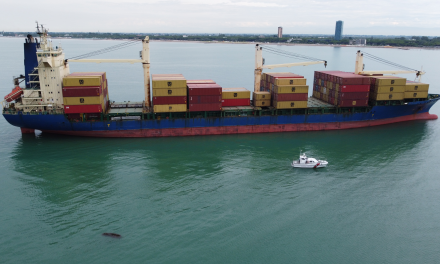
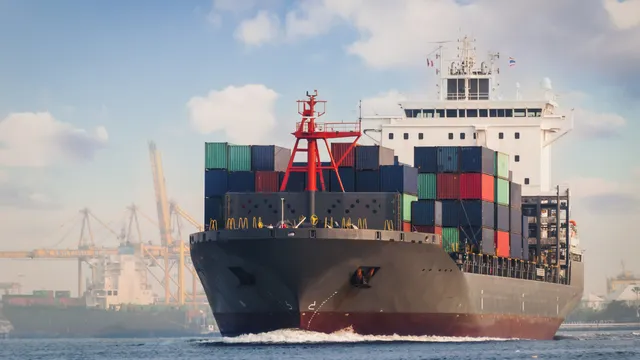
Training exercises will underpin the development of the skills needed to bring ships into and out of the Venetian lagoon when the barrier gates are raised. The working assumption is vessels up to 250 metres, but it is very likely that the Venice Harbour Master’s Office will take a cautious approach at least in the initial phase, limiting ship dimensions. In this specific operating condition, transits will have to be assisted by mooring crews, tugs and pilots to manage, with maximum safety, a set of manoeuvres that cannot be taken for granted and will in fact need to be handled down to the smallest detail. For these reasons, a decision by the lagoon Coast Guard is expected shortly to set the parameters needed for the lock’s full operational use. A decision that should come in the next few days, although at the moment it is not known when.
For now, the Venice Port Authority has officially published the service order for “the provision of the technical-practical training service for transit operations in the Malamocco lock”, noting that the decision has “immediate effect”.
This means that the training will last five months and will take place at Vemars (Venice Maritime School), a centre of excellence located opposite the lagoon Port Authority where, also thanks to the latest-generation simulators presented last October, learning will be easier. The course will rely on experts “accustomed” to navigating this type of structure, without excluding the option of running different meteo-marine conditions, as well as possible emergency scenarios. The goal is to ensure maximum safety during manoeuvres when ships enter the lock.
How the MOSE navigation lock works
When MOSE is raised, the lagoon water level is lower than the sea level. Ships, therefore, are not in a position to enter the city. That is why, near the lagoon inlets, these navigation locks were designed: they allow vessels to be lifted, overcoming the tidal level difference, entering and leaving Venice even when MOSE is up.
The largest of these is at the Malamocco inlet. When a vessel is approaching Venice, the entrance gates open, the water in the lock reaches sea level thanks to opening the “sea-side”, then the ship enters the lock, the gate closes behind it, and a pumping system lowers the water level to match the lagoon tide. The gate towards Venice is then opened, allowing the ship to access the port.
This is, however, an operationally specialised process, with a necessary increase in costs, which companies will assess case by case: they can decide whether to “go full ahead” by increasing costs, or wait for the gates to be lowered to enter in the more “classic” way.