

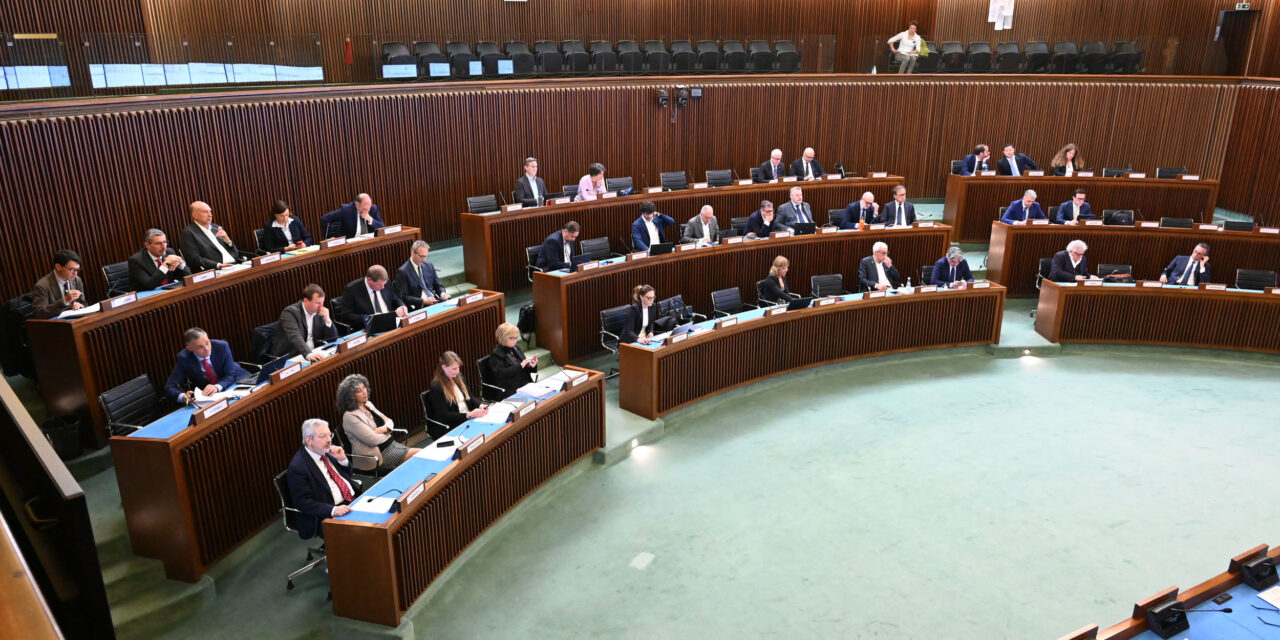
TRIESTE – The Friuli Venezia Giulia Regional Council has unanimously approved a motion to defend the autonomy of the port system, calling on the Region to intervene in the national reform.
The assembly, on a proposal from the Democratic Party later amended through a shared amendment, committed the president of the Region to take an active role in discussions with the Government to prevent the future company “Porti d’Italia spa” from taking over powers currently held by the Port System Authorities.
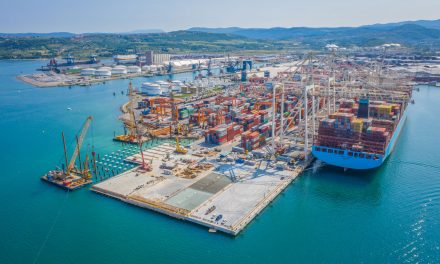

At the centre of the document is the protection of the operational capacity and management autonomy of the Port System Authority of the Eastern Adriatic Sea, which includes the ports of Trieste and Monfalcone. The motion was accepted by the Fedriga regional government, represented in the chamber by infrastructure councillor Cristina Amirante.
A cross-party position emerged during the debate. For Diego Moretti (Pd), the reform risks reducing the autonomy, financial resources and human capital of the Port Authorities, with an estimated cut of up to 40% and greater interference by the Ministry in appointments.
On the same line, Antonio Calligaris (Lega) stressed the need to preserve the autonomy of the regional ports, considered a strategic asset for the local economy.
Roberto Cosolini (Pd) acknowledged the need for a national strategy for logistics and ports, but specified that this should remain under the Ministry and not be assigned to a new company. Laura Fasiolo instead pointed to the risk of losing the identity and specialization of the local system, while Francesco Russo highlighted the specific nature of the port of Trieste, which operates for around 95% on foreign markets.
Criticism also came from other political forces. Rosaria Capozzi (M5S) spoke of possible centralization that would be harmful to a model that has produced concrete results, while Furio Honsell (Open Sinistra Fvg) described it as “risky” to call the current structure into question.
Giulia Massolino (Patto per l’Autonomia-Civica Fvg) finally drew attention to the economic impact, estimating a loss of around 21 million euros per year for the Port Authority, with possible effects also on the Free Port regime linked to the international obligations of the 1947 Peace Treaty.
In closing, councillor Amirante reiterated the central importance of maintaining the functions and autonomy of the Port Authority, describing the motion as an important step in reaffirming the strategic role of the regional port system.